Tetsuo (Tetsuo: The Iron Man, 1989): Mutace masa, industriální virus a biomechanický fetišismus
Tetsuo / 鉄男 (1989)
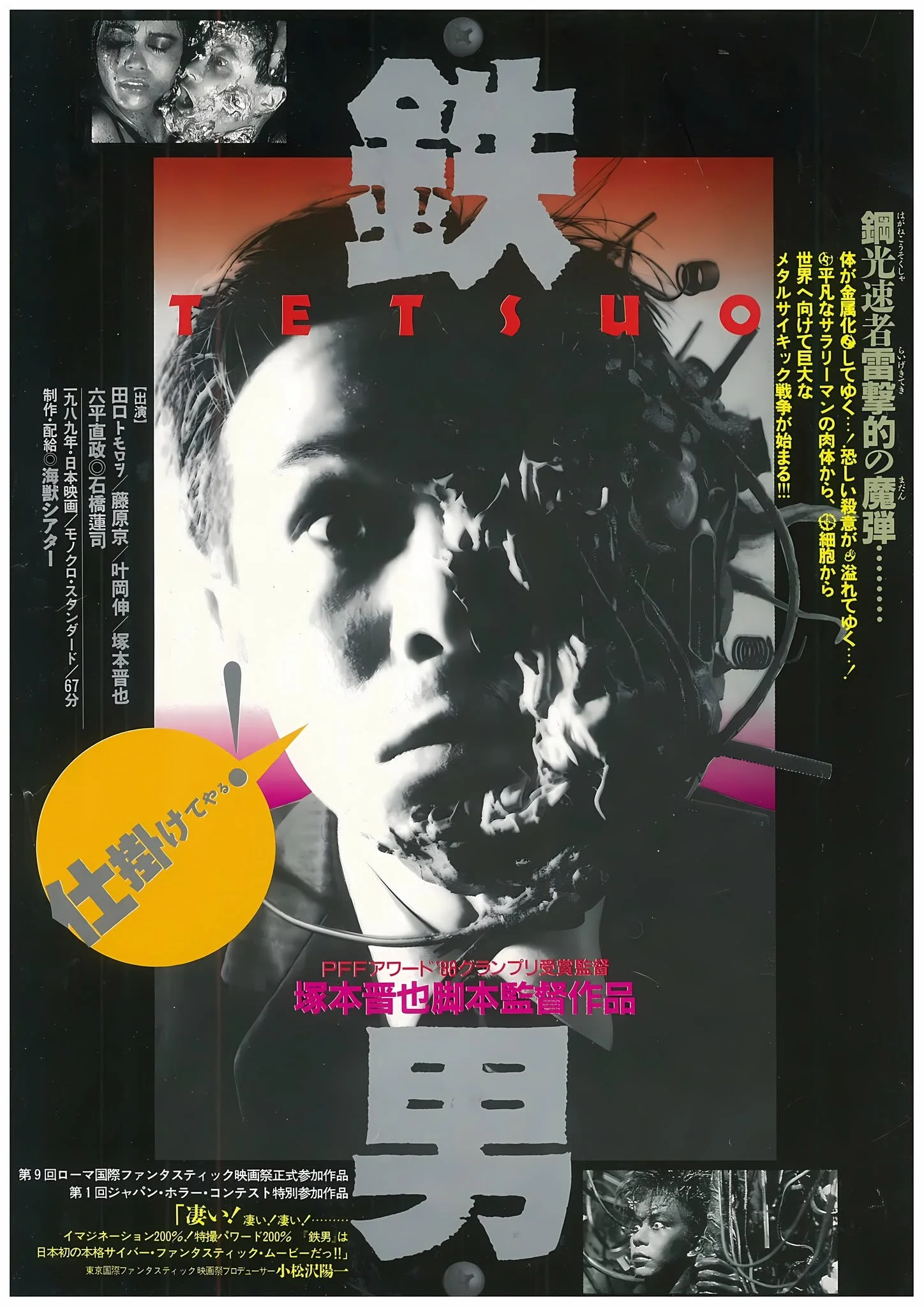
Analytická studie kultovního japonského kyberpunkového hororu Šinji Cukamota zkoumající tělesnou mutaci, haptický filmový obraz, zvukovou asambláž Čua Išikawy a zánik organického lidství.
When the City Becomes an Infection
Snímek Šinji Cukamota Tetsuo (Tetsuo: The Iron Man, 1989, stopáž 67 minut) představuje jeden z nejradikálnějších a nejagresivnějších seismografických záchvěvů moderní kinematografie. Film vznikl na samém vrcholu japonské ekonomické „bublinové“ prosperity pozdních osmdesátých let, v době, kdy se Tokio navenek prezentovalo jako sterilní, neonově naleštěná metropole technologického triumfu.
Cukamoto však v undergroundových garážových podmínkách stvořil dílo, jež působilo jako rezavý železný hřebík zaražený přímo do kapoty této technologické utopie. Tetsuo není pouhým tělesným hororem (body horror); je to vizuální a sonická exploze japonského industriálního kyberpunku, dekonstruující mýtus o čistotě pokroku a zkoumající násilné splynutí organického lidského masa s toxickým průmyslovým šrotem.
I. Město jako infekce a tělo jako technologická skládka
Narativní rámec filmu je záměrně redukován na primitivní půdorys:
- Iniciační autonehoda: Bezejmenný úředník – salaryman (Tomorowo Taguči) – autem srazí a v lese pohřbí podivného kovového fetišistu (ztvárněného samotným Šinjou Cukamotem), který si do vlastního těla zaživa vruboval kusy železa. Tento čin však nezůstává bez následků; zraněný fetišista se pomstí tím, že skrze mentální projekci infikuje úředníkovo tělo anorganickým virem[cite: 114].
- Zhroucení organické integrity: Zlom začíná banálním holením před zrcadlem, kdy úředník zjistí, že mu ze tváře namísto vousu vyrůstá ocelový drát[cite: 114]. Během několika hodin se lidské tělo proměňuje v propustnou skládku[cite: 114]. Kůže puká, svaly jsou vytlačovány ozubenými koly, pružinami a trubkami[cite: 114]. Člověk ztrácí svou antropocentrickou výlučnost: tělo již není chrámem duše, nýbrž biologickým substrátem, do něhož nezadržitelně vrůstá průmyslový odpad přetechnizovaného velkoměsta[cite: 114].
II. Haptický obraz a kinetika vizuální křeče
Cukamotova filmová řeč zcela odmítá pasivní kontemplativní sledování[cite: 114]:
- Taktilní kamera z ruky: Způsob snímání odpovídá samotné mutaci[cite: 114]. Černobílý 16mm materiál s extrémním kontrastem, zrnem a chvěním ruční kamery vytváří dojem vizuální křeče[cite: 114]. Kamera nepředstavuje nezaujatého pozorovatele; naráží do těl herců, prudce těká a fyzicky atakuje divákovu sítnici[cite: 114]. Jak definuje filmová teoretička Laura U. Marksová, Cukamoto vytváří „haptický obraz“ (haptic visuality) – obraz, který divák nevnímá pouze zrakem, nýbrž jej prožívá celým povrchem těla jako hmatový a fyzický nátlak[cite: 114].
- Stop-motion zrychlení: Využití fázové stop-motion animace pro scény běhu ulicemi Tokia propůjčuje pohybu postav trhanou, mechanickou nepřirozenost[cite: 114]. Hrdinové se nepohybují jako lidské bytosti, nýbrž jako rozbité industriální stroje vržené do městského prostoru[cite: 114].
III. Industriální perkuze Čua Išikawy jako nervová soustava
Zvuková stopa, kterou vytvořil skladatel Ču Išikawa, představuje rovnocennou dramaturgickou složku obrazu[cite: 114]:
- Akustický atak: Hudba zcela odmítá melodické konvence[cite: 114]. Sestává z kovových úderů do trubek, skřípění pilin, hluku sbíječek, dunění pístů a zkreslených industriálních rytmů[cite: 114].
- Zvuk jako motor destrukce: Zvukový design nefunguje jako doprovodná kulisa; je to nervová soustava filmu, jež pohání obraz kupředu jako pneumatické kladivo drtící lebku[cite: 114]. Akustické praskání doprovázející každou erupci kovu z lidského masa působí na diváka bezprostředně somaticky[cite: 114].
IV. Biomechanický falus a dekonstrukce sexuality
Tělesná transformace radikálně dekonstruuje genderové a sexuální role[cite: 114]:
- Vrták namísto penisu: Vrcholným projevem mutace je proměna úředníkova pohlavního orgánu v obří rotující ocelový vrták[cite: 114]. Tato groteskní a zvrácená biomechanická protéza vizualizuje destrukci intimity – když se jej jeho přítelkyně pokusí zabít kuchyňským nožem, souboj přerůstá v krvavý masakr, v němž je ženské tělo probodnuto a pohlceno rotujícím strojem.
- Sexuální fetišismus kovu: Postavy v Tetsuo netrpí odporem ke kovu; prožívají zvrácenou, extatickou slast z překonání křehkosti lidského masa[cite: 114]. Organická zranitelnost je překonána ocelovou tvrdostí[cite: 114].
V. Závěr: Fúze monster a slib nového ocelového světa
Závěrečný souboj mezi úředníkem a fetišistou neústí v eliminaci protivníka, nýbrž v jejich totální splynutí[cite: 114]:
- Biomechanická fúze: Obě mutující těla se v divokém splynutí srostou do jediného gigantického tankoidního biomechanického organismu[cite: 114]. Zánik biologického těla není prožíván jako tragédie, ale jako radikální osvobození[cite: 114].
- Pokřik do budoucnosti: Z obludné ocelové bestie zaznívá finální zvolání: „Proměníme celý svět v rez a ocel!“[cite: 114] Tetsuo končí absolutním triumfem posthumanismu[cite: 114]. Snímek předpověděl zánik tradičního humanistického subjektu a definoval estetiku moderního kyberpunku, jež dodnes rezonuje v mezinárodní kinematografii i digitálním umění[cite: 114].
Slovníček pojmů a bibliografie
- Haptický filmový obraz (Laura U. Marks): Vizuální styl kinematografie, který skrze zrno, detailní textury a nestabilitu kamery vyvolává u diváka bezprostřední tělesný a hmatový smyslový prožitek namísto pouhé optické distance[cite: 114].
- Japonský industriální kyberpunk: Specifický subžánr science fiction a body hororu přelomu 80. a 90. let (Cukamoto, Fukui), zkoumající násilné propojení lidského masa, industriálního odpadu a velkoměstského zmaru[cite: 114].
- Posthumanismus: Filozoficko-estetický směr odmítající antropocentrické pojetí člověka a reflektující překonání biologických limitů těla skrze technologie, mutace a fúzi se strojem[cite: 114].
Bibliografie (Chicago Style):
- Brown, Steven T. Tokyo Cyberpunk: Posthumanism in Japanese Visual Culture. New York: Palgrave Macmillan, 2010[cite: 114].
- Lamarre, Thomas. The Anime Machine: A Media Theory of Animation. Minneapolis: University of Minnesota Press, 2009[cite: 114].
- Marks, Laura U. The Skin of the Film: Intercultural Cinema, Embodiment, and the Senses. Durham: Duke University Press, 2000[cite: 114].
- McRoy, Jay. Nightmare Japan: Contemporary Japanese Horror Cinema. Amsterdam: Rodopi, 2008[cite: 114].
- Mes, Tom. Iron Man: The Cinema of Shinya Tsukamoto. Godalming: FAB Press, 2005[cite: 114].
- Tsukamoto, Shinya, dir. Tetsuo: The Iron Man (Motion Picture). Tokyo: Kaijyu Theatre, 1989.
The year was 1989. Japan was at the peak of its economic bubble; the world gleamed with neon light, and technological optimism felt almost tangible. In this intoxication, Shinya Tsukamoto filmed Tetsuo—a work that felt like a rusty nail driven into the polished chassis of the society of the time. While the mainstream dreamed of a clean future, Tsukamoto portrayed it as a rotting junkyard.
Historically, Tetsuo is not merely a horror film. It is a tremor of the “lost decade” yet to come. The film was born from the bowels of the Tokyo underground scene, an environment where industrial aesthetics collided with punk. Tsukamoto did not work in studios; he worked in garages. The result is not just a film, but a visual annihilation that shocked the world in 1989 with its ferocity.
The story, if one can speak of it in traditional terms, is trivial: an ordinary salaryman falls victim to a mutation after hitting a metal fetishist with his car. But Tetsuo is not about the plot. It is a film about flesh aggressively overwritten by inorganic matter. In this vision, the human subject loses its privileged position. The body is no longer a temple; it becomes a permeable junkyard seamlessly integrating technological waste. The boundary between living organism and industrial scrap collapses. Metal here does not function as an external weapon, but as a virus that transforms and aggressively reorganizes tissue from within [1].
The way the film is told mirrors this mutation. The camera does not observe—it collides and penetrates. The grainy black-and-white image with extreme contrast, the jerky movements of the handheld camera, and invasive animation do not create a fluid experience. They create a visual spasm. The viewer is not merely in front of the image, but inside it. It is an experience that attacks the spectator physically, as a tactile sensation—what film theorists call the haptic image [2][3].
Chu Ishikawa’s soundtrack—a chaotic barrage of striking pipes, grinding, and industrial noise—is not an accompaniment. It is the nervous system of the film. The sound does not underscore the image; it drives it forward like a piston hammering through the skull.
The characters have no psychology. They are merely components undergoing a radical becoming-machine. The body horror the film offers does not stem from the fear of losing humanity, but from the perverse euphoria of transcending it. When, at the end, two corroding bodies merge into a single biomechanical machine, we do not feel tragedy. We feel liberation from the vulnerability of organic flesh [4][5].
Tetsuo does not end with a warning. It ends with a triumph. The biological order ceases, the image disintegrates, and all that remains is pure speed, rust, and the promise of a new, steel world.
References
[1] Brown, Steven T. Tokyo Cyberpunk: Posthumanism in Japanese Visual Culture. Palgrave Macmillan, 2010, pp. 97–102.
[2] Marks, Laura U. The Skin of the Film: Intercultural Cinema, Embodiment, and the Senses. Duke University Press, 2000, pp. 162–165.
[3] Lamarre, Thomas. The Anime Machine: A Media Theory of Animation. University of Minnesota Press, 2009, pp. 86–92.
[4] Mes, Tom. Iron Man: The Cinema of Shinya Tsukamoto. FAB Press, 2005, pp. 45–48.
[5] McRoy, Jay. Nightmare Japan: Contemporary Japanese Horror Cinema. Rodopi, 2008, pp. 53–56.