I katé umírají! (Hangmen Also Die!, 1943): Politická epistemologie a vizuální architektura moci
Hangmen Also Die! (1943): Political Epistemology and Visual Architecture of Power
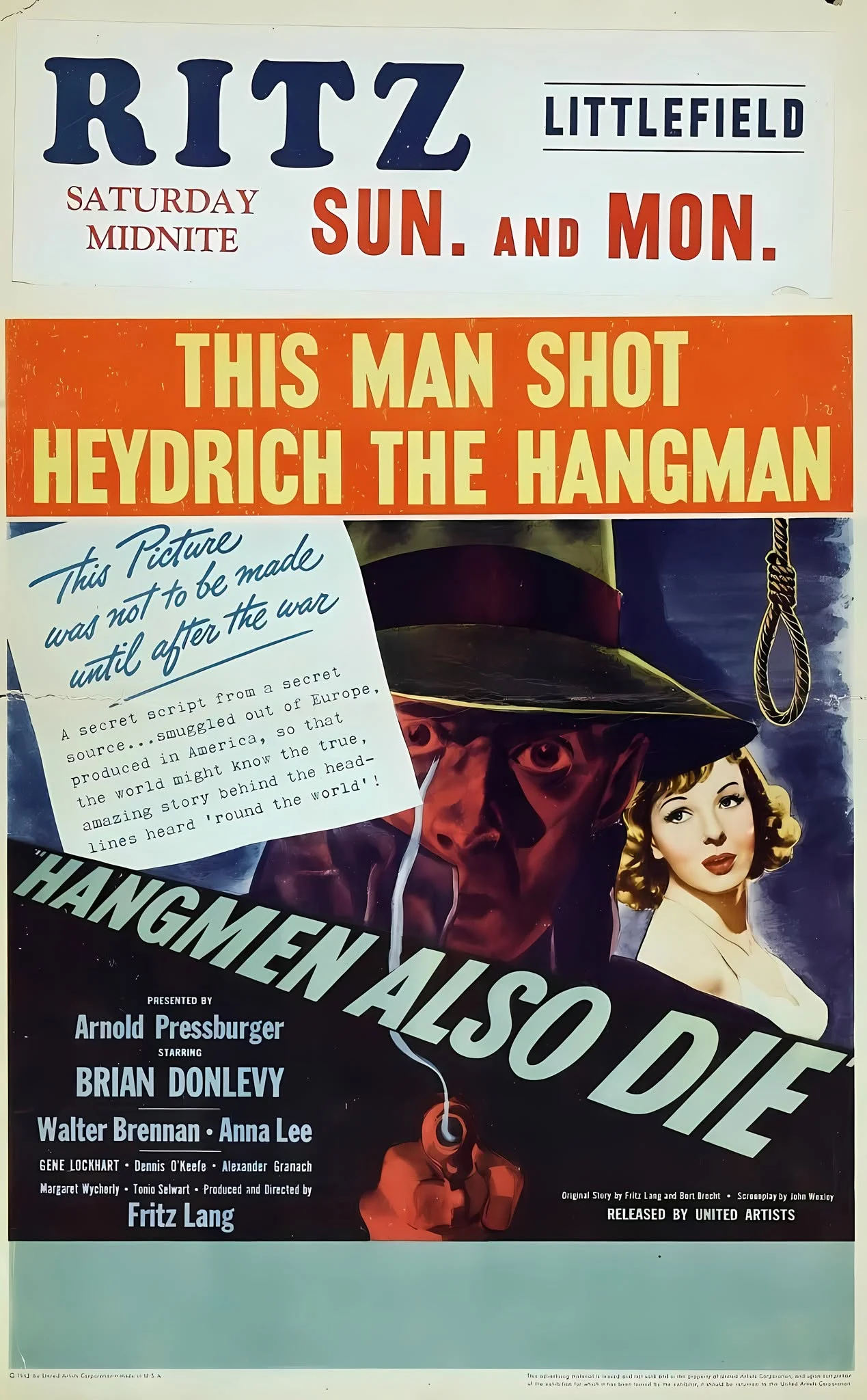
Analytická studie válečného dramatu Fritze Langa a Bertolta Brechta zkoumající manipulaci s pravdou, heydrichiádu, brechtovský zcizovací efekt a vizuální panoptikon okupované Prahy.
Analytical study of Fritz Lang and Bertolt Brecht's wartime drama examining truth manipulation, totalitarian power, and the visual panopticon.
Snímek I katé umírají! (Hangmen Also Die!, 1943, stopáž 134 minut) nepředstavuje pouhou hollywoodskou válečnou agitku; je to přísný analytický rozbor fungování totalitní moci a epistemologie lži. Režisér Fritz Lang a dramatik Bertolt Brecht (společně s kameramanem Jamesem Wongem Howem) uchopili atentát na zastupujícího říšského protektora Reinharda Heydricha nikoliv jako faktografickou rekonstrukci, nýbrž jako modelovou studii mechanismů kolektivního odporu. Snímek organicky propojuje tradici německého expresionismu, brechtovskou dialektiku a rodící se poetiku amerického filmu noir.
I. Produkční kontext: Emigrace a památka Lidic
Film vznikal na přelomu let 1942 a 1943 pod bezprostředním dojmem zpráv o vyhlazení Lidic a popravách stovek českých vlastenců:
- Exilový manifest: Lang i Brecht, kteří z Německa uprchli před nacismem již v roce 1933, spojili síly s hudebním skladatelem Hannsem Eislerem. Cílem nebylo natočit dokument o Československu, nýbrž zmobilizovat mezinárodní veřejnost a odhalit brutální anatomii nacistického okupačního aparátu.
- Autonomie nezávislé produkce: Projekt vznikl pod hlavičkou společnosti Arnold Productions pro United Artists, což Langovi umožnilo vyhnout se zásahům velkých studií a zachovat Brechtův nekompromisní politický tón.
II. Politická epistemologie: Pravda jako funkce aparátu
Ústředním dramaturgickým motivem není pátrání po tom, kdo stiskl spoušť, nýbrž boj o to, kdo ovládne interpretaci atentátu:
- Strategie Velké lži: Doktor Franta Svoboda (Brian Donlevy), skutečný atentátník, se ukrývá v pražském podzemí. Odboj tváří v tvář hrozbě hromadných poprav rukojmích vymyslí geniální plán: podstrčí falešné důkazy usvědčující z atentátu kolaborujícího velkoobchodníka s pivem Emila Czaku.
- Past na totalitu: Gestapo tuto zkonstruovanou lež přijme za svou. Odboj vítězí nikoliv vojenskou převahou, nýbrž tím, že donutí totalitní systém uvěřit vlastní paranoie. Pravda v okupovaném prostoru přestává být objektivní kategorií – stává se zbraní v rukou těch, kteří dokáží kontrolovat tok informací.
III. Brechtovský zcizovací efekt a anonymní kolektiv
Vliv Bertolta Brechta se projevuje v odmítnutí hollywoodského kultu individuálního hrdiny:
- Kolektivní subjekt: Skutečným protagonistou filmu není doktor Svoboda, nýbrž anonymní masa pražského obyvatelstva – rodina profesora Novotného (Walter Brennan), dělníci, zelináři i hostinští. Všichni riskují životy nikoliv pro vlastní slávu, ale pro zachování integrity celku.
- Verfremdungseffekt: Didaktické scény, písně Hanse Eislera a vědomé potlačení melodramatického sentimentu nutí diváka k racionální politické analýze namísto pasivního soucitu. Fašistický mýtus neporazitelnosti je systematicky dekonstruován jako byrokratická fraška.
IV. Vizuální architektura Jamese Wonga Howea: Praha jako panoptikon
Kamera Jamese Wonga Howea přetvořila studiové kulisy Prahy v klaustrofobní disciplinární aparát:
- Mříže a rámy: Záběry jsou neustále členěny vertikálními liniemi okenních rámů, mřížoví a hlubokých stínů. Postavy jsou snímány tak, jako by byly permanentně pod dohledem skrytého oka moci.
- Hloubka ostrosti: Využití techniky deep focus propojuje popředí s pozadím záběru a demonstruje všudypřítomnost hrozby – v každých dveřích či za rohem může stát agent gestapa.
V. Závěr: Konec tyrana a satisfakce historie
Závěrečný Heydrichův skon v nemocnici na Bulovce je představen bez jakéhokoliv patosu; jako fyzické zhroucení chladného technokrata smrti.
I katé umírají! představuje vrchol Langova protifašistického filmového cyklu. Ukazuje, že ani nejbrutálnější teror nedokáže zlomit společnost, která si dokáže udržet vnitřní solidaritu a přeměnit pravdu v nástroj aktivní sebeobrany.
Slovníček pojmů a bibliografie
- Politická epistemologie: Filozofické a sociologické zkoumání způsobů, jimiž mocenské struktury manipulují s fakty, vytvářejí oficiální pravdu a instrumentalizují informace.
- Verfremdungseffekt (Zcizovací efekt): Brechtovský dramatický postup narušující diváckou iluzi reality s cílem probudit kritický úsudek a politickou reflexi.
- Vizuální panoptikon: Scénografická a kameramanská koncepce navozující pocit permanentního sledování a prostorové nesvobody.
Bibliografie (Chicago Style):
- Bathrick, David. “Brecht in Hollywood: Hangmen Also Die and the Anti-Fascist Film.” The Germanic Review: Literature, Culture, Theory 60, no. 4 (1985): 140–146.
- Elsaesser, Thomas. Metropolis and Beyond: Fritz Lang and International Cinema. London: British Film Institute, 2000.
- Gunning, Tom. The Films of Fritz Lang: Allegories of Vision and Modernity. London: British Film Institute, 2000.
Hangmen Also Die! (1943) is not merely a war film—it is an intellectual and visual assault on totalitarian logic. Fritz Lang and Bertolt Brecht (collaborating with cinematographer James Wong Howe) treat the assassination of Reinhard Heydrich not as a historical reconstruction, but as a model of how totalitarian power operates through truth, power, and narrative. The film fuses German expressionism, Brechtian dialectics, and early American noir into a cohesive whole.
I. Historical Context and Production
Released in 1943, just one year after the actual assassination of Reinhard Heydrich (May 27, 1942) and the subsequent destruction of Lidice, the film served as a personal and political response. Produced for United Artists without major studio censorship on an $850,000 budget, its goal was ideological and emotional mobilization of the American public rather than documentary precision.
II. Epistemology of Totalitarianism: Truth as a Function of Power
The core question of the film is not “who killed Heydrich?”, but “who will control the narrative of the assassination?” The resistance wins not through moral superiority, but by seizing interpretive control.
The central narrative axis—the “Big Lie”—features the resistance framing the collaborator Emil Czaka. The Gestapo readily accepts this fabrication because it neatly aligns with their paranoid worldview. The thesis is absolute: under totalitarianism, truth is not an objective category, but an instrument of power.
III. Brecht’s Influence: From Theater to Film
Bertolt Brecht injected his political and aesthetic logic into the film through the Verfremdungseffekt (alienation effect):
- The traditional individual hero is replaced by collective resistance—an anonymous mass of ordinary people risking hundreds of lives to save one.
- Narrative action is interrupted by didactic moments and songs, forcing the viewer to analyze politically rather than identifying emotionally.
- The film rejects romanticized tropes and happy endings, dismantling the fascist myth of vitality and heroism.
IV. Visual Structure: Prague as a Disciplinary Apparatus
James Wong Howe shot all of Prague on studio soundstages, transforming the city into a claustrophobic trap:
- Framing: Bars, doorframes, windows, and deep shadows create a constant sense of surveillance—a visual panopticon.
- Deep Focus: Everything remains sharp from foreground to background, signaling that the enemy is omnipresent.
- High-Contrast Lighting: Faces in semi-darkness emphasize isolation and psychological pressure.
V. Pathology of Power and Reception
Heydrich is portrayed not as a brutal caricature, but as a cold, rational bureaucrat whose evil manifests through administrative and intellectual structures. Although Czech exiles in the US (led by Jan Masaryk) actively supported the film for its propaganda value, initial reactions were ambivalent due to stylized sets and English-language dialogue. Following the destruction of Lidice, however, it emerged as a powerful vehicle for symbolic retribution.
VI. Conclusion
Hangmen Also Die! consolidates Lang’s American period, merging exile experience with political narration and translating expressionism into a dark architecture of control. When justice collapses under tyranny, the final battlefield becomes the story we tell about it.
Glossary and Bibliography
- Political Epistemology: The investigation of how institutions and power structures define what constitutes truth and reality.
- Verfremdungseffekt (Alienation Effect): An artistic strategy preventing naive audience identification with characters to stimulate critical, rational thinking.
- Visual Panopticon: Spatial organization of the cinematic frame evoking continuous, pervasive surveillance of the individual.
Bibliography (Chicago Style):
- Bathrick, David. “Brecht in Hollywood.” The Germanic Review: Literature, Culture, Theory 60, no. 4 (1985): 140–146.
- Elsaesser, Thomas. Metropolis and Beyond: Fritzi Lang and International Cinema. London: BFI, 2000.
- Gunning, Tom. The Films of Fritz Lang: Allegories of Vision and Modernity. London: British Film Institute, 2000.