Krev na Satanově drápu (The Blood on Satan's Claw, 1971): Nákaza z půdy a rituál dětí
The Blood on Satan's Claw (1971): Contagion from the Soil and the Children's Ritual
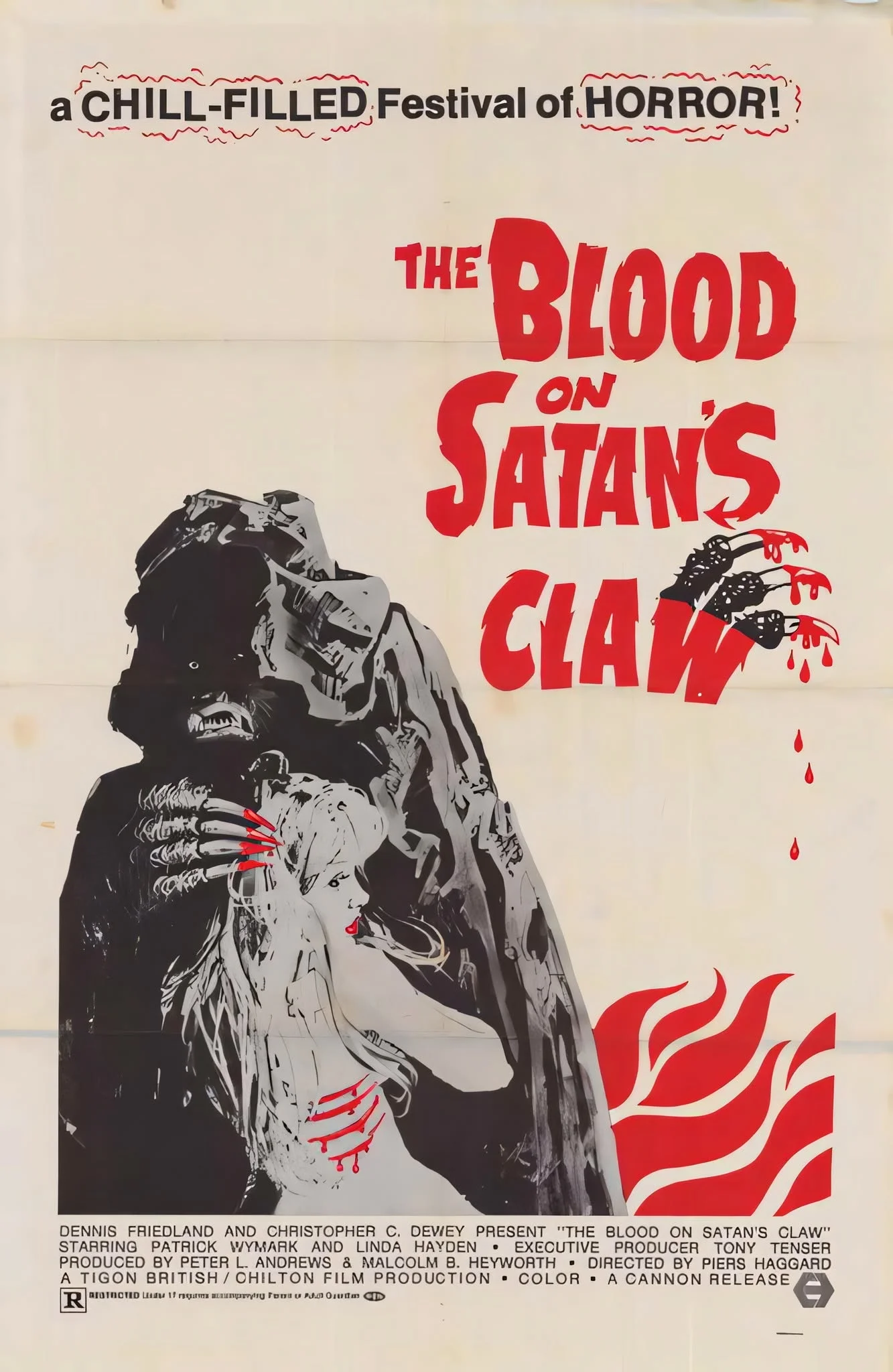
Analytická studie zakladatelského díla britského folk-hororu Piersa Haggarda zkoumající zvířecí masky, archeologii zla, dekonstrukci venkovské nevinnosti a fyzickou mutaci.
An analytical study of Piers Haggard's seminal British folk horror exploring the archaeology of evil, animal masks, generational rebellion, and the deconstruction of rural innocence.
Tato studie dekonstruuje stěžejní dílo britského folk-hororu Krev na Satanově drápu (The Blood on Satan’s Claw, 1971, stopáž 93 minut) jako mrazivou sondu do zrodu pohanského kultu v Anglii 17. století. Snímek analyzuje postupný rozklad venkovské komunity poté, co je na poli vyorána znetvořená, chlupatá lebka neznámého původu.
Nález funguje jako psychologický a biologický virus, který nakazí místní mládež, jež se pod vedením charismatické Angel Blake začne uchylovat k rituálním vraždám, nošení zvířecích masek a uctívání bytosti zvané Behemot. Metodologicky se text zaměřuje na konflikt mezi generacemi, symboliku nezvládnutelné přírody (bahno a kožešiny) a erozi křesťanské autority. Film ukazuje venkovskou tradici nikoliv jako folklorní idylu, ale jako neustálou hrozbu propadu do zvířecího barbarství.
I. Otevřená rána v zemi a horizontála bahna
Horor zde nepochází z vesmíru ani z gotického hradu; doslova vyvře ze samotné hlíny. Když oráč narazí na podivnou lebku s okem, symbolicky tím otevírá jizvu v krajině. Režisér Piers Haggard vizuálně definuje horizontálu bahna a lesa – venkovský prostor, který je blátivý, špinavý a plný tlející hmoty.
Tato půda v sobě skrývá pre-křesťanskou, temnou sílu. Zatímco úřady (zastoupené arogantním Soudcem) existenci zla popírají a snaží se udržet racionální řád, starobylá infekce se šíří jako plíseň, infikuje mladou generaci a dokazuje, že civilizační nátěr je na anglickém venkově jen velmi tenký.
II. Vzpoura mládeže a zrod pohanského sabatu
Film vznikl v době po doznívajícím hnutí hippies na konci 60. let, a jeho narativ jasně zrcadlí generační konflikt. Místní mládež, fascinovaná nálezem a vedená andělsky krásnou, ale psychopatickou Angel Blake (Linda Hayden), odmítá autoritu rodičů a církve.
Vytvářejí vlastní sabat hluboko v lesích. Jejich „hry“ začínají rituálním oblékáním a končí znásilněním a lidskými oběťmi. Angel Blake funguje jako temná verze Májové královny – nenosí květiny, ale krvavou autoritu, pomocí které manipuluje ostatní děti, aby obětovaly své vrstevníky pro uspokojení entity dřímající pod zemí.
III. Kožešina, masky a fyzická mutace
Zásadním motivem spojeným s folklorem a rituály je zde fyzická transformace. Nákaza se projevuje tak, že některým teenagerům začnou na těle růst skvrny černé, zvířecí srsti (tzv. „ďáblova kůže“). Aby tuto mutaci zakryli, nebo naopak oslavili, oblékají se do kožešin a zvířecích masek.
Ztrácejí lidskou identitu a mění se ve smečku. Odřezávání infikované kůže (v mrazivé scéně amputace) je zoufalým pokusem lékařské vědy zastavit zvířecí přirozenost, která si žádá návrat. Masky zde nefungují jako karnevalová rekvizita, ale jako skutečný projev vnitřního monstra, které z dětí udělalo dravce.
IV. Závěr: Očištění ohněm a mečem
Když racionální přístup definitivně selže, nastupuje brutální vertikála moci. Soudce (Patrick Wymark) si uvědomuje, že s tímto druhem zla nelze vyjednávat, ani ho nelze léčit teologií. Ve finále odhazuje soudcovskou paruku, bere do ruky obrovský meč a vede vesničany do lesa, aby kult fyzicky vyhladili.
Závěrečný střet s částečně zhmotněným monstrem Behemotem není soubojem modliteb, ale krvavou nutností obnovy řádu. Návrat ke stabilitě je vykoupen radikálním násilím. Oslavy jara jsou utopeny v krvi dětí, protože příroda, jak film neustále připomíná, vyžaduje biologickou oběť.
Slovníček pojmů a bibliografie
- Horizontála bahna: Vizuální vymezení venkovského prostoru jako tlející, biologické hmoty skrývající pohanské síly pod povrchem civilizace.
- Archeologie zla: Koncept, kde zlo není vnější či duchovní entitou, ale fyzickým pozůstatkem pohanské minulosti vyoraným přímo ze země.
- Ďáblova kůže (Devil’s Skin): Fyzický a biologický projev nákazy v podobě zvířecí srsti na tělech dospívajících, ztělesňující regres lidství do primárního barbarství.
- Brutální vertikála moci: Neúprosné obnovení civilizačního řádu autoritou meče bez ohledu na věk pachatelů.
Bibliografie (Chicago Style):
- Haggard, Piers. The Blood on Satan’s Claw (Audio Commentary). Directed by Piers Haggard. London: Odeon Entertainment, 2010. DVD.
- Newland, Paul, ed. Folk Horror: Hours Dreadful and Things Strange. Bristol: Intellect Books, 2020.
- Scovell, Adam. Folk Horror: Hours Dreadful and Things Strange. Leighton Buzzard: Auteur, 2017.
- Young, Rob. Electric Eden: Unearthing Britain’s Visionary Music. London: Faber and Faber, 2010.
This study deconstructs the seminal British folk-horror work The Blood on Satan’s Claw (1971, running time 93 minutes) as a chilling probe into the genesis of a pagan cult in 17th-century England. The film analyzes the gradual decay of a rural community after a deformed, hairy skull of unknown origin is unearthed in a field.
The discovery acts as a psychological and biological virus that infects the local youth, who, led by the charismatic Angel Blake, turn to ritualistic murders, the wearing of animal masks, and the worship of a being called Behemoth. Methodologically, the text focuses on the generational conflict, the symbolism of untamable nature (mud and fur), and the erosion of Christian authority. The film portrays rural tradition not as a folkloric idyll, but as a constant threat of regression into animalistic barbarism.
I. The Open Wound in the Earth and the Horizontal of Mud
The horror here does not come from outer space or a gothic castle; it literally erupts from the soil itself. When a plowman strikes a strange skull with an eye, he symbolically opens a scar in the landscape. Director Piers Haggard visually defines the horizontal of mud and woods—a rural space that is muddy, dirty, and full of decaying matter.
This soil conceals a pre-Christian, dark power. While the authorities (represented by the arrogant Judge) deny the existence of evil and attempt to maintain rational order, the ancient infection spreads like rot, infecting the younger generation and proving that the veneer of civilization is exceedingly thin in the English countryside.
II. The Youth Rebellion and the Genesis of the Pagan Coven
The film was made in the aftermath of the late 1960s hippie movement, and its narrative clearly reflects generational conflict. The local youth, fascinated by the discovery and led by the angelically beautiful but psychopathic Angel Blake (Linda Hayden), reject the authority of their parents and the Church.
They form their own twisted coven deep in the woods. Their “games” begin with ritual dressing up and end in rape and human sacrifice. Angel Blake functions as a dark version of the May Queen—she does not wear flowers, but wields a bloody authority, manipulating the other children to sacrifice their peers to satisfy the entity slumbering beneath the earth.
III. Fur, Masks, and Physical Mutation
A crucial motif associated with folklore and rituals here is physical transformation. The contagion manifests itself by causing patches of black, animalistic fur (the “Devil’s Skin”) to grow on the bodies of some teenagers. To hide this mutation, or conversely, to celebrate it, they dress in furs and animal masks.
They shed their human identity and transform into a pack. The cutting away of the infected skin (in a chilling amputation scene) is a desperate attempt by medical science to stop the animalistic nature demanding a return. The masks here do not function as carnival props, but as a true manifestation of the inner monster that has turned the children into predators.
IV. Conclusion: Cleansing by Fire and Sword
When the rational approach definitively fails, the brutal vertical of power steps in. The Judge (Patrick Wymark) realizes that this kind of evil cannot be negotiated with, nor can it be cured by theology. In the finale, he discards his judge’s wig, takes up a massive sword, and leads the villagers into the woods to physically exterminate the cult.
The final clash with the partially materialized monster Behemoth is not a battle of good prayers, but a bloody butchery. The return to order is redeemed through radical violence. The spring celebrations are drowned in the blood of children, because nature, as the film constantly reminds us, demands flesh.
Glossary and Bibliography
- Horizontal of Mud: Visual framing of the rural environment as a decaying, biological mass harboring ancient pre-Christian forces beneath the veneer of civilization.
- Archaeology of Evil: The concept where evil is not an abstract or spiritual entity, but a physical relic of a pagan past unearthed directly from the soil.
- Devil’s Skin: A biological manifestation of contagion appearing as animal fur on adolescents, embodying the regression of humanity into primal barbarism.
- Brutal Vertical of Power: The relentless, violent restoration of civilizational order by judicial and state authority regardless of the perpetrators’ age.
Bibliography (Chicago Style):
- Haggard, Piers. The Blood on Satan’s Claw (Audio Commentary). Directed by Piers Haggard. London: Odeon Entertainment, 2010. DVD.
- Newland, Paul, ed. Folk Horror: Hours Dreadful and Things Strange. Bristol: Intellect Books, 2020.
- Scovell, Adam. Folk Horror: Hours Dreadful and Things Strange. Leighton Buzzard: Auteur, 2017.
- Young, Rob. Electric Eden: Unearthing Britain’s Visionary Music. London: Faber and Faber, 2010.