Zvětšenina (Blow-Up, 1966): Krize vnímání a prázdnota obrazu
Blow-Up (1966): The Crisis of Perception and the Emptiness of the Image
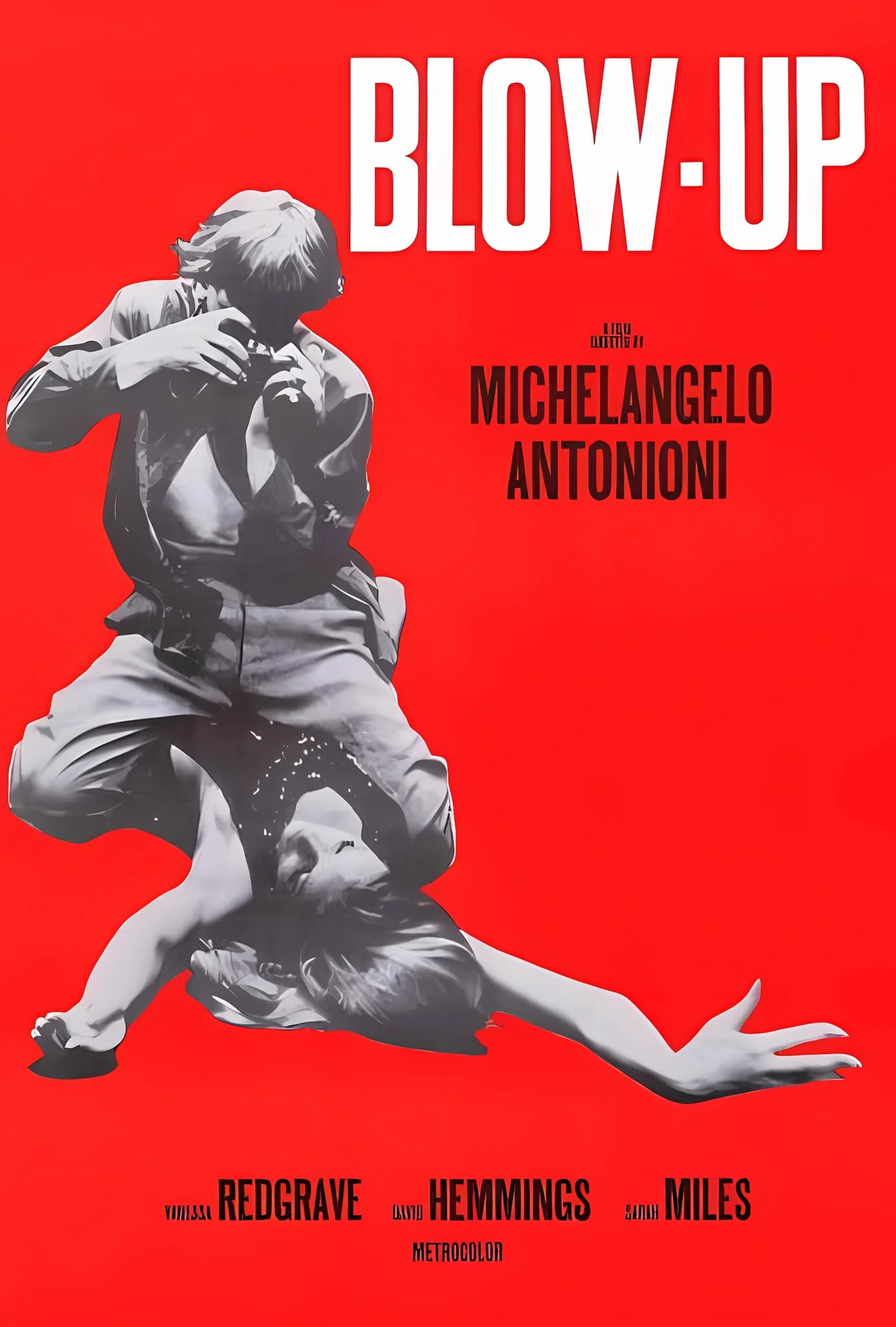
Analytická studie prvního anglicky mluveného snímku Michelangela Antonioniho zkoumající limity lidského vnímání, barevnou dramaturgii a nečitelnost reality v zrnu.
An analytical study of Michelangelo Antonioni's first English-language film exploring the limits of human perception, color dramaturgy, and the unreliability of reality.
Tato studie dekonstruuje první anglicky mluvený film Michelangela Antonioniho Zvětšenina (Blow-Up, 1966, stopáž 111 minut) jako radikální zkoumání limitů lidského vnímání a nespolehlivosti fotografického záznamu. Snímek, volně inspirovaný povídkou Júlia Cortázara, analyzuje vyprázdněnost „swingujícího Londýna“ skrze postavu fotografa Thomase, který věří, že skrze objektiv ovládá realitu.
Metodologicky se text zaměřuje na barevnou dramaturgii Carla Di Palmy, narativní dekonstrukci detektivního žánru a filozofický přesah závěrečné scény s mimi. Film ukazuje, že čím více se snažíme realitu „přiblížit“ a zvětšit, tím spíše se nám rozpadá v nečitelnou abstrakci.
I. Povrch jako horizontála bytí
Vizuální identita filmu zrcadlí Thomasův (David Hemmings) přístup k životu. Vše je pro něj pouhý povrch, materiál pro kompozici – od modelek až po bezdomovce v noclehárně:
- Kamerová distance: Kamera Carla Di Palmy využívá syté barvy a geometrickou strohost moderního Londýna k vytvoření světa, který je esteticky dokonalý, ale emocionálně sterilní.
- Bariéra aparátu: Thomas se pohybuje po horizontále vjemů, kde obraz plně nahradil prožitek. Fotoaparát nefunguje jako okno do světa, ale jako ochranný štít, který mu umožňuje nedotýkat se skutečnosti.
II. Park a zrod pochybnosti
Klíčová sekvence v parku Maryon představuje zlom:
- Objev v temné komoře: Thomas zde náhodně vyfotografuje milenecký pár, ale teprve v temné komoře začíná skrze proces zvětšování (blow-up) objevovat skrytý narativ – náznak těla v trávě a zbraně v křoví.
- Dekonstrukce detektivky: Antonioni buduje napětí, které však nevede k vyřešení zločinu, nýbrž k epistemologické otázce, zda nějaký zločin vůbec existoval. Zvětšování fotografií je metaforou pro marnou snahu rozumu vtisknout chaosu pevný řád.
III. Abstrakce zrna a ztráta hmatatelnosti
Čím více Thomas fotografii zvětšuje, tím více se obraz mění v amorfní shluk černých a bílých skvrn:
- Destrukce detailu: Objektivní pravda se v největším přiblížení stává pouhým zrnem emulze – čistou malířskou abstrakcí.
- Past reprezentace: Tato vizuální dekonstrukce je jádrem filmu: realita je nedosažitelná a každý pokus o její absolutní zachycení vede k rozpadu významu. Horizontála vjemu se ukazuje jako past, ve které se smysl vytrácí v okamžiku maximální optické blízkosti.
IV. Závěr: Tenis bez míčku a přijetí iluze
Závěrečná scéna s mimi hrajícími imaginární tenis je zásadním milníkem moderní kinematografie. Thomas, který ztratil veškeré materiální důkazy (fotografie byly ukradeny, mrtvola zmizela), přistupuje na pravidla imaginace. Když pomyslný míček zvedne a hodí zpět, definitivně rezignuje na roli objektivního pozorovatele.
Uvědomuje si, že realita je sociální a psychologický konsensus. Film končí Thomasovým zmizením z travnaté plochy – jakmile pochopí neuchopitelnost světa, jeho vlastní existence v pozici suverénního zaznamenavatele reality ztrácí smysl.
Slovníček pojmů a bibliografie
- Povrch jako horizontála bytí: Estetický a filozofický koncept, v němž vizuální vjem nahrazuje hlubší emocionální a etický prožitek reality.
- Proces zvětšování (Blow-up): Fotografická i narativní metoda postupného přibližování detailu, jež namísto odhalení pravdy vede k rozpadu obrazu a smyslu.
- Abstrakce zrna: Transformace objektivní skutečnosti v materiální strukturu filmu (zrno emulze), zosobňující nedosažitelnost absolutní pravdy.
- Tenis bez míčku: Závěrečná metafora přijetí společenské iluze a konvence reality, rušící pozici nezávislého, objektivního pozorovatele.
Bibliografie (Chicago Style):
- Antonioni, Michelangelo. Blow-Up: A Film by Michelangelo Antonioni. New York: Simon and Schuster, 1971.
- Brunette, Peter. The Films of Michelangelo Antonioni. New York: Cambridge University Press, 1998.
- Chatman, Seymour. Antonioni, or, the Surface of the World. Berkeley: University of California Press, 1985.
- Hemmings, David. Blow-Up and Other Exaggerations. London: Robson Books, 2004.
This study deconstructs Michelangelo Antonioni’s first English-language film, Blow-Up (1966, running time 111 minutes), as a radical exploration of the limits of human perception and the unreliability of the photographic record. Loosely inspired by a short story by Julio Cortázar, the film analyzes the emptiness of “Swinging London” through the character of Thomas, a photographer who believes he controls reality through his lens.
Methodologically, the text focuses on Carlo Di Palma’s color dramaturgy, the narrative deconstruction of the detective genre, and the philosophical implications of the final scene with the mimes. The film demonstrates that the more we attempt to “approach” and magnify reality, the more it dissolves into an unreadable abstraction.
I. The Surface as the Horizontal of Being
The visual identity of the film mirrors Thomas’s (David Hemmings) approach to life. To him, everything is a mere surface, material for composition—from models to the homeless in a shelter.
Carlo Di Palma’s cinematography utilizes the saturated colors and geometric austerity of modern London to create a world that is aesthetically perfect but emotionally sterile. Thomas moves along the horizontal plane of perceptions where the image has replaced experience. His camera does not function as a window to the world but as a barrier that allows him to remain untouched by reality.
II. The Park and the Birth of Doubt
The pivotal sequence in Maryon Park represents the turning point. Thomas happens to photograph a trysting couple, but only in the darkroom, through the process of magnification (blow-up), does he begin to discover a hidden narrative—the suggestion of a murder.
Antonioni masterfully builds tension that leads not to the resolution of a crime, but to the question of whether a crime ever occurred. The enlargement of photographs is a metaphor for the human mind’s attempt to find order and meaning within the chaos of the world.
III. Abstraction and the Loss of Tangibility
The more Thomas enlarges the photograph, the more the image transforms into black and white blotches. The objective truth (the body in the grass) becomes, in its greatest detail, mere silver halide grain—pure abstraction.
This visual deconstruction is the core of the film: reality is elusive, and every attempt at its absolute capture leads to its destruction. The horizontal of perception reveals itself as a trap where meaning vanishes the moment we try to get too close.
IV. Conclusion: Tennis without a Ball and Embracing Illusion
The final scene with the mimes playing tennis is one of the most important endings in cinema history. Thomas, having lost his evidence (the photos were stolen, the body disappeared), accepts the game of imagination. When he “throws” the imaginary ball back, he definitively resigns from the role of the objective observer.
He realizes that reality is a social and psychological construct. The film ends with Thomas vanishing from the frame—once he understands the elusiveness of the world, his own existence as a “recorder” loses its meaning.
Glossary and Bibliography
- The Surface as the Horizontal of Being: An aesthetic and philosophical concept where visual perception replaces deeper emotional or existential experience.
- Process of Magnification (Blow-Up): A photographic and narrative technique of increasing detail that leads to the dissolution of image and meaning rather than clarity.
- Abstraction in the Grain: The transformation of objective reality into mere clusters of emulsion grains, symbolizing the unreachability of absolute truth.
- Tennis Without a Ball: A closing metaphor for embracing shared illusion and social convention, dismantling the illusion of the objective observer.
Bibliography (Chicago Style):
- Antonioni, Michelangelo. Blow-Up: A Film by Michelangelo Antonioni. New York: Simon and Schuster, 1971.
- Brunette, Peter. The Films of Michelangelo Antonioni. New York: Cambridge University Press, 1998.
- Chatman, Seymour. Antonioni, or, the Surface of the World. Berkeley: University of California Press, 1985.
- Hemmings, David. Blow-Up and Other Exaggerations. London: Robson Books, 2004.