Birth/Rebirth (2023): Biologické vzkříšení a etická nula
Birth/Rebirth (2023): Biological Resurrection and Ethical Zero
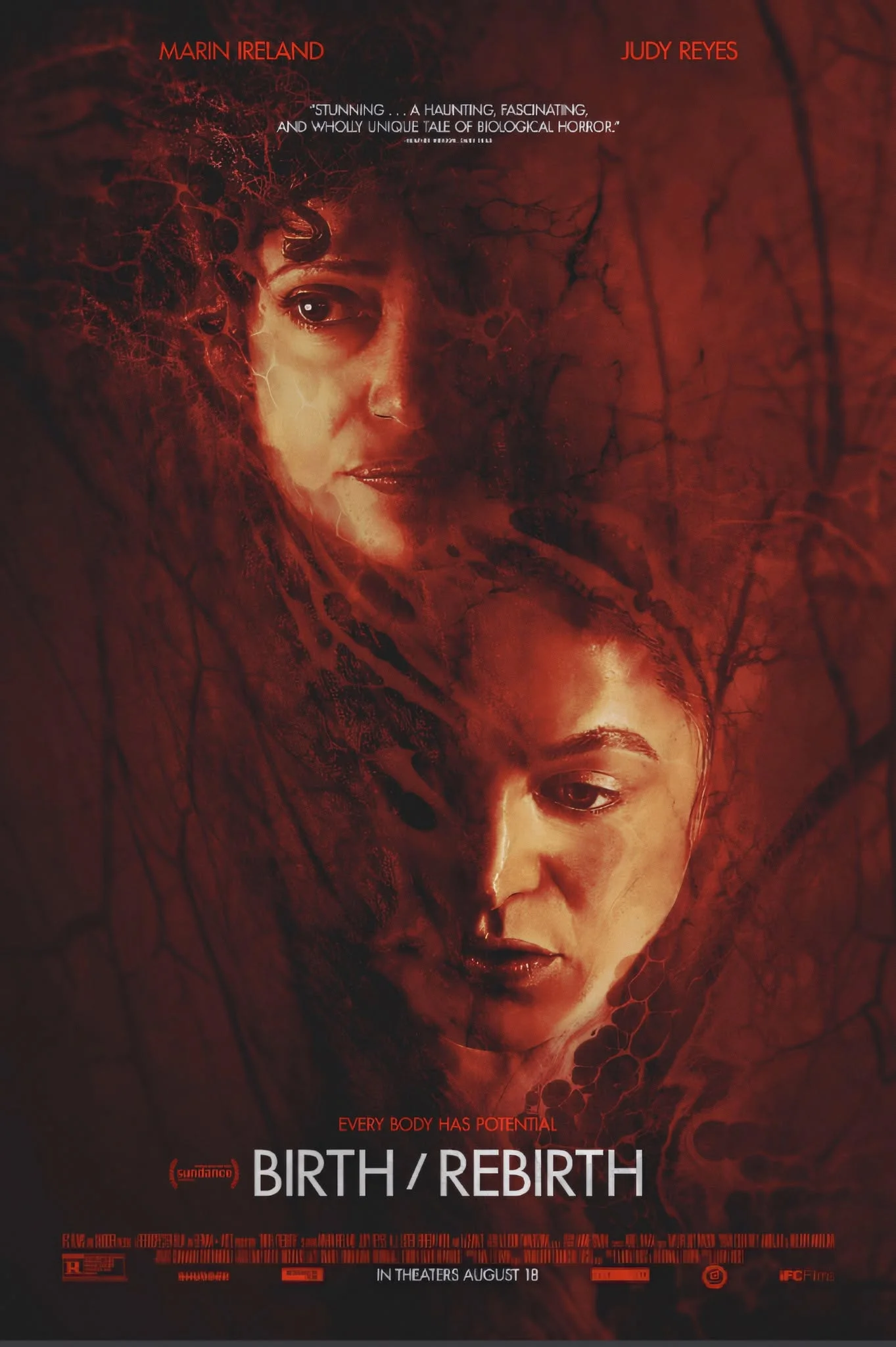
Analytická studie nezávislého hororu Laury Moss zkoumající reanimaci jako technický proces, klinickou kameru a dekonstrukci mateřského pudu.
An analytical study of Laura Moss's independent horror exploring reanimation as a technical process, clinical framing, and the deconstruction of maternal instinct.
Tato studie dekonstruuje prestižní nezávislý horor Birth/Rebirth (2023, stopáž 94 minut) jako radikální redefinici mýtu o vzkříšení. Snímek analyzuje střet dvou žen – patoložky Rose, která ve svém bytě vyvíjí sérum pro oživení mrtvé tkáně, a zdravotní sestry Celie, jejíž dcera náhle zemře a stane se subjektem Roseina experimentu.
Metodologicky se text zaměřuje na klinickou, aseptickou kameru, která zbavuje akt oživení veškeré mystiky, a na etické vakuum, v němž se mateřská láska mění v parazitický mechanismus. Film ukazuje vzkříšení nikoliv jako zázrak, ale jako neustálý, krvavý a morálně neudržitelný údržbový proces.
I. Klinická horizontála a vzkříšení bez Boha
Film se zcela vyhýbá gotickým hradům i bleskům. Roseina „laboratoř“ je sterilní moderní byt. Režisérka Laura Moss zde buduje klinickou horizontálu.
Vzkříšení mrtvé holčičky Lily je prezentováno jako řada biochemických kroků: extrakce látek, monitorování buněčné regenerace a neustálé doplňování biologického materiálu. Tato věcnost je mnohem děsivější než nadpřirozené síly, protože naznačuje, že život je jen složitý technický problém. V tomto světě není prostor pro duši; tělo je vnímáno jako stroj, který lze při dostatečné míře bezohlednosti znovu nahodit.
II. Symbióza patologie a mateřství
Snímek staví do kontrastu dvě formy ženské obsese. Rose reprezentuje chladný, vědecký autismus – vzkříšení je pro ni intelektuální výzvou. Celia (Judy Reyes) reprezentuje pudovou, mateřskou lásku, která se odmítá smířit se ztrátou.
Jejich spojenectví je nejděsivějším prvkem filmu. Aby udržely oživené dítě při životě, musí obě ženy překračovat ty nejzákladnější etické hranice. Mateřská láska je zde dekonstruována jako síla, která je schopna ospravedlnit jakékoliv zvěrstvo. Znovuzrození dítěte není aktem milosrdenství, ale aktem sobeckého vzdoru proti přirozenému řádu.
III. Somatický horor a údržba masa
Na rozdíl od zombie filmů zde vzkříšená bytost není agresivním monstrem. Malá Lila je apatická, křehká a zcela závislá na neustálém přísunu „paliva“ z tkání živých dárců (včetně Roseina vlastního těla).
Snímek využívá somatický horor – detailní záběry na jehly, extrakce a biologický odpad evokují v divákovi pocit fyzické nevolnosti. Tato verze vzkříšení není jednorázový akt, ale permanentní, vyčerpávající bitva proti entropii. Život, který byl vrácen, je neustále na hraně rozkladu, což vytváří nesnesitelnou tenzi.
IV. Závěr: Cena za zázrak a nekonečný cyklus
Finále filmu nepřináší žádné očištění ani morální ponaučení. Postavy se propadají do spirály, z níž není úniku. Aby „zázrak“ vzkříšení pokračoval, musí být přinášeny stále větší oběti.
Birth/Rebirth končí vizí totálního morálního rozpadu ve jménu zachování biologického života. Snímek přetváří mýtus o vzkříšení v mrazivé varování: život bez smrti není vítězstvím, ale věčným vězením, za které platíme ztrátou vlastní lidskosti.
Slovníček pojmů a bibliografie
- Klinická horizontála: Vizuální a narativní stylizace redukující existenciální a duchovní otázky na chladnou biochemickou rovinu.
- Aseptická reanimace: Proces oživení tkáně zbavený jakéhokoliv náboženského či mystického rozměru, nahlížený čistě jako technická údržba.
- Somatický horor: Forma tělesného děsu zaměřená na invazivní lékařské zákroky, jehly, odběry tkání a biologické selhávání organismu.
- Etické vakuum: Stav, kdy je absolutní morální hranice zrušena ve jménu obcházení přirozené smrti a uspokojení mateřského pudu.
Bibliografie (Chicago Style):
- Kermode, Mark. “Birth/Rebirth Review – A Chilling Modern Frankenstein.” The Observer, 2023.
- Moss, Laura. Birth/Rebirth: Director’s Statement and Interview. New York: IFC Films, 2023.
- Shelley, Mary. Frankenstein; or, The Modern Prometheus. London: Lackington, Hughes, Harding, Mavor & Jones, 1818.
- Zimmerman, Samuel. “The Clinical Gaze: Anatomy and Resurrection in Modern Cinema.” Fangoria, 2023.
This study deconstructs the prestigious independent horror Birth/Rebirth (2023, running time 94 minutes) as a radical and highly serious redefinition of the resurrection myth. The film analyzes the clash between two women: Rose, a pathologist developing a serum to revive dead tissue in her apartment, and Celie, a nurse whose daughter suddenly dies and becomes the subject of Rose’s experiment.
Methodologically, the text focuses on the clinical, aseptic cinematography that strips the act of revival of all mysticism, and on the ethical vacuum in which maternal love transforms into a parasitic mechanism. The film portrays resurrection not as a miracle, but as a continuous, bloody, and morally unsustainable maintenance process.
I. The Clinical Horizontal and Resurrection Without God
The film avoids gothic castles and lightning entirely. Rose’s “laboratory” is a sterile modern apartment. Director Laura Moss builds a clinical horizontal here.
The resurrection of the little girl Lila is presented as a series of biochemical steps: substance extraction, monitoring cell regeneration, and constant replenishment of biological material. This matter-of-factness is far more terrifying than supernatural forces because it suggests that life is merely a complex technical problem. In this world, there is no room for the soul; the body is viewed as a machine that can be rebooted with sufficient ruthlessness.
II. The Symbiosis of Pathology and Motherhood
The film contrasts two forms of female obsession. Rose represents cold, scientific detachment—resurrection is an intellectual challenge for her. Celie (Judy Reyes) represents instinctive maternal love that refuses to accept loss.
Their alliance is the film’s most unsettling element. To keep the revived child alive, both women must cross the most fundamental ethical boundaries. Maternal love is deconstructed here as a force capable of justifying any atrocity. The rebirth of the child is not an act of mercy, but an act of selfish defiance against the natural order.
III. Somatic Horror and the Maintenance of Flesh
Unlike zombie films, the resurrected being here is not an aggressive monster. Little Lila is apathetic, fragile, and entirely dependent on a constant supply of “fuel” from living donor tissues (including Rose’s own body).
The film utilizes somatic horror—close-ups of needles, extractions, and biological waste evoke a sense of physical nausea in the viewer. This version of resurrection is not a one-time act (as in the Bible) but a permanent, grueling battle against entropy. The life that was returned is constantly on the brink of decay, creating an unbearable tension.
IV. Conclusion: The Price of a Miracle and the Infinite Cycle
The film’s finale brings no cleansing or moral lesson. The characters fall into a downward spiral from which there is no escape. For the “miracle” of resurrection to continue, ever greater sacrifices must be made.
Birth/Rebirth ends with a vision of total moral collapse in the name of preserving biological life. The Sunday resurrection is depicted here as the ultimate curse. The film thus concludes Easter theme with a chilling message: life without death is not a victory, but an eternal, rotting prison for which we pay with our humanity.
Glossary and Bibliography
- Clinical Horizontal: Visual and narrative framing that reduces existential and spiritual questions to a cold, biochemical level.
- Aseptic Reanimation: The process of reviving tissue stripped of religious or mystical dimensions, viewed purely as technical maintenance.
- Somatic Horror: A subgenre focused on invasive medical procedures, needles, tissue extractions, and the biological failure of the organism.
- Ethical Vacuum: A state where moral boundaries are completely erased to bypass natural death and satisfy maternal instinct.
Bibliography (Chicago Style):
- Shelley, Mary. Frankenstein; or, The Modern Prometheus. London: Lackington, Hughes, Harding, Mavor & Jones, 1818.
- Moss, Laura. Birth/Rebirth: Director’s Statement and Interview. New York: IFC Films, 2023.
- Kermode, Mark. “Birth/Rebirth Review – A Chilling Modern Frankenstein.” The Observer, 2023.
- Zimmerman, Samuel. “The Clinical Gaze: Anatomy and Resurrection in Modern Cinema.” Fangoria, 2023.