Zloději kol (Ladri di biciclette, 1948): Křížová cesta v prachu ulice
Bicycle Thieves (1948): Stations of the Cross in the Dust of the Street
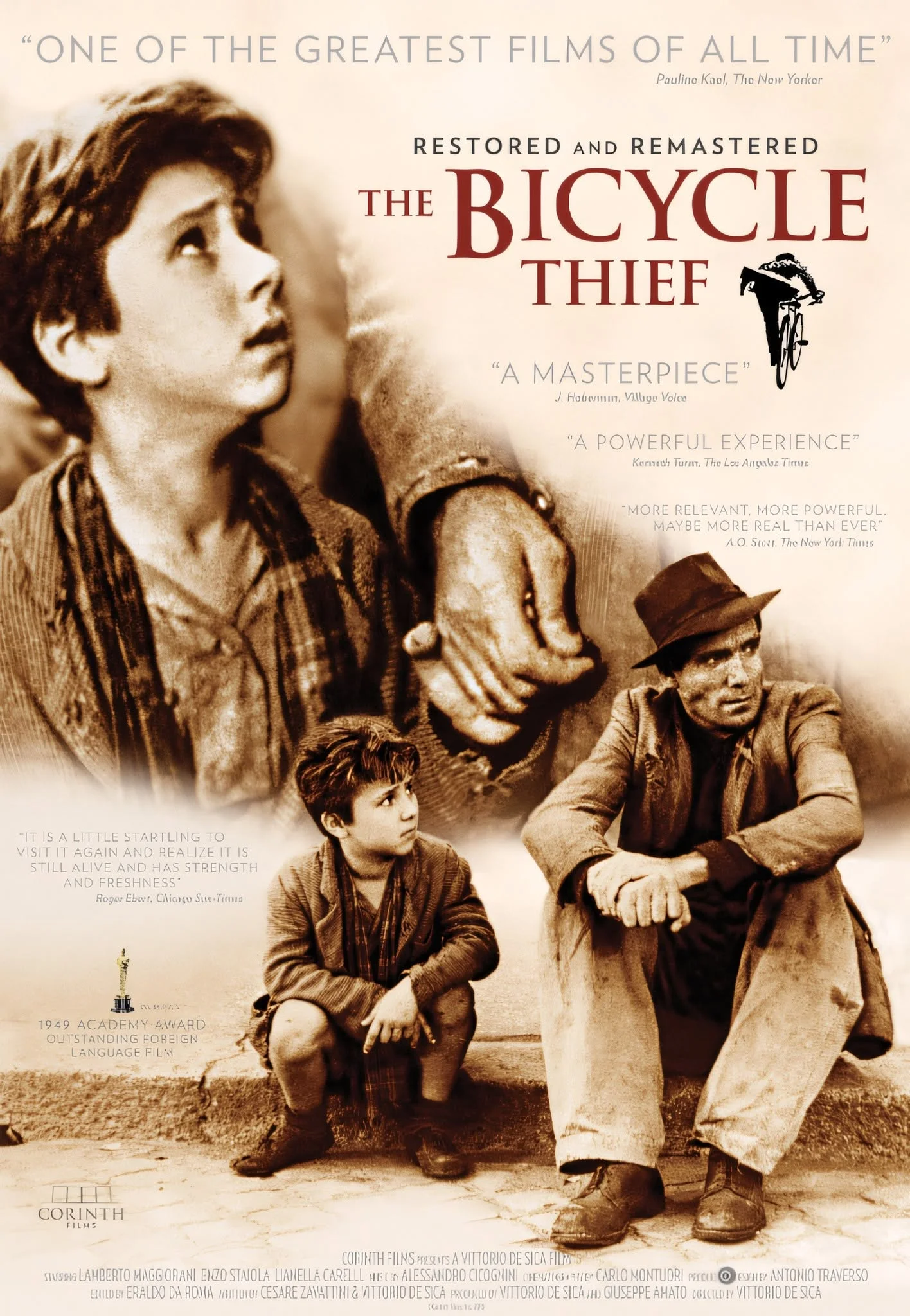
Analytická studie pilíře italského neorealismu zkoumající estetiku ulice, čistou horizontálu existence a cykličnost viny.
An analytical study of the pillar of Italian Neorealism exploring street aesthetics, the pure horizontal of existence, and the cyclical nature of guilt.
Tato studie dekonstruuje pilíř italského neorealismu Zloději kol (Ladri di biciclette, 1948, stopáž 89 minut) jako radikální sociální drama, které rezignuje na studiovou stylizaci ve prospěch syrové pravdy ulice. Snímek analyzuje tragédii dělníka Antonia, jemuž ukradené kolo – jediný prostředek k obživě – spouští řetězec zoufalství v poválečném Římě.
Metodologicky se text zaměřuje na práci s neherci, „mrtvé časy“ v narativu a morální ambivalenci viny. Film ukazuje, že v systému totálního nedostatku se horizontála přežití mění v drtivý mechanismus, který oběť nutí stát se viníkem.
I. Estetika ulice a horizontála nouze
Vizuální identita filmu je definována totálním splynutím s realitou. Kamera se pohybuje v autentických exteriérech trosek poválečného Říma. Neexistuje zde žádná „vznešená“ vertikála – nebe je lhostejné a církev je v jedné z klíčových scén ukázána jako instituce, která sice sytí těla, ale nevnímá tragédii jednotlivce.
Vše se odehrává v horizontální rovině ulice, trhu a špinavých nároží. Kolo zde není jen předmět; je to ontologická podmínka existence, bez které postava přestává být ekonomicky i lidsky funkční.
II. Otec a syn: Zrcadlení nevinnosti a selhání
Vztah Antonia (Lamberto Maggiorani) a jeho malého syna Bruna (Enzo Staiola) je emocionálním jádrem filmu. Bruno funguje jako svědek otcovy křížové cesty. V jeho dětských očích se odráží otcova proměna z ochránce v zoufalého a zlomeného muže.
De Sica mistrovsky využívá přítomnost dítěte k tomu, aby zdůraznil váhu každého rozhodnutí. Horizontála přežití se zde střetává s morální zodpovědností – otec se snaží zachovat si tvář před synem, zatímco ho drtí neúprosná realita.
III. Cykličnost viny a absence katarze
Snímek odmítá tradiční hollywoodské vykoupení. Antonio, dohnaný k šílenství, se sám pokusí ukrást kolo a je dopaden. V ten moment se horizontála uzavírá do kruhu – oběť se stala tím, čím opovrhovala.
Skutečnost, že není zatčen (díky synově přítomnosti), není happy endem, ale prohloubením jeho ponížení. Jedinou zbývající hodnotou je Brunova ruka v dlani zlomeného otce. Tato gestická tečka je jediným průsečíkem lidskosti v jinak chladném světě.
IV. Závěr: Zmizení v davu
Závěrečný záběr, kdy Antonio a Bruno splývají s anonymním davem na ulici, je definicí neorealistické filozofie. Jejich tragédie není výjimečná; je to jedna z tisíců podobných cest v téže horizontále.
Zloději kol ukazují, že největší dramata se neodehrávají v palácích nebo v kosmických lodích, ale v momentě, kdy se poctivý člověk musí rozhodnout mezi hladem a ctí.
Slovníček pojmů a bibliografie
- Estetika ulice a horizontála nouze: Neorealistický koncept natáčení v reálných exteriérech, redukující existenci na fyzický boj o přežití bez transcendentální spásy.
- Mrtvé časy v narativu: Narativní pauzy zachycující všední okamžiky a mikrodramata bez přímého vlivu na kauzální posun zápletky.
- Cykličnost viny: Psychologický a sociální mechanizmus, v němž systémový nedostatek vmanipuluje oběť do role pachatele.
- Zmizení v davu: Závěrečná dekonstrukce individuálního hrdinství, ukazující tragédii jednotlivce jako univerzální zkušenost celého společenství.
Bibliografie (Chicago Style):
- Bazin, André. What is Cinema? Vol. 2. Berkeley: University of California Press, 1971.
- De Sica, Vittorio. Bicycle Thieves (Screenplay). New York: Lorrimer, 1968.
- Wagstaff, Christopher. Italian Neorealist Cinema: An Aesthetic Approach. Toronto: University of Toronto Press, 2007.
This study deconstructs the pillar of Italian Neorealism, Bicycle Thieves (Ladri di biciclette, 1948, running time 89 minutes), as a radical social drama that renounces studio stylization in favor of the raw truth of the street. The film analyzes the tragedy of a worker named Antonio, whose stolen bicycle—his only means of livelihood—triggers a chain of despair in post-war Rome.
Methodologically, the text focuses on the use of non-professional actors, “dead time” in the narrative, and the moral ambivalence of guilt. The film demonstrates that in a system of total scarcity, the horizontal of survival transforms into a crushing mechanism that forces the victim to become the perpetrator.
I. Street Aesthetics and the Horizontal of Necessity
The film’s visual identity is defined by a total merging with reality. The camera moves through authentic exteriors of ruined post-war Rome. No “exalted” verticality exists here—the heavens are indifferent, and the Church is depicted in a key scene as an institution that feeds bodies but ignores individual tragedy.
Everything unfolds on the horizontal plane of the street, the market, and dirty corners. The bicycle is not merely an object; it is an ontological condition of existence, without which the character ceases to be economically or humanly functional.
II. Father and Son: Mirroring Innocence and Failure
The relationship between Antonio (Lamberto Maggiorani) and his young son Bruno (Enzo Staiola) is the film’s emotional core. Bruno serves as the witness to his father’s “Stations of the Cross.” In his child’s eyes, the father’s transformation from protector to a desperate, broken man is reflected.
De Sica masterfully uses the child’s presence to emphasize the weight of every decision. The horizontal of survival clashes with moral responsibility—the father tries to save face before his son while being crushed by relentless reality.
III. The Cyclical Nature of Guilt and the Absence of Catharsis
The film rejects traditional Hollywood redemption. Antonio, driven to madness, attempts to steal a bicycle himself and is caught. At that moment, the horizontal closes into a circle—the victim has become what he despised.
The fact that he is not arrested (thanks to his son’s presence) is not a happy ending, but a deepening of his humiliation. The only remaining value is Bruno’s hand in his broken father’s palm. This gestural period is the only intersection of humanity in an otherwise cold world.
IV. Conclusion: Disappearing into the Crowd
The final shot, where Antonio and Bruno merge with the anonymous crowd on the street, defines neorealist philosophy. Their tragedy is not exceptional; it is one of thousands of similar journeys on the same horizontal plane.
Bicycle Thieves demonstrates that the greatest dramas do not occur in palaces or spacecraft, but in the moment an honest man must choose between hunger and honor.
Glossary and Bibliography
- Street Aesthetics and the Horizontal of Necessity: Neorealist visual technique using real locations to reduce existence to physical survival without transcendental salvation.
- Dead Time in Narrative: Storytelling pauses capturing mundane everyday moments and micro-dramas outside the main plot causality.
- Cyclical Nature of Guilt: Psychological and social mechanism where systemic scarcity forces the victim into becoming a perpetrator.
- Disappearing into the Crowd: Final subversion of individual heroics, framing personal tragedy as a universal experience shared by the masses.
Bibliography (Chicago Style):
- Bazin, André. What is Cinema? Vol. 2. Berkeley: University of California Press, 1971.
- De Sica, Vittorio. Bicycle Thieves (Screenplay). New York: Lorrimer, 1968.
- Wagstaff, Christopher. Italian Neorealist Cinema: An Aesthetic Approach. Toronto: University of Toronto Press, 2007.