Suspiria (1977 & 2018): Estetická past, geometrie hrůzy a historická vina
Two Faces of Darkness: Suspiria as an Aesthetic Trap and Historical Decay
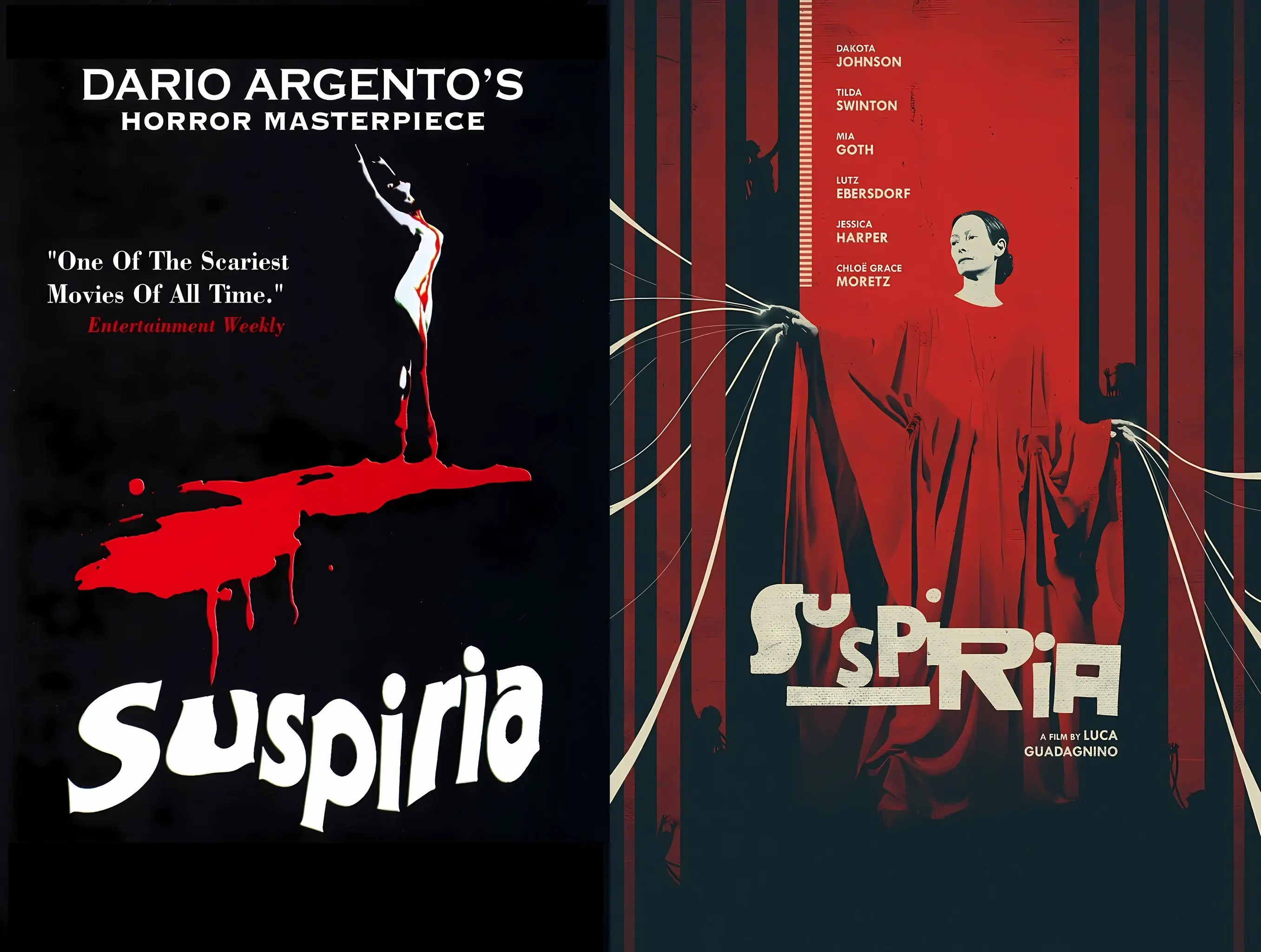
Srovnávací analytická studie dvou verzí kultovního hororu Suspiria od Daria Argenta a Lucy Guadagnina zkoumající technicolorový teror, matriarchát a trauma Německého podzimu.
An essayistic comparative study of the two versions of Suspiria (1977 and 2018) by Dario Argento and Luca Guadagnino.
Většina filmových remaků představuje pouhou komerční reprodukci prověřeného originálu. Umělecká konfrontace původní Suspirie Daria Argenta (1977, stopáž 98 minut) a její radikální reinterpretace v režii Lucy Guadagnina (2018, stopáž 152 minut) však tvoří jeden z nejvíce fascinujících dialogů v dějinách kinematografie.
Oba italští tvůrci vycházejí ze stejné základní žánrové premisy inspirované esejem Thomase De Quinceyho Suspiria de Profundis – příchodu mladé americké baletky Susie Bannionové do prestižní taneční akademie v německém Freiburgu respektive v rozděleném Berlíně, která je tajným sídlem starodávného čarodějnického sabatu Matky Markose. Z této premisy však vybudovali dva diametrálně odlišné estetické i filozofické světy: Argentův film funguje jako čistá, senzoricky agresivní estetická past a pohádka zla, zatímco Guadagninovo dílo představuje tělesný, politický a historický sestup do kolektivní viny Německa pozdních sedmdesátých let.
I. Útok na smysly versus zranitelnost masa: Vizuální systémy
Formální koncepce obou verzí útočí na diváka zcela protikladnými prostředky[cite: 109]:
- Argento (1977) – Technicolorový neon a primární agrese: Původní film rezignuje na jakýkoliv realismus[cite: 109]. Kameraman Luciano Tovoli použil zastaralý třípásový proces Technicolor s technikou dye-transfer, aby dosáhl extrémně přesycené, halucinační barevnosti[cite: 109]. Plátno je zaléváno křiklavou karmínovou, kobaltově modrou a smaragdově zelenou barvou[cite: 109]. Secesní architektura akademie Tanz Akademie s escherovskými geometrickými vzory funguje jako past na lidské oko[cite: 109]. Spolu s agresivními syntezátory a šepoty skupiny Goblin tvoří film ryzí senzorický útok, kde hrůza nevyplývá ze sociálního kontextu, nýbrž z tyranské moci čisté formy[cite: 109].
- Guadagnino (2018) – Šeď rozděleného Berlína a tělesná brutalita: Remake křiklavý neon vědomě zahazuje[cite: 109]. Kameraman Sayombhu Mukdeeprom volí tlumenou, zemitou paletu šedých, hnědých a vybledlých tónů[cite: 109]. Děj je přesazen do Berlína roku 1977, přímo k patě betonové Berlínské zdi za zvuku melancholické hudby Thoma Yorkea[cite: 109]. Tanec zde není elegantním baletem; je to divoký, fyzicky vyčerpávající a krvavý rituál současného tance v choreografii Damiena Jaleta, v němž pohyb těla přímo láme kosti a drásá vnitřnosti obětí v sousední zrcadlové místnosti[cite: 109].
II. Anatomie moci: Prastará metafyzika versus politická vina a matriarchát
Zásadní rozkol mezi oběma filmy leží ve způsobu definování zla uvnitř instituce[cite: 109]:
- Argentovská kosmická fatalita: V roce 1977 je čarodějnický sabat v čele s Helenou Markosovou zobrazen jako abstraktní, mytické a iracionální zlo[cite: 109]. Akademie funguje jako hermetický labyrint bez kontaktu s vnější politikou[cite: 109]. Zlu nelze porozumět ani s ním vyjednávat; Susie (Jessica Harperová) jej musí v pohádkovém finále zničit probodnutím pavího pera, načež celá stavba shoří a zhroutí se[cite: 109].
- Guadagninovská historická paměť a Německý podzim: V roce 2018 se akademie stává přímým zrcadlem vnějšího politického teroru[cite: 109]. Děj probíhá na pozadí únosu letadla Landshut a řádění Frakce Rudé armády (RAF) během tzv. Německého podzimu[cite: 109]. Postava starého psychoanalytika Josefa Klemperera (ztvárněného Tildou Swintonovou v těžkém maskérském převleku) ztělesňuje trauma holocaustu – neschopnost německé společnosti postavit se vlastní vině a tichému přihlížení nacistickým zločinům[cite: 109]. Čarodějnice zde představují uzavřený matriarchální aparát zápasící o vnitřní moc mezi starou, hnijící autoritou Markosové a reformní vůlí madam Blancové[cite: 109].
III. Susie Bannionová: Od nevinné oběti k inkarnaci Matky Suspiriorum
Zatímco Argentova Susie zůstává klasickou „final girl“ prchající z hořícího domu, Guadagnino provádí radikální mýtotvorný zvrat:
- Falešná oběť: Susie (Dakota Johnsonová) nepřichází do Berlína jako bezbranná dívka z amišské rodiny z Ohia, aby byla obětována.
- Krvavé zjevení: V závěrečné krvavé orgii sabatu odhaluje svou pravou identitu: není pouhou tanečnicí, nýbrž samotnou reinkarnací Matky Suspiriorum (Matky vzdechů). Nepřichází sloužit staré hierarchii, ale zničit dekadentní kult Markosové a nastolit nový řád soucitu a smrti.
IV. Závěr: Dvě cesty do hlubin moderního hororu
Oba filmy společně tvoří neobyčejně plodný analytický celek[cite: 109]:
- Estetika vs. Dějiny: Dario Argento dokázal, že filmový horor může fungovat jako ryzí, audiovizuální opera překračující hranice racionálního myšlení skrze barevný a zvukový exces[cite: 109]. Luca Guadagnino naopak prokázal, že žánrové schéma lze využít k hluboké psychoanalytické a politické reflexi národní identity, tělesnosti a historického traumatu[cite: 109].
- Odkaz: Obě podoby Suspirie ukazují, že uzavřená umělecká instituce je dokonalou laboratoří útlaku – ať už se zlo projevuje jako jedovatá barva na stěně, nebo jako neodpustitelná vina vepsaná do paměti národa[cite: 109].
Slovníček pojmů a bibliografie
- Dye-Transfer proces Technicoloru: Nákladná laboratorní technologie tisku barevných filmových kopií pomocí třech barevných matric, umožňující dosažení mimořádně sytých, trvanlivých a kontrastních primárních barev[cite: 109].
- Německý podzim (Deutscher Herbst, 1977): Období politické krize a teroristických útoků krajně levicové Frakce Rudé armády (RAF) v Západním Německu na podzim roku 1977.
- Tři matky (Le Tre Madri): Okultní mytologický koncept Thomase De Quinceyho rozvinutý Dariem Argentem, popisující trojici mocných čarodějnic: Mater Suspiriorum (Matka vzdechů), Mater Tenebrarum (Matka temnot) a Mater Lachrymarum (Matka slz).
Bibliografie (Chicago Style):
- Argento, Dario, dir. Suspiria (Motion Picture). Roma: Seda Spettacoli, 1977.
- De Quincey, Thomas. Suspiria de Profundis. London: Blackwood’s Magazine, 1845.
- Guadagnino, Luca, dir. Suspiria (Motion Picture). Los Angeles: Amazon Studios / Frenesy Film Company, 2018.
- McDonagh, Maitland. Broken Mirrors, Broken Minds: The Dark Dreams of Dario Argento. Minneapolis: University of Minnesota Press, 2010.
- Wagstaff, Christopher. Italian Neorealist Cinema: An Aesthetic Approach. Toronto: University of Toronto Press, 2007.
Most remakes lazily copy the original. The encounter between Dario Argento’s 1977 film and Luca Guadagnino’s 2018 reinterpretation is a rare exception. Both auteurs took the exact same premise—a young American at a German ballet academy run by witches—and forged two completely different worlds.
When we place both versions side by side, a fascinating contrast emerges. We see how cinematic horror can mutate from pure visual terror into a chilling exploration of collective guilt.
1. Sensory Assault vs. Bodily Vulnerability
The formal execution of both films isn’t just an aesthetic choice; it represents two entirely different methods of attacking the audience.
Argento (1977) – Form and Chaos as a Weapon: The original film completely rejects realism. Through the exceptionally saturated palette of Technicolor dye-transfer prints, it screams with aggressive primary colors—blood red, deep blue, and toxic green. The Art Nouveau architecture of the academy isn’t just a backdrop; it’s a geometric trap. This sense of alienation is further amplified by deliberate linguistic chaos, as the system disorients the victim through an impenetrable mix of English, Italian, German, Latin, Greek, and Russian. Combined with the synthetic strikes and whispers of Goblin’s iconic score, the film creates a nearly physical assault on the viewer’s nervous system. The horror here doesn’t stem from the narrative, but from pure form.
Guadagnino (2018) – Industrial Grime: The remake throws away the neon. It drags us back to the divided Berlin of 1977, an era of terrorism and paranoia. The screen turns grey and dim. Dance is no longer a graceful art; it becomes a brutal, exhausting ritual. The choreography breaks bones and tears muscles—the body is physically injured to serve as an instrument of power, all set to Thom Yorke’s melancholic score.
2. The Anatomy of Power: Fatal Evil vs. Political Guilt
The greatest chasm between the two films doesn’t lie in their visuals, but in how they define the internal system of the academy.
Argento – Cosmic Inevitability: In the original, the coven operates as an abstract, ancient evil. There are no politics here. The academy is simply a labyrinth where the individual loses all weight. You cannot resist or negotiate with this evil—you can only experience it in sheer terror. It is pure fatality.
Guadagnino – Matriarchal Tyranny: The new Suspiria, by contrast, transforms the school into a hierarchical system that mirrors the outside world. The academy is eaten alive by power struggles and forced obedience. Crucial to this is the character of psychoanalyst Dr. Klemperer, who symbolizes Germany’s historical trauma—the silence and the turning of a blind eye to the Nazi past. The horror here doesn’t stem from spells, but from complicity. From how the system forces individuals to participate in evil and surrender their free will.
Conclusion: Two Paths to the Same End
Together, these films form a brilliant analytical pair. Argento presents the system as form—a ruthless aesthetic nightmare where the threat is irrational. Guadagnino reveals it as history—a web of manipulation, politics, and bodily control. Yet, both paths lead to the same terrifying realization: a closed institution is always the most perfect laboratory for the destruction of the individual.