Paříž, Texas (Paris, Texas, 1984): Krajina osamění a anatomie ztráty
Paris, Texas (1984): The Landscape of Loneliness and the Anatomy of Loss
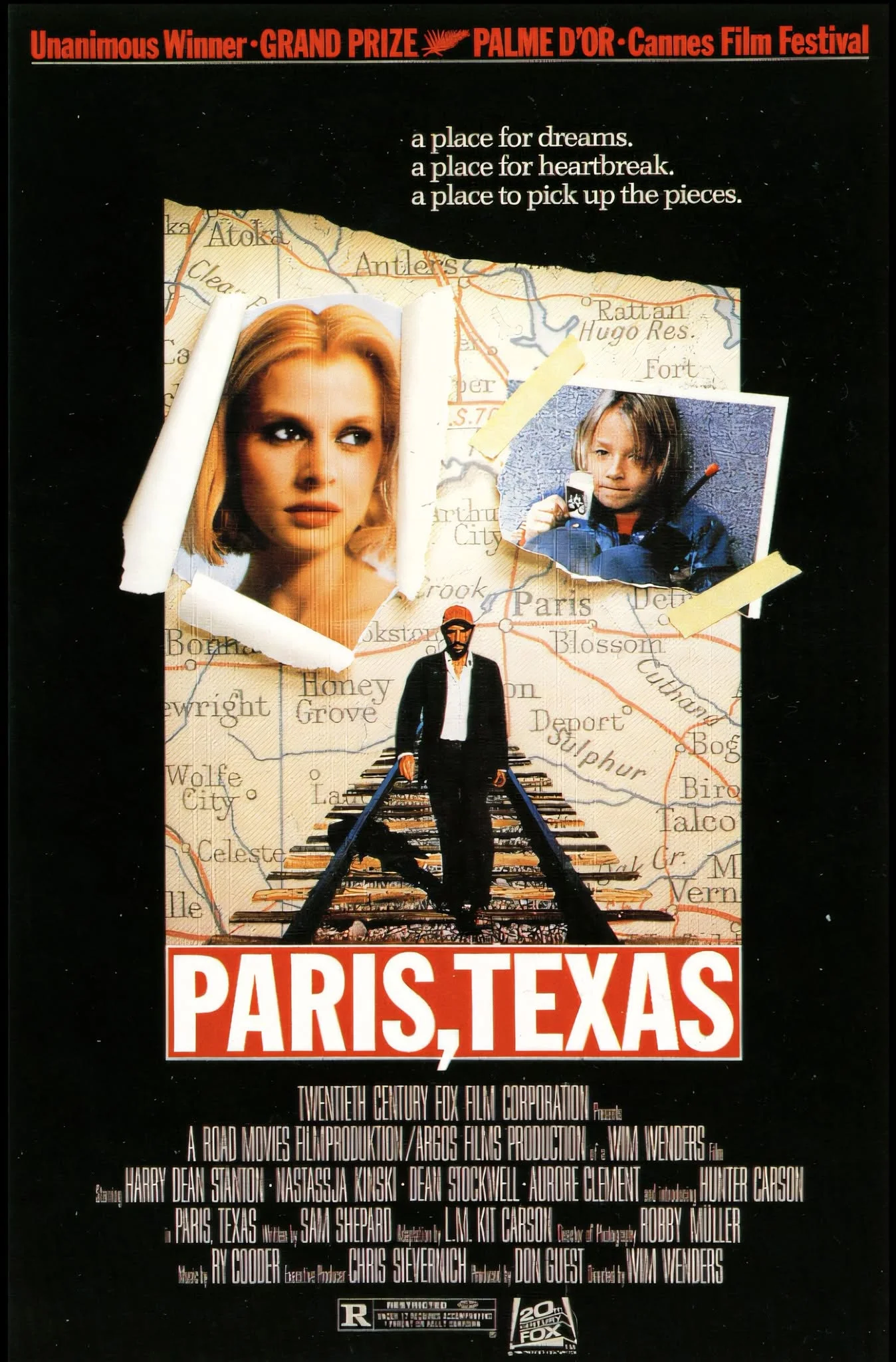
Analytická studie kultovní road movie Wima Wenderse zkoumající lidskou izolaci, poušť jako existenciální očistec, barevnou kameru Robbyho Müllera a zpověď za polopropustným zrcadlem.
An analytical study of Wim Wenders' iconic road movie exploring human isolation, the desert as purgatory, and confession behind a one-way mirror.
Melancholická existenciální road movie německého režiséra Wima Wenderse Paříž, Texas (Paris, Texas, 1984, stopáž 145 minut), oceněná Zlatou palmou na festivalu v Cannes, představuje jeden z vrcholů moderního autorského filmu. Snímek, natočený podle scénáře amerického dramatika Sama Sheparda za hudebního doprovodu kytaristy Ry Coodera, dekonstruuje americký mýtus o neomezené svobodě otevřené dálnice.
Wenders neoslavuje pohyb prostorem; analyzuje jej jako symptom hlubokého vnitřního traumatu, rozpadu paměti a neschopnosti unést tíhu vlastní identity a rodinné odpovědnosti.
I. Poušť jako existenciální očistec a vymazání subjektu
Příběh otevírá monumentální pohled na nehostinnou, vyprahlou krajinu texaského Big Bendu[cite: 133]:
- Tělo v mechanickém pohybu: Travis Henderson (Harry Dean Stanton) kráčí pouští v zaprášeném obleku a červené kšiltovce, s plastovým kanystrem na vodu[cite: 133]. Nepromlouvá; jeho němotu nelze vysvětlit pouhou dehydratací, nýbrž radikálním psychickým vymazáním vlastního já[cite: 133]. Poušť nefunguje jako geografická lokace, nýbrž jako vnitřní prostor absolutní prázdnoty a zapomnění[cite: 133]. Travis se pokusil zrušit svou existenci tím, že splyne s anorganickou přírodou[cite: 133].
- Kamera Robbyho Müllera: Kameraman Robby Müller rámuje osamělou lidskou postavu proti obrovskému horizontu. Barvy nejsou naturalistické – sytá modř nebe, žlutý prach a křiklavá červeň vytvářejí vizuální čistotu, v níž každá stopa civilizace (opuštěná železniční trať, billboard) působí jako cizorodý relikt[cite: 133].
II. Návrat jazyka a rekonstrukce otcovské role
Travisův návrat do civilizovaného světa s pomocí loajálního bratra Walta (Dean Stockwell) probíhá jako bolestný proces znovunabývání lidství[cite: 133]:
- Paměť na fotografii: Jediným záchytným bodem Travisovy identity je zmačkaná fotografie prázdné parcely v texaském městečku Paris – místě, kde byl podle rodinné legendy počat a které si koupil jako iluzorní budoucí domov.
- Obnova vztahu se synem: Setkání s osmiletým synem Hunterem v Los Angeles nutí Travise opustit bezpečí solipsistické izolace[cite: 133]. Rekonstrukce jejich vztahu se odehrává beze slov, skrze gesta – napodobování chůze přes ulici, společné sledování starých rodinných 8mm filmů a následnou pouť autem napříč Texasem[cite: 133]. Pohyb vpřed se mění z bezcílného bloudění v cílevědomé hledání ztracené matky[cite: 133].
III. Peep-show kabinka: Zpověď za polopropustným zrcadlem
Katarzní vyvrcholení filmu v nevěstinci v Houstonu patří k nejintenzivnějším psychologickým scénám v dějinách kinematografie[cite: 133]:
- Architektura odcizení: Setkání Travise s bývalou ženou Jane (Nastassja Kinski) je zarámováno do přísného prostoru peep-show kabinky[cite: 133]. Mezi oběma postavami stojí polopropustné zrcadlo – Jane vidí pouze svůj vlastní odraz v prudkém světle, zatímco Travis ji pozoruje z temnoty a komunikuje skrze telefonní sluchátko[cite: 133]. Intimita je trvale mechanizována a odcizena[cite: 133].
- Monolog bez očního kontaktu: Teprve v momentě, kdy se Travis otočí k zrcadlu zády a zruší iluzi vizuálního kontaktu, dokáže promluvit[cite: 133]. Jeho dlouhý, monotónní monolog je chirurgicky přesnou anatomií toxické posedlosti, majetnické žárlivosti, alkoholismu a domácího násilí, které kdysi jejich rodinu zničily[cite: 133]. Zrcadlo se stává místem pravdivé zpovědi, kde se iluze rozpadají na prach[cite: 133].
IV. Závěr: Nezištná oběť a odchod do neonové noci
Wenders a Shepard radikálně odmítají konvenční hollywoodský happy end[cite: 133]:
- Sjednocení bez přítomnosti otce: Travis zařídí setkání Jane s malým Hunterem v hotelovém pokoji. Pozoruje z parkoviště jejich objetí za oknem, avšak odmítá do jejich nového života vstoupit[cite: 133]. Uvědomuje si, že jeho přítomnost by staré rány pouze znovu otevřela[cite: 133].
- Dálnice jako osud: Závěrečný záběr sleduje Travise odjíždějícího v jeho starém voze do temné noci ozářené zelenými a rudými neony městských dálnic[cite: 133]. Jeho odchod není zbabělým útěkem, nýbrž aktem nejvyšší, očišťující oběti – přijetím faktu, že skutečná láska někdy vyžaduje vlastní definitivní zmizení[cite: 133].
Slovníček pojmů a bibliografie
- Polopropustné zrcadlo (One-way Mirror): Optický a scénografický prvek umožňující jednosměrný pohled z temnoty do osvětlené místnosti, fungující jako metafora nemožnosti bezprostředního kontaktu a manipulace pohledem[cite: 133].
- Existenciální road movie: Filmový subžánr, v němž fyzická cesta krajinou neslouží k dosažení geografického cíle, nýbrž k vnitřnímu sebepoznání a konfrontaci s vlastním traumatem[cite: 133].
- Slide kytara Ry Coodera: Specifický hudební doprovod založený na osamělých tónech akustické kytary, zrcadlící rozlehlost americké pouště a melancholii hrdinova nitra[cite: 133].
Bibliografie (Chicago Style):
- Geist, Kathe. The Cinema of Wim Wenders: From Paris, France to Paris, Texas. Ann Arbor: UMI Research Press, 1988[cite: 133].
- Kolker, Robert Phillip, and Peter Beicken. The Films of Wim Wenders: Cinema as Vision and Desire. Cambridge: Cambridge University Press, 1993[cite: 133].
- Shepard, Sam. Motel Chronicles. San Francisco: City Lights Books, 1982.
- Wenders, Wim, dir. Paris, Texas (Motion Picture). Berlin: Road Movies / Argos Films, 1984.
- Wenders, Wim. Emotion Pictures: Reflections on the Cinema. London: Faber and Faber, 1989[cite: 133].
This study deconstructs Wim Wenders’ melancholic road movie Paris, Texas (1984, running time 145 minutes) as an existential exploration of human isolation, the disintegration of memory, and the effort to find forgiveness. The film analyzes the journey of Travis Henderson, a man who emerges from the desert stripped of language and his past, attempting to mend broken ties with his son and former wife.
Methodologically, the text focuses on the visual compositions of cinematographer Robby Müller (the aesthetics of neon and empty American highways), the musical landscape of Ry Cooder, and the masterful screenplay by Sam Shepard. The film demonstrates that internal trauma cannot be overcome by a physical escape through space, but only through a painful acceptance of one’s own guilt.
I. The Desert as Purgatory and the Loss of Identity
In the opening, Travis (Harry Dean Stanton) walks through a dead, scorching Texas landscape. This desert functions not just as a geographical location, but as a perfect visual transcription of his inner emptiness. It is a place of absolute isolation with no anchor points, where time, memory, and identity lose their meaning.
Travis has become merely a body in mechanical motion; his initial silence is a profound defense mechanism against civilization and the relationships that destroyed him in the past. He attempts to erase his own existence by blending into the inhospitable landscape.
II. The Return of Language and the Weight of Responsibility
The return to civilization with his brother Walt and the reunion with his son Hunter represents a slow, almost reluctant anchoring in reality for Travis. Contact with his son forces him to reassume the role of a father and leave the safety of his internal exile.
Travis gradually regains language and the ability to communicate, which is the first unavoidable step toward facing his traumas. The subsequent car journey across the American Southwest transforms from aimless vagabonding into a purposeful pilgrimage for catharsis and confrontation with the past.
III. Confession Behind a One-Way Mirror
The final encounter with his wife Jane (Nastassja Kinski) in a peep-show booth is one of the most intense emotional peaks in world cinema. Wenders and Shepard erect a literal and metaphorical barrier between two broken beings here—a one-way mirror. They can speak to each other, but they cannot touch; their intimacy is permanently mediated and isolated.
When Travis finally turns his back to the mirror, he breaks the illusion of eye contact, and his monologue becomes a deep, brutally honest confession about his own toxic love, paralyzing jealousy, and personal failure.
IV. Conclusion: Purification through Sacrifice and Departure
At the end of his journey, Travis realizes with bitterness that his physical presence would only shatter the fragile family structure once again. He manages to reunite Jane and Hunter in a single hotel room, but he chooses to remain outside their newfound world.
The final shot of Travis driving away into a night illuminated by greenish neon subverts the traditional cliché of the American happy ending. His departure is not a cowardly flight back into oblivion, but an act of the highest, selfless love—a conscious acceptance of his own fate and redemption through sacrifice.
Glossary and Bibliography
- The Desert as Purgatory: A visual transcription of internal emptiness and absolute isolation where memory and identity lose their original meaning.
- One-Way Mirror: A literal and metaphorical barrier in the peep-show booth enabling confession without physical touch or direct eye contact.
- Aesthetics of Neon and Highways: Robby Müller’s visual stylization capturing the alienated American landscape and southwestern melancholy.
- Redemption Through Sacrifice: Reframing the protagonist’s final departure not as cowardice, but as a conscious, selfless act to preserve the reunited family.
Bibliography (Chicago Style):
- Geist, Kathe. The Cinema of Wim Wenders: From Paris, France to Paris, Texas. Ann Arbor: UMI Research Press, 1988.
- Kolker, Robert Phillip, and Peter Beicken. The Films of Wim Wenders: Cinema as Vision and Desire. Cambridge: Cambridge University Press, 1993.
- Shepard, Sam, and Wim Wenders. Paris, Texas. Berlin: Road Movies, 1984.
- Wenders, Wim. Emotion Pictures: Reflections on the Cinema. London: Faber and Faber, 1989.