Zabití posvátného jelena (The Killing of a Sacred Deer, 2017): Chirurgická vina a symetrie trestu
The Killing of a Sacred Deer (2017): Surgical Guilt and the Symmetry of Punishment
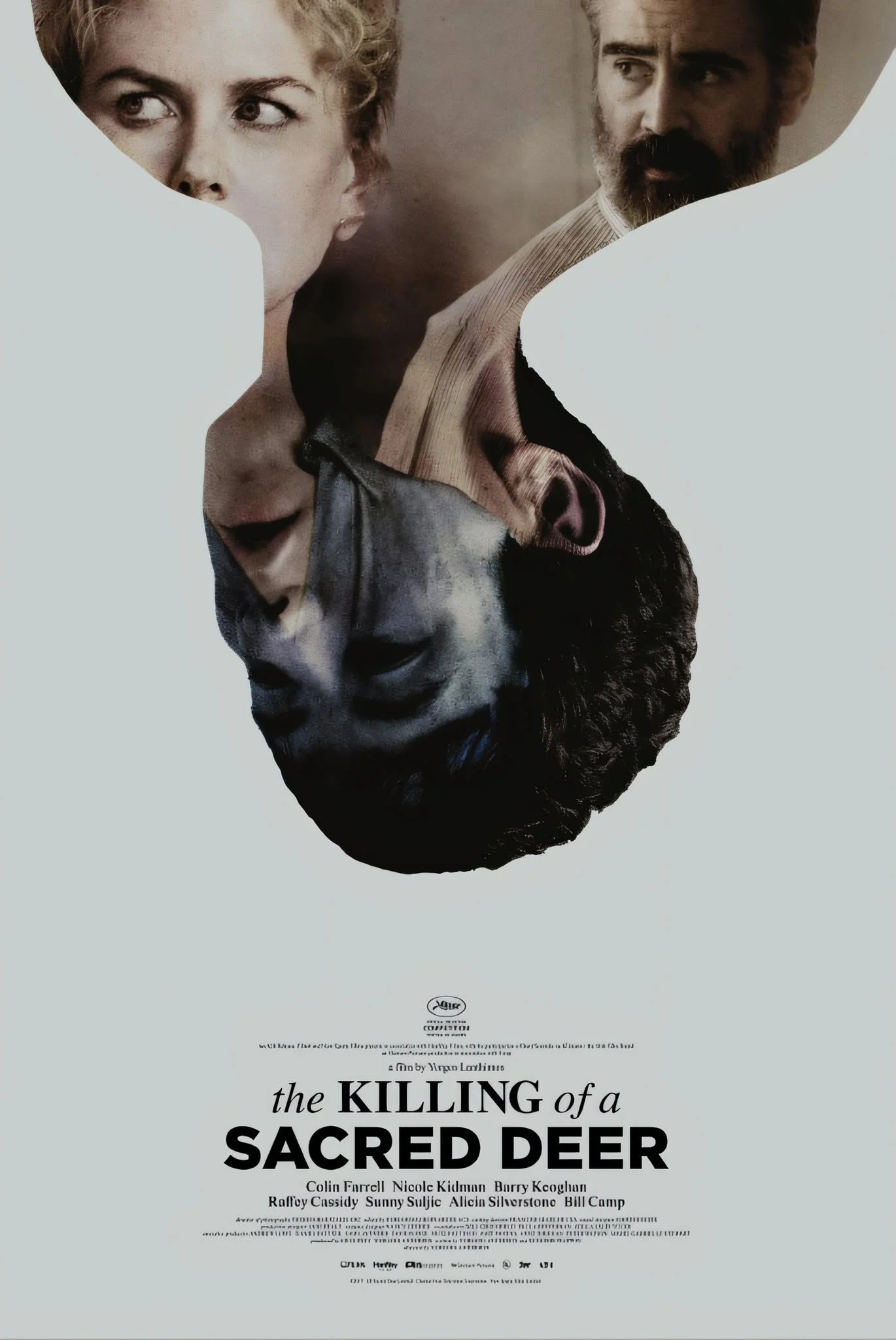
Analytická studie psychologického thrilleru Yorgose Lanthimose zkoumající klinický determinismus, deadpan herectví, jazyk jako masku a mechaniku rituální reciprocity.
An analytical study of Yorgos Lanthimos's psychological thriller exploring clinical determinism, the deadpan delivery, language as a mask, and the mechanics of ritual sacrifice.
Tato studie dekonstruuje psychologický thriller Yorgose Lanthimose Zabití posvátného jelena (The Killing of a Sacred Deer, 2017, stopáž 121 minut) jako moderní radikální adaptaci Eurípidovy antické tragédie Ifigenie v Aulidě. Snímek analyzuje život špičkového kardiochirurga Stevena Murphyho, jehož rodina se stane obětí nevysvětlitelné paralyzující choroby poté, co do jejich soukromí pronikne dospívající Martin – syn pacienta, který zemřel na Stevenově operačním stole.
Metodologicky se text zaměřuje na vysoce stylizovaný, monotónní projev postav (deadpan), geometrickou širokoúhlou kameru snímající sterilní nemocnice a předměstské vily jako vězeňské cely a koncept neúprosné rituální reciprocity. Film představuje vrcholný bod intelektuálního hororu, v němž děs nevychází z nadpřirozených monster, nýbrž z neúprosných zákonitostí vyššího řádu, který vyžaduje absolutní vyrovnání viny.
I. Sterilní vertikála a mocenská asymetrie
Lanthimos buduje svět, který je vizuálně i emocionálně aseptický:
- Chirurg v roli boha: Steven Murphy (Colin Farrell) ztělesňuje moderní iluzi kontroly nad životem a smrtí. Jeho dům i nemocniční koridory jsou snímány dlouhými, pomalými jízdami kamery Thimise Bakatakise, které zdůrazňují geometrickou preciznost, chladné osvětlení a emocionální sterilitu.
- Inverze dominance: Tato zdánlivě neotřesitelná vertikála moci se hroutí s příchodem Martina (Barry Keoghan). Chlapec představuje zhmotnění potlačené viny, kterou Steven zakrývá profesionální maskou a alkoholem. Mocenská asymetrie se radikálně obrací: suverénní lékař, jenž byl zvyklý řezat do cizích těl, je sám rozebírán neviditelnou silou, proti níž je moderní věda naprosto bezmocná.
II. Jazyk jako maska a eroze lidskosti
Postavy komunikují ve specifickém modu typickém pro řeckou divnou vlnu (Greek Weird Wave):
- Deadpan intonace: Dialogy jsou pronášeny bez afektu, monotónně a s mechanickou doslovností. Postavy hovoří o koupi hodinek, tělesném ochlupení či blížící se smrti se stejnou věcnou lhostejností. Jazyk zde neslouží k navázání mezilidského kontaktu, nýbrž funguje jako ochranný krunýř zakrývající vnitřní prázdnotu.
- Tělo jako nefunkční stroj: Když Stevenovy děti náhle ochrnou a odmítají jídlo, medicína selhává. Utrpení je podáno s chladnou anatomickou věcností – děti se plazí po koberci jako ochromená zvířata, aniž by se v rodičích probudila autentická katarzní něha.
III. Mechanika rituální oběti a antická kletba
Martinův rozsudek funguje s neúprosností fyzikálního zákona:
- Zákon reciprocity: Aby byla vyrovnána smrt otce, musí Steven vlastní rukou usmrtit jednoho člena své nukleární rodiny (manželku Annu, dceru Kim nebo syna Boba). Pokud odmítne, zemřou všichni tři po nevyhnutelných fázích paralýzy, krvácení z očí a multiorgánového selhání.
- Ruská ruleta ve smokingu: Pokus o „spravedlivý“ výběr oběti dosahuje vrcholu v rituální scéně, kde se Steven v obývacím pokoji točí se zavázanýma očima a náhodně střílí z lovecké pušky. Racionální moderní člověk 21. století se v momentu krize propadá do archaického kmenového rituálu lidské oběti.
IV. Závěr: Reciprocita bez vykoupení
Závěrečné setkání v bistru přináší mrazivé svědectví o přežití za cenu ztráty lidské důstojnosti:
- Vyrovnaný účet: Martin jí hranolky polité kečupem a pozoruje zbývající členy Murphyovy rodiny. Smrtí syna Boba byl dluh splacen a vesmírná rovnice vyrovnána.
- Triumf antického determinismu: Neexistuje zde odpuštění, katarze ani smíření. Zabití posvátného jelena demonstruje, že nejstrašnější hrůzy se neodehrávají v temných lesích, nýbrž na ostrém denním světle uprostřed sterilního komfortu civilizace, která se marně pokusila vymazat pojem etické odpovědnosti.
Slovníček pojmů a bibliografie
- Klinický determinismus: Filozoficko-estetický přístup podřizující narativ odosobněné, mechanické kauzalitě připomínající nezvratný lékařský nález.
- Deadpan herectví: Vysoce stylizovaný herecký projev zbavený běžné intonace a mimické expresivity, zdůrazňující existenciální odcizení postav.
- Rituální reciprocita: Antický koncept krevní msty a vyrovnání viny (lex talionis), kde je spravedlnost definována matematickou symetrií oběti („život za život“).
- Řecká divná vlna (Greek Weird Wave): Filmové hnutí charakterizované odcizeným dialogem, absurdními sociálními mikrosvěty a chirurgickou dekonstrukcí rodinných a institucionálních struktur.
Bibliografie (Chicago Style):
- Euripides. Iphigenia in Aulis. Translated by Don Taylor. London: Methuen Drama, 2004.
- Kermode, Mark. “The Killing of a Sacred Deer Review – A Masterpiece of Clinical Unease.” The Observer, November 5, 2017.
- Lanthimos, Yorgos. The Killing of a Sacred Deer: Production Notes. London: A24 / Element Pictures, 2017.
- Vassiliou, Konstantinos. “The Greek Weird Wave: Cinema of Resilience and the New Aesthetic of the Clinical.” Journal of Greek Media & Culture 4, no. 2 (2018): 145–163.
This study deconstructs Yorgos Lanthimos’s psychological thriller The Killing of a Sacred Deer (2017, running time 121 minutes) as a modern adaptation of Euripides’ tragedy Iphigenia in Aulis. The film analyzes the life of a top cardiovascular surgeon, Steven Murphy, whose family falls victim to an unexplainable, paralyzing illness after Martin—the son of Steven’s former patient—enters their lives.
Methodologically, the text focuses on the highly stylized, monotone delivery of the characters (deadpan), wide-angle cinematography depicting sterile hospital interiors and homes as prison cells, and the concept of “just” reciprocity. The film represents the pinnacle of intellectual horror, where terror stems not from the unknown, but from the inexorable rules of a higher order demanding blood for blood.
I. The Sterile Vertical and Power Asymmetry
Lanthimos builds a world that is visually and emotionally aseptic. Steven Murphy (Colin Farrell) is the embodiment of divine power—a surgeon who decides between life and death. His house and the hospital are filmed with long, slow tracking shots that emphasize geometric precision and emotional emptiness.
This sterile vertical of his status is, however, disrupted by Martin’s presence. The boy embodies the return of suppressed guilt that Steven hides behind his professional mask. The power asymmetry flips: the one who operates (cuts into bodies) is now himself being dissected by an invisible force against which modern medicine is completely powerless.
II. Language as a Mask and the Erosion of Humanity
The characters in the film speak without any emotional intonation, factually and often brutally honestly about trivialities and death alike. This stylized delivery functions as a mask covering deep internal decay. The viewer is drawn in not through empathy, but through observation.
This distancing method creates an unbearable sense of unease. Man is reduced here to a biological entity, a collection of tissues and functions that can be switched off at any moment. When Steven’s children begin to lose the ability to walk and eat, their suffering is presented with a mechanical coldness more terrifying than any lamentation.
III. The Mechanics of Ritual Sacrifice
The film touches directly upon the very essence of tragedy and ritual. Martin’s curse is not explained supernaturally; it functions like a law of nature. Steven must kill one member of his family to save the others—“an eye for an eye, a life for a life.”
This ritual of “killing the deer” is depicted without pathos, as a necessary maintenance of cosmic balance. The scene in which Steven attempts a “just” selection of the victim by ritually spinning with a rifle while blindfolded is the zenith of grotesque terror. It is a moment where peak intelligence and civilization collapse into a state of primal ritual madness.
IV. Conclusion: Reciprocity Without Redemption
The final scene in a diner, where Steven’s family meets Martin after the sacrifice has been made, is a chilling testament to survival at the cost of total human erosion. There is no forgiveness here, only the fact that the debt has been paid and the cosmic equation is balanced.
Visual and emotional symmetry is restored, but at the price of the absolute destruction of the family unit. The film thus presents the chilling realization that the most terrifying things do not happen in dark woods, but in plain sight, in perfectly tidied rooms, and as a consequence of our own decisions made long ago that have finally, inevitably, caught up with us.
Glossary and Bibliography
- Clinical Determinism: A philosophical and aesthetic approach in which the fates of characters unfold with the impersonal, relentless logic of a medical diagnosis.
- Deadpan Delivery: Highly stylized acting performance devoid of emotional intonation, emphasizing detachment and mechanical alienation.
- Sterile Vertical: Visual stylization of architecture and camera framing that emphasizes a false sense of divine superiority and control over life and death.
- Ritual Reciprocity: The unforgiving mechanism of cosmic balance requiring an exact equalization of guilt and sacrifice (“a life for a life”).
Bibliography (Chicago Style):
- Euripides. Iphigenia in Aulis. Translated by Don Taylor. London: Methuen Drama, 2004.
- Lanthimos, Yorgos. The Killing of a Sacred Deer: Director’s Statement. London: A24, 2017.
- Kermode, Mark. “The Killing of a Sacred Deer Review – A Masterpiece of Clinical Unease.” The Observer, November 5, 2017.
- Vassiliou, Konstantinos. “The Greek Weird Wave: Cinema of Resilience and the New Aesthetic of the Clinical.” Journal of Greek Media & Culture, 2018.