Utajený (Caché, 2005): Architektura viny a teror pohledu
Caché (2005): The Architecture of Guilt and the Terror of the Gaze
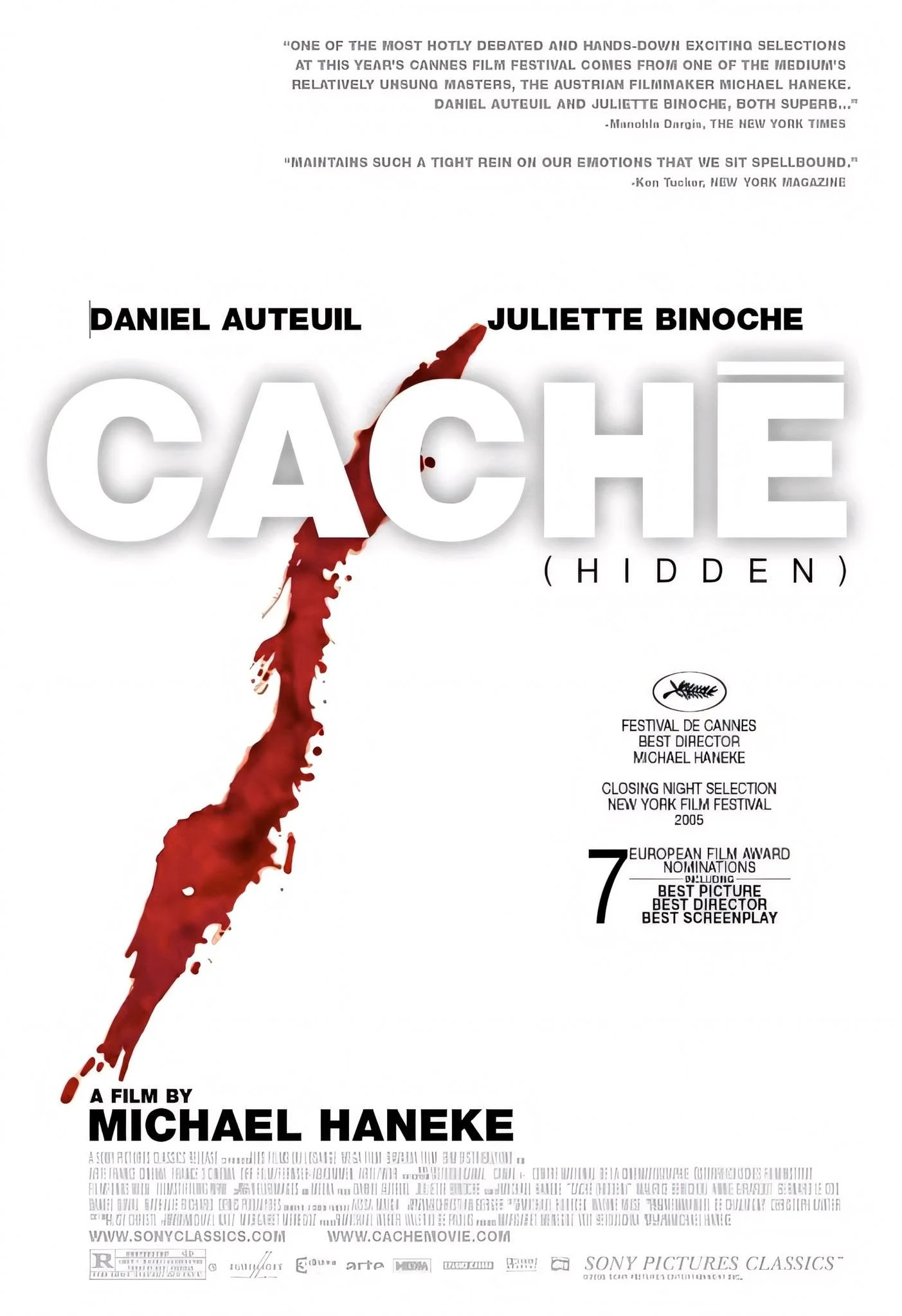
Analytická studie psychologického thrilleru Michaela Hanekeho zkoumající zbraň statického obrazu, potlačenou postkoloniální vinu a destrukci buržoazního bezpečí.
An analytical study of Michael Haneke's psychological thriller exploring the weapon of the static image, repressed post-colonial guilt, and the breakdown of bourgeois security.
Tato studie dekonstruuje psychologický thriller Michaela Hanekeho Utajený (Caché, 2005, stopáž 117 minut) jako neúprosnou analýzu potlačené viny a mediální manipulace. Snímek sleduje pařížskou intelektuální rodinu, jejíž život se začne hroutit poté, co na zápraží nachází anonymní videokazety se statickými záběry vlastního domu.
Metodologicky se text zaměřuje na zrušení distinkce mezi objektivní filmovou kamerou a diegetickým videozáznamem, na absenci viditelného antagonisty a na postkoloniální trauma (pařížský masakr Alžířanů z roku 1961) jako spodní proud osobní historie. Film ukazuje, že k naprosté destrukci reality není potřeba fyzické násilí; stačí tichý mechanismus pozorování, který člověka donutí konfrontovat se s vlastním svědomím.
I. Horizontála bezpečí a invaze neviditelného
Georges (Daniel Auteuil) a Anne (Juliette Binoche) reprezentují evropskou vyšší střední třídu. Jejich pařížský byt plný knih funguje jako intelektuální pevnost, izolovaná horizontála bezpečí a sociálního úspěchu:
- Narušení soukromí: Tento prostor je narušen tím nejbanálnějším způsobem – doručením videokazety v igelitovém sáčku.
- Mechanismus psychologického teroru: Na záznamu není žádná explicitní hrozba ani vyděračský dopis, pouze statický záběr na průčelí jejich domu. Teror nespočívá v obsahu obrazu, nýbrž v samotném faktu pozorování. Neviditelný voyeur bere rodině kontrolu nad jejich soukromím a spouští řetězec vzájemné nedůvěry a paranoie.
II. Falešná objektivita a past na diváka
Haneke radikálně znejišťuje diváka systematickým mazáním rozdílu mezi filmovou kamerou a diegetickým videozáznamem:
- Komplicita publika: Film často otevírá statický záběr městské ulice, o němž divák předpokládá, že představuje standardní narativní expozici, dokud se na plátně neobjeví rychlé přetáčení či pauza – v ten moment zjišťujeme, že sledujeme video spolu s protagonisty.
- Objektivizace dohledu: Tento formální postup zatahuje diváka do role spoluviníka. Jsme zapojeni do téhož mechanismu sledování jako neznámý odesílatel. Kamera zde funguje jako odosobněný aparát na zkoumání pravdy, před nímž nelze uniknout.
III. Vertikála potlačené historie a zřeknutí se odpovědnosti
Stopy na páskách vedou Georgese k Majidovi (Maurice Bénichou), alžírskému sirotkovi, kterého Georgesovi rodiče v dětství zamýšleli adoptovat, dokud Georges ze žárlivosti nevymyslel krutou lež, jež Majida vyhnala do ústavní péče:
- Národní a osobní vina: Osobní zrada zrcadlí vytěsněné historické trauma – krvavý pařížský masakr Alžířanů z 17. října 1961, kdy policie utopila desítky demonstrantů v Seině.
- Odmítnutí sebereflexe: Kazety Georgese nenutí k pokání, pouze otevírají zasutou minulost. Georges však reaguje agresí, vytáčkami a odmítnutím jakéhokoliv podílu na vině. V jeho pojetí světa by přiznání chyby zbořilo fasádu váženého televizního intelektuála.
IV. Závěr: Brutalita důsledku a nezastavitelný mechanismus viny
Vyvrcholení filmu popírá jakoukoliv žánrovou katarzi. Majidova nečekaná sebevražda břitvou před Georgesovýma očima představuje brutální vpád reálné bolesti do sterilního buržoazního prostředí.
Film však touto tragédií nekončí. Závěrečný statický záběr na schodiště školy, kde spolu v tichosti rozmlouvají synové obou mužů, zanechává celý příběh otevřený. Odesílatel kazet není nikdy odhalen. Mechanismus se nezastavil; trauma a vina se automaticky přenášejí na další generaci, zatímco chladné oko kamery zůstává permanentně otevřené.
Slovníček pojmů a bibliografie
- Teror statického obrazu: Využití nehybné, odlidštěné kamery bez identifikovatelného původce jako nástroje psychologického nátlaku a narušení integrity domova.
- Falešná objektivita: Stírání formálních hranic mezi autorským vyprávěním a vnitřním videozáznamem, které činí diváka přímým účastníkem dohledu.
- Postkoloniální trauma: Potlačená historická vina národa (pařížský masakr Alžířanů z roku 1961), která prosakuje do soukromé existence elit.
- Absence žánrové katarze: Záměrné odmítnutí detektivního rozuzlení, které vede k přenesení etické odpovědnosti na diváka a další generaci.
Bibliografie (Chicago Style):
- Brunette, Peter. Michael Haneke. Urbana: University of Illinois Press, 2010.
- Frey, Mattias. “Michael Haneke.” Senses of Cinema, no. 57 (2010).
- Haneke, Michael. Caché (The Criterion Collection Booklet). Essay by Alexander Horwath. New York: Criterion, 2018.
- Wheatley, Catherine. Michael Haneke’s Cinema: The Ethic of the Image. New York: Berghahn Books, 2009.
This study deconstructs Michael Haneke’s psychological thriller Caché (2005, running time 117 minutes) as a relentless analysis of repressed guilt and media manipulation. The film follows a Parisian intellectual family whose life begins to crumble after they find anonymous videotapes containing static shots of their own home on their doorstep.
Methodologically, the text focuses on the erasure of the distinction between the objective film camera and the diegetic video recording, the absence of a visible antagonist, and post-colonial trauma (the 1961 Paris massacre of Algerians) as an undercurrent of personal history. The film demonstrates that physical violence is not required for the complete destruction of reality; a silent, relentless mechanism of observation is enough to force a person to confront their own conscience.
I. The Horizontal of Security and the Invasion of the Invisible
Georges (Daniel Auteuil) and Anne (Juliette Binoche) represent the perfect European upper-middle class. Their book-filled Parisian apartment functions as an intellectual fortress, an isolated horizontal of security and success. However, this space is violated in the most banal way possible—by the delivery of a videotape.
There is no threat on the recording, no blackmail message, only a static, lengthy shot of the facade of their house. Haneke defines here a pure mechanism of psychological terror: the attack does not lie in what is in the image, but in the very act of observation. An invisible voyeur strips the family of the monopoly over their own privacy, instantly triggering paranoia and distrust within the marriage.
II. False Objectivity and the Trap for the Viewer
Haneke radically unsettles the viewer by erasing the visual difference between the film camera (objective storytelling) and the anonymous video recording. The film often begins with a static shot of a street, which the viewer assumes to be standard cinematic exposition, until the image rewinds or pauses—and we realize that we are watching the delivered tape alongside the characters.
This formal trick makes the viewer an accomplice. We are implicated in the same mechanism of surveillance as the unknown perpetrator. Who is actually holding the camera? Haneke suggests that the camera is an independent, dehumanized truth machine from which there is no escape.
III. The Vertical of Repressed History and the Denial of Responsibility
The videotapes gradually lead Georges to Majid (Maurice Bénichou), an Algerian orphan whom Georges’s parents were supposed to adopt until Georges, as a young boy, constructed a malicious lie out of jealousy that condemned Majid to a life of poverty and an orphanage.
Personal betrayal here mirrors a broader national guilt (a reference to 1961 when French police drowned Algerian protesters in the Seine). The mechanism of the tapes does not force Georges to confess; it merely opens the door to his past. Georges, however, defends himself furiously, refusing any responsibility and reacting with aggression. In his world, guilt is unacceptable because it would shatter his entire identity as a successful intellectual.
IV. The Brutality of Consequence and the Unstoppable Engine
The climax of the film denies any catharsis. Majid’s sudden, extremely bloody suicide right in front of Georges is a shocking breakthrough of raw reality into the sterile bourgeois world. It is the final proof that the mechanism works—Majid becomes the physical victim of Georges’s inability to self-reflect.
Yet, the film does not end with this act. The final static, wide shot of the school steps, where the sons of both men (perhaps) meet, leaves the entire situation chillingly open. The creator of the tapes is never revealed. The mechanism has not stopped; guilt is inherited by the next generation, and the eye of the camera remains forever open.
Glossary and Bibliography
- Terror of the Static Image: The deployment of an unmoving, dehumanized camera without an overt author as a mechanism of paranoia and privacy invasion.
- False Objectivity (The Viewer’s Trap): The blurring of lines between diegetic video footage and cinematic narration, implicating the viewer as an accomplice in surveillance.
- Post-colonial Trauma: Repressed historical and personal guilt (the 1961 Paris massacre of Algerians) seeping into seemingly sterile contemporary life.
- Absence of Catharsis: The denial of narrative resolution or antagonist reveal, ensuring that guilt is inherited by the next generation.
Bibliography (Chicago Style):
- Brunette, Peter. Michael Haneke. Urbana: University of Illinois Press, 2010.
- Frey, Mattias. “Michael Haneke.” Senses of Cinema, no. 57 (2010).
- Haneke, Michael. Caché (The Criterion Collection Booklet). Essay by Alexander Horwath. New York: Criterion, 2018.
- Wheatley, Catherine. Michael Haneke’s Cinema: The Ethic of the Image. New York: Berghahn Books, 2009.