U konce s dechem (À bout de souffle, 1960): Rychlost povrchu a smrt v běhu
Breathless (1960): The Speed of the Surface and Death on the Run
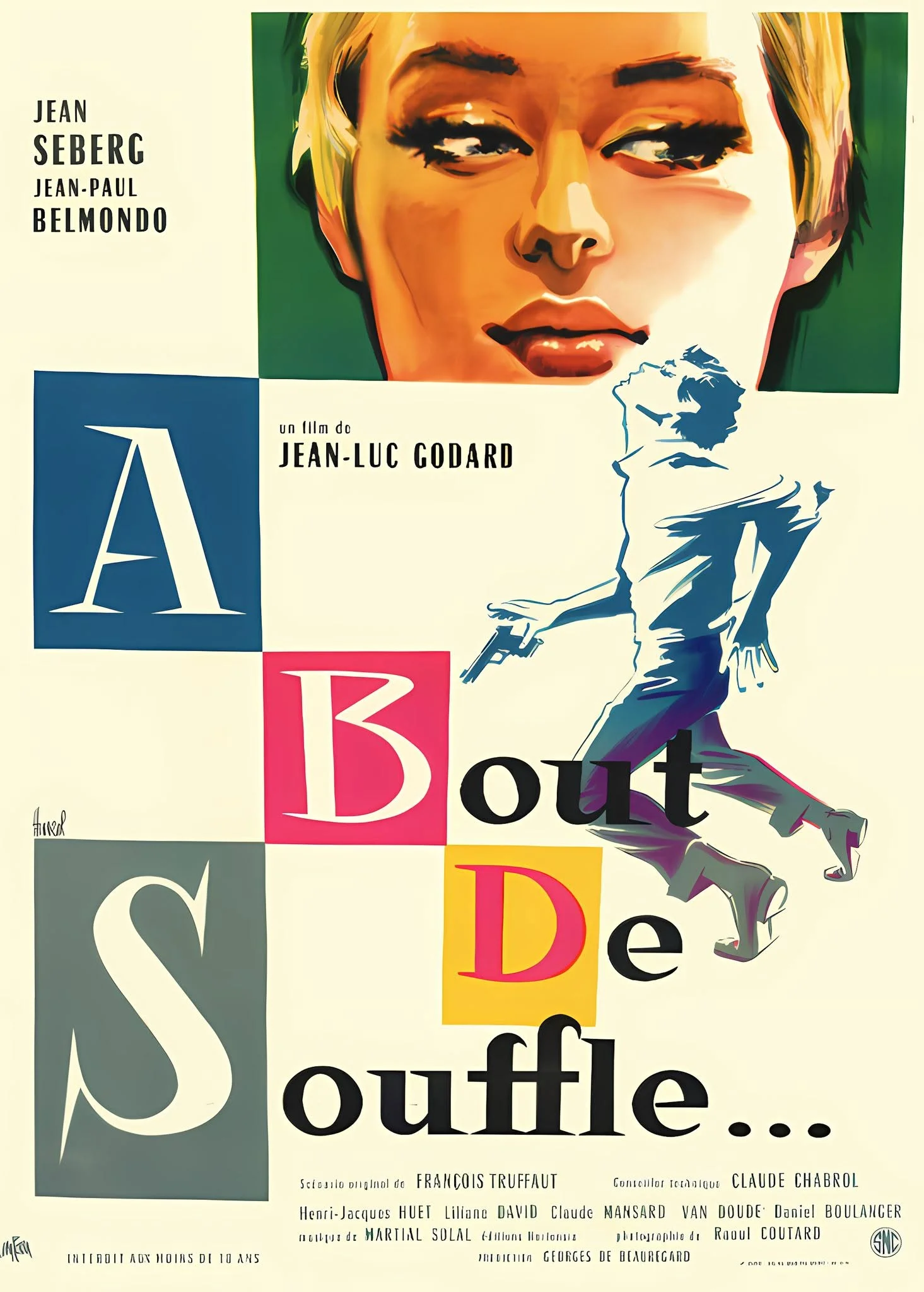
Analytická studie kultovního snímku francouzské nové vlny zkoumající skokový střih, čistou horizontálu stylu a dekonstrukci filmového času.
An analytical study of Jean-Luc Godard's French New Wave masterpiece exploring the jump cut, the pure horizontal of style, and the destruction of cinematic time.
Tato studie dekonstruuje manifest francouzské nové vlny U konce s dechem (À bout de souffle, 1960, stopáž 90 minut) jako radikální přetržení dosavadní filmové gramatiky. Snímek analyzuje příběh drobného zlodějíčka Michela Poiccarda, jehož existence je zredukována na neustálý pohyb vpřed.
Metodologicky se text zaměřuje na revoluční techniku „jump cut“ (skokový střih), natáčení v reálných ulicích Paříže a vědomou absenci psychologické hloubky postav. Film ukazuje svět, který je zbaven jakékoli duchovní či morální osy (vertikály) a který se řítí pouze po povrchové rovině asfaltu, módy a prchavého okamžiku (horizontále), dokud mu nedojde dech.
I. Skokový střih jako tep ulice
Vizuální identita filmu je definována absolutní svobodou a odmítnutím zavedených pravidel. Kameraman Raoul Coutard natáčel z ruky, často z nákupního nebo invalidního vozíku, čímž obrazu vtiskl syrovou kinetickou energii.
Godardův vynález skokového střihu (jump cut) uvnitř jediné scény brutálně rozsekal plynulý filmový čas. Odstranil z filmu mrtvá místa a ponechal pouze nervní, arytmický pulz. Čas už neplyne spojitě, ale skáče vpřed po dějové lince bez ohledu na akademickou návaznost pohybu či pohledů.
II. Existence bez hloubky: Osa povrchu
Michel (Jean-Paul Belmondo) a Patricia (Jean Seberg) nejsou tradičními hrdiny s propracovaným vnitřním světem. Netrápí je svědomí, nepátrají po vině ani nehledají hlubší smysl bytí. Zcela jim chybí vertikála – tedy osa duchovního, morálního či psychologického ponoru.
Jsou definováni výhradně tím, co dělají na povrchu: jak si přejíždějí palcem po rtech, jak kouří cigarety, jaké nosí sluneční brýle. Godard představuje čistou horizontálu – rovinu neustálého fyzického pohybu, popkultury a okamžitých rozhodnutí bez ohledu na následky. Skrze toto zploštění divák instinktivně chápe, že život redukovaný pouze na horizontální osu je zběsilým únikem před vnitřní prázdnotou.
III. Dekonstrukce mýtu a zcizovací efekt
Snímek neustále připomíná, že je filmem o filmu. Michel mluví přímo do objektivu kamery k divákovi, napodobuje gesta Humphreyho Bogarta a hraje si na gangstera. Žánrová pravidla amerického filmu noir jsou přenesena do sluncem zalitých pařížských ulic, čímž ztrácejí svou osudovou temnotu a mění se v čistou stylistickou hru.
V této rovině neexistuje skutečná morální vina, pouze řetězec událostí. Když Michel zastřelí policistu, kamera nezkoumá jeho psychický otřes; pouze chladně a fakticky zaznamená pád těla do trávy.
IV. Závěr: Smrt jako vyčerpání kinetické energie
Závěrečná scéna Michelova úprku a smrti není katarzí velké antické tragédie. Michel běží ulicí, dokud fyzicky může, a když padá k zemi, jeho poslední slova k Patricii („C’est vraiment dégueulasse“) představují spíše absurdní gesto než dojemné loučení.
Jeho přímočará linie bytí nebyla přeťata božím zásahem ani morálním prozřením; zastavila se jednoduše proto, že se vyčerpala její kinetická energie. Godard tím stvořil moderního antihrdinu, který nepotřeboval psychologickou hloubku k tomu, aby navždy proměnil dějiny kinematografie.
Slovníček pojmů a bibliografie
- Skokový střih (Jump Cut): Revoluční střihová technika narušující spojitost času a prostoru uvnitř jedné scény, vytvářející nervní a eliptický rytmus vyprávění.
- Čistá horizontála stylu: Existence redukovaná na povrchové znaky, rychlost, gesta a fyzický pohyb bez vertikálního etického či duchovního přesahu.
- Zcizovací efekt (Verfremdungseffekt): Postup narušující diváckou iluzi reality (např. přímým pohledem a promluvou herce do kamery).
- Kinetická smrt: Zastavení lidské existence z pouhého vyčerpání fyzického pohybu, nikoliv jako vyústění morální katarze.
Bibliografie (Chicago Style):
- Brody, Richard. Everything Is Cinema: The Working Life of Jean-Luc Godard. New York: Metropolitan Books, 2008.
- Godard, Jean-Luc. Godard on Godard. Translated by Tom Milne. New York: Da Capo Press, 1972.
- Marie, Michel. The French New Wave: An Artistic School. Malden: Blackwell Publishing, 2003.
This study deconstructs the manifesto of the French New Wave, Breathless (À bout de souffle, 1960, running time 90 minutes), as a radical severing of traditional film grammar. The film analyzes the story of petty thief Michel Poiccard, whose existence is reduced to ceaseless forward momentum.
Methodologically, the text focuses on the revolutionary technique of the “jump cut,” shooting in the real streets of Paris, and the conscious absence of psychological depth in the characters. The film presents a world stripped of any spiritual or moral axis (the vertical)—a world hurtling exclusively along the surface plane of asphalt, fashion, and the fleeting moment (the horizontal), until it runs out of breath.
I. The Jump Cut as the Pulse of the Street
The visual identity of the film is defined by absolute freedom and the rejection of established rules. Cinematographer Raoul Coutard shot handheld, often from a shopping or wheelchair, imbuing the image with raw kinetic energy.
Godard’s invention (or rather, necessity-driven choice) of the jump cut within a single scene brutally hacked apart continuous time. He removed the “dead spaces” from the film, leaving only a nervous, arrhythmic pulse. Time no longer flows smoothly; it skips forward along the narrative line without regard for logical or visual continuity.
II. Existence Without Depth: The Axis of the Surface
Michel (Jean-Paul Belmondo) and Patricia (Jean Seberg) are not traditional heroes with elaborate inner worlds. They are unbothered by conscience, do not search for guilt, and seek no deeper meaning to existence. They entirely lack what we might call the vertical—the axis of spiritual, moral, or psychological depth.
They are defined exclusively by what they do on the surface: how they rub their thumbs across their lips, how they smoke cigarettes, the sunglasses they wear. Godard thus presents a pure horizontal—the plane of constant physical movement, pop culture, and instant decisions regardless of consequences. Through this flattening, the viewer instinctively understands that a life reduced solely to this horizontal axis is, in fact, merely a frantic escape from inner emptiness.
III. Deconstruction of Myth and the Alienation Effect
The film constantly reminds the audience that it is “only” a film. Michel speaks directly to the camera, imitates Humphrey Bogart’s gestures, and plays at being a gangster. The genre rules of American film noir are transposed to the sun-drenched streets of Paris, losing their dark fatalism and turning into a stylistic game.
On this plane, true guilt does not exist, only a sequence of events. When Michel shoots a policeman, the camera does not explore his horror or remorse; it merely records the factual fall of a body into the grass with cold detachment.
IV. Conclusion: Death as the Exhaustion of Movement
The final scene of Michel’s flight and death is not the climax of a grand classical tragedy. Michel runs down the street as long as he physically can, and when he falls, his last words to Patricia (“You make me want to puke.” / “C’est vraiment dégueulasse.”) are an absurd gesture rather than a poignant farewell.
His straightforward line of being was not severed by divine intervention or moral realization; it simply stopped because its kinetic energy was exhausted. Godard thus created a modern anti-hero who needed no depth to forever alter the history of cinema.
Glossary and Bibliography
- Jump Cut: A revolutionary editing technique disrupting temporal continuity to create a nervous, arrhythmic narrative rhythm.
- Pure Horizontal of Style: Existence reduced to surface, speed, fashion, and physical movement lacking a vertical spiritual or moral dimension.
- Alienation Effect and Myth Deconstruction: Conscious disruption of cinematic illusion (e.g., direct address to the camera, playful subversion of film noir tropes).
- Death as Exhaustion of Movement: The halting of existence due to spent kinetic energy rather than moral or tragic retribution.
Bibliography (Chicago Style):
- Brody, Richard. Everything Is Cinema: The Working Life of Jean-Luc Godard. New York: Metropolitan Books, 2008.
- Godard, Jean-Luc. Godard on Godard. Translated by Tom Milne. New York: Da Capo Press, 1972.
- Marie, Michel. The French New Wave: An Artistic School. Malden: Blackwell Publishing, 2003.