Zničení (Annihilation, 2018): Biologická refrakce a estetika sebedestrukce
Annihilation (2018): Biological Refraction and the Aesthetics of Self-Destruction
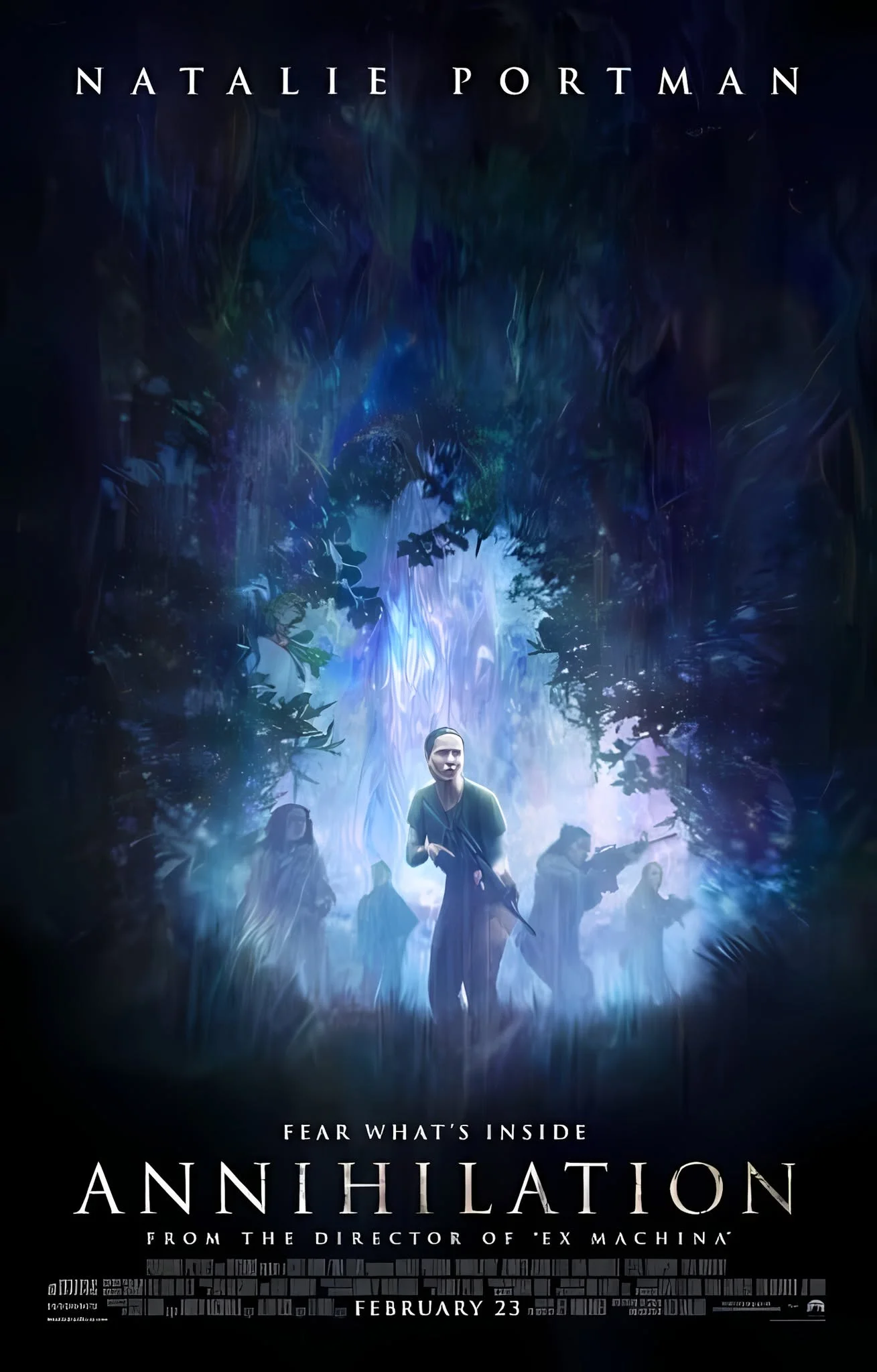
Analytická studie sci-fi hororu Alexe Garlanda zkoumající Záři jako biologický hranol, estetiku buněčného bujení a anihilaci lidského ega.
An analytical study of Alex Garland's sci-fi horror exploring The Shimmer as a biological prism, the aesthetics of cellular proliferation, and the annihilation of the human ego.
Tato studie dekonstruuje sci-fi horor Alexe Garlanda Zničení (Annihilation, 2018, stopáž 115 minut) jako vizuálně opulentní meditaci o sebedestrukci. Snímek sleduje expedici pěti vědkyň do „Oblasti X“ – karanténní zóny obklopující mimozemský meteorit, v níž neplatí známé fyzikální ani biologické zákony.
Metodologicky se text zaměřuje na koncept „Záře“ jako hranolu, který láme a mísí DNA všech živých organismů, na vizualizaci rakoviny jako aktu stvoření a na psychologický determinismus postav, které dobrovolně kráčejí vstříc vlastnímu zániku. Film ukazuje hrůzu z toho, že vesmír nás nechce zničit ze zlomyslnosti, ale jednoduše nás asimiluje a přetvoří k nepoznání.
I. Hranice Záře a horizontála mutace
Základním motivem filmu je neustálá proměna. Tzv. Záře (The Shimmer) funguje jako gigantický prizmatický hranol. Neláme však pouze světlo a rádiové vlny, ale především samotnou DNA. Garland zde buduje horizontálu mutace, kde se stírají hranice mezi druhy.
Rostliny rostou ve tvaru lidských těl, aligátoři mají žraločí zuby a medvěd v sobě nese hlasité, zmučené dozvuky své poslední lidské oběti. Tato fúze je nádherná i děsivá zároveň. Příroda zde není idylická, je to neřízený, hypertrofovaný chaos, který ukazuje, jak křehká je biologická integrita, na níž zakládáme svou definici lidství.
II. Estetika rozkladu a bujení
Zničení je v jádru filmem o rakovině a stárnutí – o procesech, kdy se vlastní buňky těla obracejí proti němu. Každá z postav vstupuje do Oblasti X s nějakou formou vnitřního traumatu nebo sebedestruktivního sklonu (ztráta dcery, závislost, pokus o sebevraždu). Záře toto vnitřní rozkládání pouze externalizuje a urychluje.
Horor nespočívá v temnotě, ale v oslnivých barvách, rozkvetlých plísních a krystalických strukturách, které pohlcují lidské maso. Garland dekonstruuje zažitou představu, že destrukce musí být ošklivá; naopak ukazuje, že zánik může být fascinujícím, esteticky dokonalým aktem stvoření něčeho zcela nového.
III. Klonování traumatu a křik medvěda
Nejintenzivnější scénou filmu, která čistě definuje moderní somatický a akustický teror, je útok zmutovaného medvěda. Zvíře, jemuž se částečně sloučila DNA s předchozí obětí (Cassie), nevydává zvířecí řev, ale lidský křik umírající ženy.
Tento moment je drtivou ukázkou asimilace utrpení. Smrt zde nepřináší klid; vědomí a bolest oběti jsou uvězněny v biologické schránce predátora a nuceny se neustále opakovat. Jde o nejtemnější formu existence, kdy je identita roztrhána a její fragmenty jsou asimilovány do groteskního, cizorodého ekosystému.
IV. Závěr: Anihilace ega a mimozemská lhostejnost
Finále v majáku zcela opouští tradiční vyprávění a mění se ve vizuální, téměř abstraktní tanec s mimozemskou entitou. Entita Lenu (Natalie Portman) nenapadá, pouze zrcadlí její pohyby a postupně přebírá její biologickou podobu.
Anihilace zde neznamená fyzickou smrt, ale vymazání původního ega. Když Lena opouští Oblast X, její oči v závěrečném záběru prozrazují drobnou, fosforeskující mutaci. Snímek končí poznáním, že jakýkoliv kontakt s absolutním neznámem nás navždy změní. Z Oblasti X se nelze vrátit jako stejný člověk; naše staré já musí být zničeno, aby mohlo vzniknout já nové, byť možná zcela cizí.
Slovníček pojmů a bibliografie
- Záře (The Shimmer): Anomální karanténní zóna fungující jako refrakční hranol lomením a míšením DNA, světelných i rádiových vln.
- Biologická refrakce: Rekombinace a ohýbání genotypů různorodých organismů napříč druhovými hranicemi.
- Somatický a akustický teror: Děs pramenící z deformace fyzického těla a pohlcení lidského hlasu i vědomí cizorodou entitou.
- Anihilace ega: Proces rozpadu individuální lidské identity a její transformace v nový ekosystém.
Bibliografie (Chicago Style):
- Garland, Alex. Annihilation: Original Screenplay. London: Faber and Faber, 2018.
- Kermode, Mark. “Annihilation Review – A Dazzling, Perplexing Sci-Fi Masterpiece.” The Observer, March 11, 2018.
- Thacker, Eugene. In the Dust of This Planet: Horror of Philosophy vol. 1. Winchester: Zero Books, 2011.
- VanderMeer, Jeff. Annihilation (The Southern Reach Trilogy). New York: Farrar, Straus and Giroux, 2014.
This study deconstructs Alex Garland’s sci-fi horror Annihilation (2018, running time 115 minutes) as a visually opulent meditation on self-destruction. The film follows an expedition of five female scientists into “Area X”—a quarantine zone surrounding an alien meteorite where known physical and biological laws no longer apply.
Methodologically, the text focuses on the concept of “The Shimmer” as a prism that refracts and blends the DNA of all living organisms, the visualization of cancer as an act of creation, and the psychological determinism of characters who voluntarily walk toward their own demise. The film illustrates the terror that the universe does not wish to destroy us out of malice, but simply assimilates and reshapes us beyond recognition.
I. The Boundary of The Shimmer and the Horizontal of Mutation
The fundamental motif of the film is constant transformation. The Shimmer acts as a giant prism. However, it does not merely refract light and radio waves, but DNA itself. Garland builds a horizontal of mutation here, where the boundaries between species blur.
Plants grow in the shape of human bodies, alligators have shark teeth, and a bear carries the loud, tortured echoes of its last human victim. This fusion is both beautiful and terrifying. Nature here is not idyllic; it is unguided, hypertrophied chaos that demonstrates how fragile the biological integrity upon which we base our definition of humanity truly is.
II. The Aesthetics of Decay and Proliferation
At its core, Annihilation is a film about cancer and aging—processes where the body’s own cells turn against it. Each of the characters enters Area X with some form of internal trauma or self-destructive tendency (the loss of a daughter, addiction, a suicide attempt). The Shimmer merely externalizes and accelerates this internal decay.
The horror lies not in darkness, but in dazzling colors, blooming molds, and crystalline structures consuming human flesh. Garland deconstructs the conventional notion that destruction must be ugly; instead, he shows that annihilation can be a fascinating, aesthetically perfect act of creating something entirely new.
III. Cloning Trauma and the Scream of the Bear
The film’s most intense scene, which purely defines modern somatic and acoustic terror, is the attack of the mutated bear. The animal, whose DNA has partially merged with a previous victim (Cassie), does not emit an animal roar, but the human scream of a dying woman.
This moment is a crushing display of the assimilation of suffering. Death brings no peace here; the consciousness and pain of the victim are trapped within the biological vessel of the predator, forced to constantly repeat. It is the darkest form of existence, where identity is torn apart and its fragments assimilated into a grotesque, alien ecosystem.
IV. Conclusion: Ego Annihilation and Alien Indifference
The finale in the lighthouse completely abandons traditional narrative, transforming into a visual, almost abstract dance with an alien entity. The entity does not attack Lena (Natalie Portman); it merely mirrors her movements and gradually assumes her biological form.
Annihilation here does not mean physical death, but the erasure of the original ego. When Lena leaves Area X, her eyes in the final shot reveal a subtle, phosphorescent mutation. The film ends with the realization that any contact with the absolute unknown changes us forever. One cannot return from Area X as the same person; our old self must be destroyed so that a new, albeit perhaps entirely alien, self can emerge.
Glossary and Bibliography
- The Shimmer: An anomalous quarantine zone functioning as a refractive prism that bends and blends DNA, light, and wave signals.
- Biological Refraction: The refraction and recombination of genotypes from disparate organisms across species boundaries.
- Somatic and Acoustic Terror: Horror originating from physical deformation and the absorption of human voice/consciousness by an alien entity.
- Ego Annihilation: The process of individual identity dissolution and its transformation into an alien ecosystem.
Bibliography (Chicago Style):
- Garland, Alex. Annihilation: Original Screenplay. London: Faber and Faber, 2018.
- Kermode, Mark. “Annihilation Review – A Dazzling, Perplexing Sci-Fi Masterpiece.” The Observer, March 11, 2018.
- Thacker, Eugene. In the Dust of This Planet: Horror of Philosophy vol. 1. Winchester: Zero Books, 2011.
- VanderMeer, Jeff. Annihilation (The Southern Reach Trilogy). New York: Farrar, Straus and Giroux, 2014.