8½ (1963): Labyrint tvůrčí krize
8½ (1963): The Labyrinth of Creative Crisis
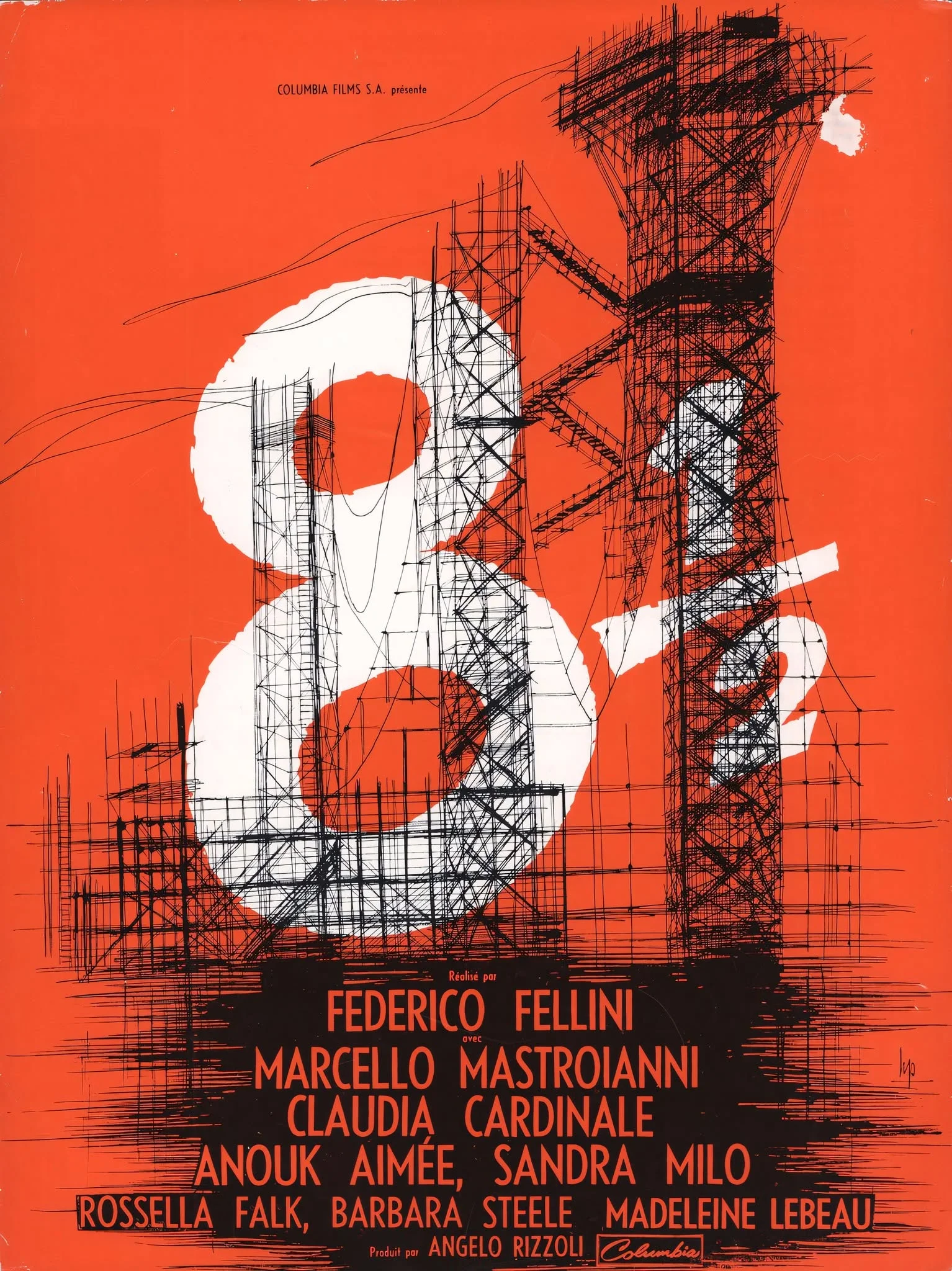
Analytická studie mistrovského díla Federica Felliniho zkoumající metafilm, freudovsko-jungiánskou psychoanalýzu a architekturu proudu vědomí.
An analytical study of Federico Fellini's masterpiece exploring meta-cinema, Freudian-Jungian psychoanalysis, and the architecture of the stream of consciousness.
Tato studie dekonstruuje mistrovské dílo Federica Felliniho 8½ (1963, stopáž 138 minut) jako ultimátní sebereflexivní metafilm, který zkoumá tvůrčí a existenciální krizi filmového režiséra Guida Anselmiho. Snímek analyzuje rozpad tradiční narativní struktury a její nahrazení volným proudem vědomí, kde se realita, sny, vzpomínky a fantazie prolínají v jeden nedělitelný celek.
Metodologicky se text zaměřuje na snovou kameru Gianniho Di Venanza, hudební leitmotivy Nino Roty a freudovsko-jungiánskou symboliku (např. archetyp animy ztělesněný Claudií Cardinale). Film ukazuje, že přijetí vlastního chaosu je jedinou cestou k umělecké a osobní svobodě.
I. Architektura proudu vědomí
Fellini zcela opouští lineární vyprávění a vytváří filmovou obdobu joyceovského proudu vědomí. Kamera Gianniho Di Venanza využívá přeexponované bílé světlo a dynamický pohyb k rozostření hranic mezi objektivní realitou lázeňského letoviska a Guidovým vnitřním světem.
Snová úvodní sekvence v dopravní zácpě (kde Guido uniká z auta a vznáší se jako drak nad mraky) funguje jako vizuální manifest pocitu udušení a touhy po úniku z tlaku producentů, žen a vlastního nabubřelého ega.
II. Ženy jako archetypy a projekce
Guidův vztah k ženám je hluboce psychoanalytický. Jeho manželka Luisa, milenka Carla a idealizovaná múza Claudia (Claudia Cardinale) nejsou plnohodnotnými, nezávislými postavami, ale spíše fragmenty Guidova vlastního podvědomí.
Claudia představuje jungiánskou animu – nedosažitelný symbol čistoty a záchrany, který ho má vyvést z umělecké sterility. V ikonické snové harémové sekvenci Fellini dekonstruuje mužskou fantazii o absolutní dominanci a odhaluje její patetickou a dětinskou podstatu.
III. Masky, cirkus a karnevalizace života
Snímek hojně využívá estetiku cirkusu a commedia dell’arte. Cirkusový motiv, umocněný nezaměnitelnou hudbou Nino Roty, slouží jako metafora pro absurditu života i samotné filmové tvorby.
Režisér je zde představen jako ringmaster (principál), který se snaží ovládnout chaos, ale nakonec zjišťuje, že jedinou možností je stát se jeho organickou součástí. Gigantická, rozestavěná konstrukce kosmické lodi představuje prázdnotu a megalomanství Guidova zamýšleného filmu – monumentální schránku bez jakéhokoli obsahu.
IV. Závěr: Tanec smíření a přijetí chaosu
V závěru Guido rezignuje na snahu vtisknout svému životu a dílu racionální řád. Zrušení natáčení megalomanského projektu není porážkou, ale absolutním osvobozením.
Finální scéna, v níž se všechny postavy z Guidova života (živé, mrtvé, reálné i fiktivní) spojí v obrovském cirkusovém tanci, je aktem naprostého přijetí. Guido si uvědomuje, že jeho život – se všemi svými chybami, iluzemi a zmatky – je tím filmem. Umělecká paralýza je překonána nikoli nalezením definitivní odpovědi, ale přijetím samotné otázky.
Slovníček pojmů a bibliografie
- Architektura proudu vědomí: Sebereflexivní narativní struktura nahrazující lineární děj volným prolínáním reality, snů, vzpomínek a fantazií.
- Archetyp animy: Jungiánský koncept ženského prvku v mužském podvědomí, ve filmu ztělesněný nespoutanou a nedosažitelnou postavou Claudie.
- Karnevalizace a cirkusová estetika: Využití commedia dell’arte a cirkusového výstupu jako metafory absurdity lidské existence i filmové tvorby.
- Tanec smíření: Závěrečný akt opuštění touhy po racionální kontrole a splynutí se všemi aspekty vlastního chaotického života.
Bibliografie (Chicago Style):
- Affron, Charles. 8 1/2: Federico Fellini, Director. New Brunswick: Rutgers University Press, 1987.
- Bondanella, Peter. The Cinema of Federico Fellini. Princeton: Princeton University Press, 1992.
- Burke, Frank. Fellini’s Films: From Postwar to Postmodern. New York: Twayne Publishers, 1996.
- Kezich, Tullio. Federico Fellini: His Life and Work. New York: Faber and Faber, 2006.
This study deconstructs Federico Fellini’s masterpiece 8½ (1963, running time 138 minutes) as the ultimate self-reflexive meta-film, exploring the creative and existential crisis of film director Guido Anselmi. The film analyzes the dissolution of traditional narrative structure and its replacement by a free-flowing stream of consciousness, where reality, dreams, memories, and fantasies merge into one indivisible whole.
Methodologically, the text focuses on Gianni Di Venanzo’s dreamlike cinematography, Nino Rota’s musical leitmotifs, and Freudian-Jungian symbolism (e.g., the anima archetype embodied by Claudia Cardinale). The film demonstrates that embracing one’s own chaos is the only path to artistic and personal freedom.
I. The Architecture of the Stream of Consciousness
Fellini completely abandons linear storytelling, creating a cinematic equivalent of the Joycean stream of consciousness. Cinematographer Gianni Di Venanzo utilizes overexposed white light and dynamic movement to blur the boundaries between the objective reality of the spa resort and Guido’s internal world.
The opening dream sequence in a traffic jam (where Guido escapes from his car and floats like a kite above the clouds) acts as a visual manifesto of his suffocation and the desire to escape the pressure of producers, women, and his own inflated ego.
II. Women as Archetypes and Projections
Guido’s relationship with women is deeply psychoanalytical. His wife Luisa, his mistress Carla, and his idealized muse Claudia (Claudia Cardinale) are not fully realized, independent characters, but rather fragments of Guido’s own subconscious.
Claudia represents the Jungian anima—an unattainable symbol of purity and salvation meant to lead him out of artistic sterility. In the iconic dream harem sequence, Fellini deconstructs the male fantasy of absolute dominance, revealing its pathetic and infantile nature.
III. Masks, the Circus, and the Carnivalization of Life
The film heavily employs the aesthetics of the circus and commedia dell’arte. The circus motif, amplified by Nino Rota’s unmistakable score, serves as a metaphor for the absurdity of life and filmmaking itself.
The director is presented here as a ringmaster attempting to control the chaos, only to realize that the sole option is to become an organic part of it. The gigantic, uncompleted spaceship set represents the emptiness and megalomania of Guido’s intended film—a monumental shell without any content.
IV. Conclusion: The Dance of Reconciliation and Embracing Chaos
In the finale, Guido abandons the attempt to impose a rational order on his life and work. The cancellation of the megalomaniacal project is not a defeat, but an absolute liberation.
The final scene, in which all the figures from Guido’s life (living, dead, real, and fictional) join hands in a giant circus dance, is an act of total acceptance. Guido realizes that his life—with all its flaws, lies, and confusion—is the film. Artistic paralysis is overcome not by finding a definitive answer, but by embracing the question itself.
Glossary and Bibliography
- Architecture of the Stream of Consciousness: A self-reflexive narrative structure replacing linear plot with a fluid synthesis of reality, dreams, memories, and fantasy.
- Anima Archetype: A Jungian concept representing the inner female aspect in the male unconscious, embodied in the film by the idealized figure of Claudia.
- Carnivalization and Circus Aesthetics: The cinematic integration of commedia dell’arte and circus motifs as a metaphor for the absurdity of life and creative art.
- Dance of Reconciliation: The concluding surrender of rational control in favor of embracing all fragmented and chaotic aspects of existence.
Bibliography (Chicago Style):
- Affron, Charles. 8 1/2: Federico Fellini, Director. New Brunswick: Rutgers University Press, 1987.
- Bondanella, Peter. The Cinema of Federico Fellini. Princeton: Princeton University Press, 1992.
- Burke, Frank. Fellini’s Films: From Postwar to Postmodern. New York: Twayne Publishers, 1996.
- Kezich, Tullio. Federico Fellini: His Life and Work. New York: Faber and Faber, 2006.