Peklo (Jigoku, 1960): Autonomní mechanismus trestu a buddhistická geometrie zatracení
Jigoku (1960)
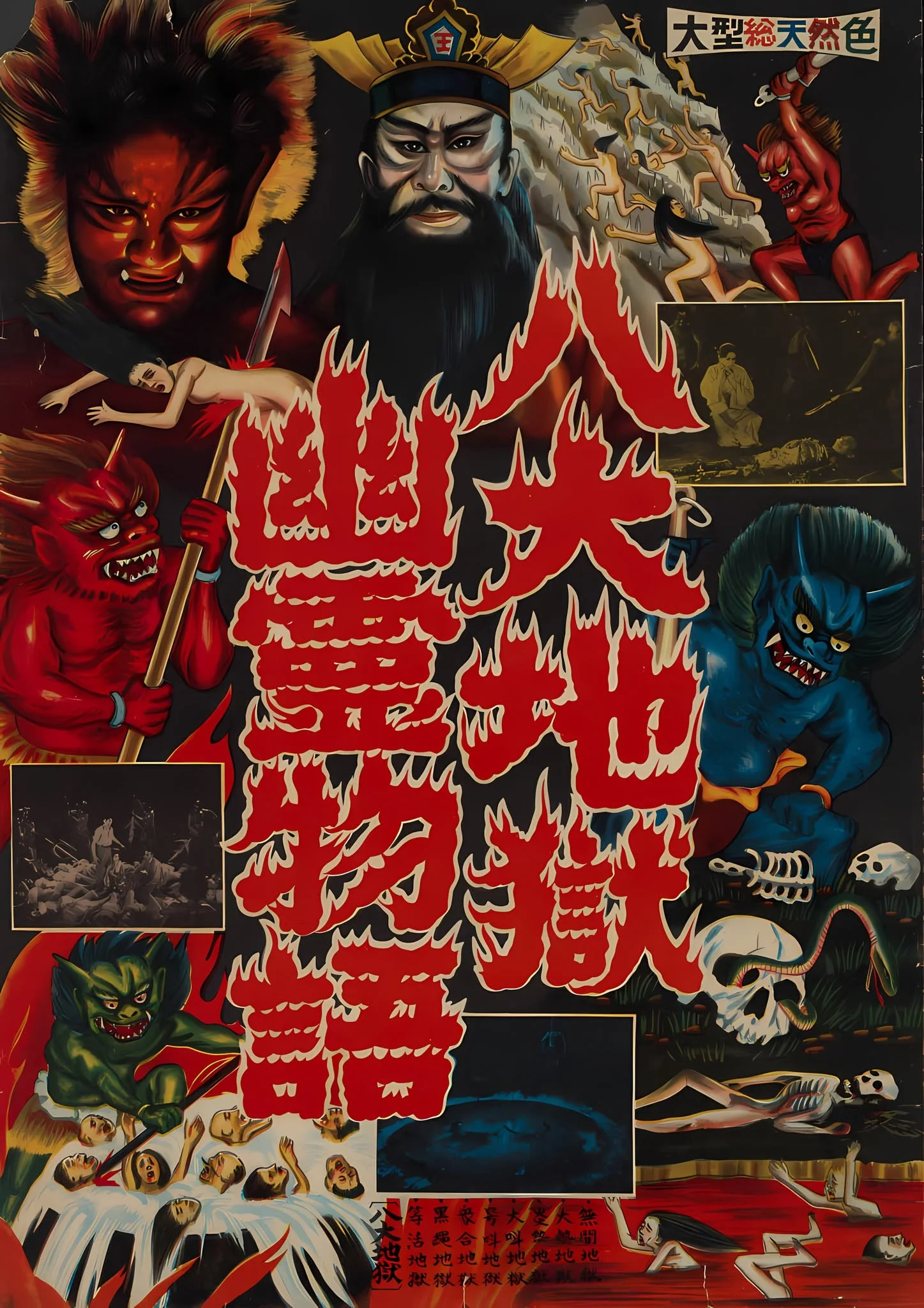
Analytická studie kultovního japonského hororu Nobua Nakagawy zkoumající rozpad narativního prostoru, buddhistickou karmu a peklo jako autonomní systém trestu.
When Space Becomes a Mechanism of Punishment
Snímek Peklo (Jigoku, 1960, stopáž 101 minut) režiséra Nobua Nakagawy, vyrobený ve studiu Shintoho na samém sklonku jeho existence, představuje naprosto ojedinělý mezník světového filmového hororu. Nakagawa nekoncipuje peklo jako pouhou metaforu či závěrečnou kulisu morálního ponaučení. V přesné polovině stopáže film brutálně láme dosavadní narativní kontinuitu a transformuje se v autonomní, mechanický systém, v němž prostor, barevná chromatika a kinetika přestávají sloužit psychologii postav a stávají se přímým aparátem exekuce.
Tato studie zkoumá přerod tradičního melodramatu vynceného vinou do expresivního rituálu kolektivního zatracení, čerpajícího z tradiční buddhistické eschatologie a divadla kabuki.
I. Pozemská spirála viny a rozpad morálního subjektu
První polovina filmu funguje jako zdánlivě konvenční společenské kriminální drama:
- Autonehoda a pasivní vina: Student teologie Širó (Šigeru Amacuka) sedí v autě řízeném jeho bezohledným přítelem Tamurou (Jóiči Numata), který srazí a usmrtí opilého gangstera. Širóovo selhání nespočívá v přímém úmyslu, nýbrž v paralyzované zbabělosti – podlehne Tamurovu tlaku a z místa nehody uprchne bez poskytnutí pomoci.
- Karmický řetězec: Nakagawa buduje řetězovou reakci hříchu. Kolem Širóa se roztáčí kolotoč zrady, korupce a sobectví – od jeho pokryteckých rodičů ve venkovském starobinci přes zkorumpovaného lékaře až po novináře parazitujícího na lidském neštěstí. Hřích zde není výjimkou, nýbrž strukturálním stavem společnosti.
II. Hromadný masakr a prostorový kolaps do podsvětí
Zlomový bod přichází v momentě, kdy celá společnost umírá při hromadné otravě rybou na oslavě v sanatoriu:
- Zrušení časoprostorové kontinuity: Vstupem postav do podsvětí mizí stabilní horizont. Prostor přestává fungovat jako koherentní dějiště a rozpadá se v bezedné bažiny, nekonečné břehy řeky Sanzu poseté kamennými mohylami a lávová pole.
- Mechanismus bez soudce: Pán podsvětí Enma Daio není personalizovaným tyranem, ale neosobním operátorem karmického zákona. Peklo funguje jako továrna na utrpení – drtící stroje, stahování z kůže zaživa, vytrhávání jazyků a usekávání končetin probíhají s chladnou procedurální lhostejností. Tresty nejsou individuálně odstupňovány; stávají se permanentním klimatem prostoru.
III. Chromatická agresivita a divadelní stylizace kabuki
Vizuální řešení pekelných sekvencí představuje vrchol Nakagawovy výtvarné odvahy:
- Exprese barev: Kamera Mamorua Kida odmítá realistické svícení. Plátno je zaléváno jedovatě sytými tóny rudé, sírově žluté a fosforeskující zelené. Barva zde není estetickým doplňkem, ale fyzickou substancí, která zhmotňuje toxicitu hříchu a dezorientuje divákovo vnímání.
- Dědictví kabuki: Scénografie využívá principy tradičního japonského divadla – malovaná stylizovaná pozadí, záměrně přiznané jevištní propadliště, rituální pózy herců (mie) a mlžné opary valící se po podlaze. Tato teatrálnost nezmenšuje hrůzu, naopak ji univerzalizuje do podoby věčného archetypu.
IV. Závěr: Buddhistická karma a reorganizace filmového jazyka
Závěrečný akt, v němž se Širó marně snaží v krvavém víru zachránit duši svého nenarozeného dítěte (plovoucího v lotosovém květu), uzavírá kruh utrpení bez levného odpuštění:
- Nevyhnutelnost zákona karmy: Nakagawa dokládá, že žádný čin nezůstává bez odezvy v tkanivu vesmíru. Peklo není hrozbou vnějším zlem, ale zrcadlem, v němž lidstvo spatřuje vlastní znetvořenou tvář.
- Nadčasový odkaz: Jigoku zůstává přelomovým dílem asijské kinematografie. Prokázalo, že filmový děs nemusí vycházet z lekaček a monster, nýbrž z radikální prostorové a chromatické dekonstrukce filmového obrazu, která diváka uvrhne přímo do středu metafyzické agónie.
Slovníček pojmů a bibliografie
- Džigoku (Jigoku): Buddhistický koncept podsvětí a pekla, v němž duše podstupují odpykávání karmy v přesně vymezených úrovních utrpení podle spáchaných vin.
- Enma Daió: Soudce a vládce buddhistického podsvětí, vážící zásluhy a hříchy zemřelých před zrcadlem pravdy.
- Karmický determinismus: Duchovní a filozofický princip příčiny a následku, kde každé morální pochybení nutně vyvolává adekvátní destrukci v přítomném či budoucím bytí.
- Řeka Sanzu: Mytická řeka v japonské buddhistické tradici, kterou musí duše zemřelých překročit při cestě do záhrobí, analogie řeckého Styxu.
Bibliografie (Chicago Style):
- Balmain, Colette. Introduction to Japanese Horror Film. Edinburgh: Edinburgh University Press, 2008.
- Galbraith, Stuart, IV. The Toho Studios Story: A History and Complete Filmography. Lanham: Scarecrow Press, 2008.
- Stephens, Chuck. “Jigoku: Hell on Earth.” In Jigoku (Criterion Collection Booklet). New York: The Criterion Collection, 2006.
Jigoku (Hell) is not merely a story about guilt, but a film that abandons narrative causality halfway through its runtime and shifts into a mode of an autonomous system. While the first part follows a standard moral drama, upon entering Hell, reality transforms into a closed structure where space, color, and movement no longer serve the narrative, but its execution.
Jigoku can be read as more than just a story about guilt. Nobuo Nakagawa transforms a drama into an expressive cinematic vision in which the image itself becomes an active vehicle of punishment. A disruption of the narrative structure occurs, and the environment ceases to be a mere backdrop, actively shaping the viewer’s experience.
The Collapse of Space
In the hellish section, spatial continuity is disrupted. The stable horizon vanishes, locations do not connect naturally, and the viewer loses the sense of navigating a cohesive world. Space ceases to function as a “setting” and becomes a network of situations where the composition of the image dictates suffering rather than character movement.
The Transformation of Causality
In Hell, the relationship between act and punishment becomes less straightforward. Individual guilt recedes into the background, and Hell begins to function as a mechanism that produces torment regardless of the logic of retribution. Punishments do not act as direct consequences of specific actions, but as part of an environment—as if the world the characters have entered functions as an autonomous system producing suffering.
Color as a Building Block
Saturated colors—red, green, and yellow—do not act as decoration. The viewer can perceive them as a force that shapes and transforms space. Here, color defines the boundaries of a reality that has lost all reference to our physical world and becomes a key tool in organizing the viewer’s focus.
What We Are Actually Seeing
Nakagawa is not just showing Hell as an afterlife, but as a reorganization of film language. In the Buddhist tradition, Hell is a consequence of karma and a state of suffering; Nakagawa transforms this concept into a highly stylized cinematic experience, where the story recedes into the background and the image becomes the primary vehicle of meaning.
Conclusion Jigoku does not feel like a mere curiosity today. Nakagawa created a film that shocks not only with its imagery of suffering but through its radical transformation of the language of horror. It remains a milestone, showing that true dread can arise not only from narrative or monsters, but from the very organization of the cinematic image.