Ještěrka s ženskou kůží (Una lucertola con la pelle di donna, 1971): Psychoanalýza a rozklad buržoazie
Hallucinatory Transgression: Psychoanalysis and Bourgeois Decay in Fulci's A Lizard in a Woman's Skin (1971)
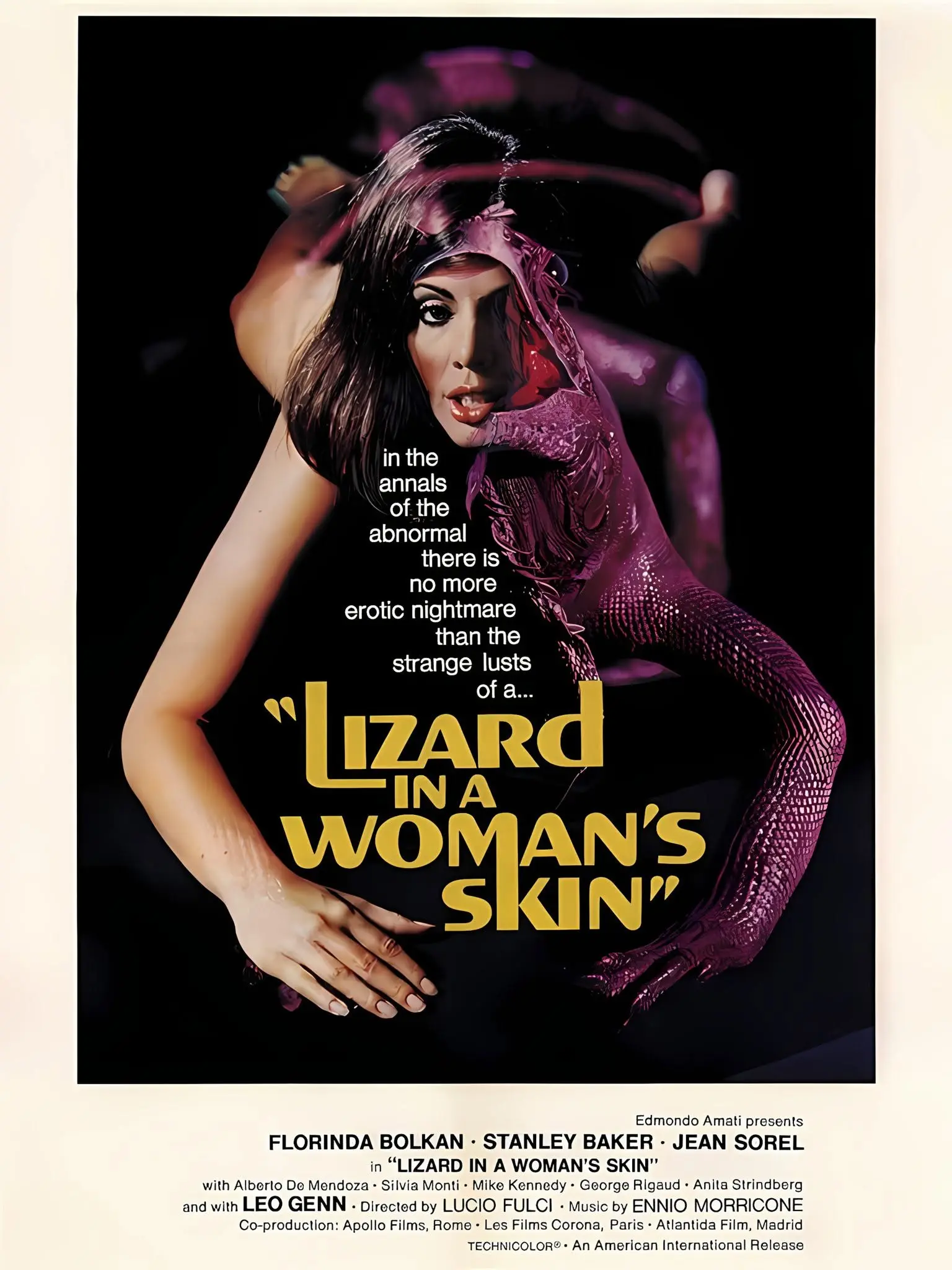
Analytická studie kultovního gialla Lucia Fulciho zkoumající psychedelickou dekonstrukci buržoazní morálky, instrumentalizaci psychoanalýzy a viscerální vpád tělesného děsu.
In the context of Italian cinema, Lucio Fulci is often reduced to a purveyor of extreme gore, but his giallo A Lizard in a Woman's Skin (1971) reveals an entirely different facet: a master of visual delirium and a…
Lucio Fulci bývá v kánonu italského filmu často zjednodušovaně nálepkován jako tvůrce extrémního gore, avšak jeho mistrovské giallo Ještěrka s ženskou kůží (Una lucertola con la pelle di donna, 1971, stopáž 102 minut) odhaluje zcela jinou autorskou fazetu: suverénního architekta vizuálního deliria a nekompromisního společenského kritika. Snímek radikálně narušuje zavedenou šablonu kriminální detektivky a noří se do rozpadající se psychiky Carol Hammondové (Florinda Bolkanová), dcery prominentního politika a manželky jeho právního partnera.
Fulci nevyužívá psychedelickou estetiku pozdních šedesátých let jako pouhou popkulturní manýru, nýbrž jako skalpel k dekonstrukci represivních mechanismů vyšší společenské třídy, v níž se pod nátěrem puritánské cti skrývá chladná mocenská kalkulace.
I. Dvě tváře Londýna a topografie třídní represe
Děj zasazený do Londýna na přelomu šedesátých a sedmdesátých let důmyslně staví proti sobě dva antagonistické světy:
- Konzervativní establišment: Chladné, geometricky strohé viktoriánské interiéry politické elity, v nichž se dbá na rodinnou reputaci a potlačení jakéhokoliv skandálu.
- Bohémská kontrakultura: Sousední byt volnomyšlenkářské Julie Durerové (Anita Strindbergová) představuje nespoutané teritorium večírků, sexuální promiskuity a drog.
- Topografie freudovského konfliktu: Tento prostorový kontrast funguje jako přímá projekce Caroliny psychiky. Julie ztělesňuje Carolino potlačené Id – temné pudy a lesbickou touhu, kterou její rodinné Superego odmítá tolerovat. Jak odhalí závěr, Julie nebyla pouhou sousedkou z nočních můr, nýbrž Carolinou skutečnou milenkou, jejíž vydírání ohrozilo stabilitu celého rodinného klanu.
II. Instrumentalizace snu a epistemologie lsti
Klíčovým narativním aparátem filmu jsou Caroliny erotické sny plné barevného zkreslení a násilí, vrcholící brutálním ubodáním Julie:
- Sen jako předpřipravené alibi: Když je Julie ve vedlejším bytě nalezena zavražděna přesně tak, jak Carol popsala svému psychoanalytikovi, policie (inspektor Corvin) stojí před záhadou zdánlivě telepatického zločinu.
- Zneužití psychiatrického diskurzu: Fulci však v závěru diváka i vyšetřovatele šokuje. Carol není labilní obětí svého nevědomí, nýbrž chladnokrevnou pachatelkou, která sny úmyslně zinscenovala před terapeutem jako falešnou stopu pro případné obhájení nepříčetnosti. Psychoanalýza zde neslouží k odhalení pravdy, nýbrž funguje jako zbraň k manipulaci soudního systému.
III. Audiovizuální rozklad: Kamera Luigiho Kuveillera a hudba Ennia Morriconeho
Formální výstavba snímku představuje vrchol italského psychologického thrilleru:
- Optická dezorientace: Kamera Luigiho Kuveillera systematicky boří perspektivu – využívá rybí oko, deformující zrcadla, extrémní makrodetaily zorniček a zoomy, které diváka vtahují do klaustrofobie rozpadajícího se vnímání.
- Morriconeho disonantní krajina: Soundtrack Ennia Morriconeho zcela odmítá melodickou líbivost. Mísí atonální smyčce, nervní jazzové rytmy a halucinační ženské vokály Eddy Dell’Orsové, čímž vytváří fyzicky znepokojivý sonický ekvivalent ženské hysterie a vnitřního rozkladu.
IV. Tělesnost jako vpád lakonovského Reálna
Fulciho rukopis se projevuje v radikální, viscerální tělesnosti:
- Scéna vivisekce psů: Šokující sekvence v sanatoriu, v níž Carol narazí na čtyři laboratorně otevřené psy s mechanicky tepajícími orgány, představuje brutální vpád reálna, které trhá sterilní fasádu společenského bezpečí.
- Právní důsledek iluze: Scéna byla natolik realistická, že vedla k soudnímu stíhání tvůrců pro podezření z týrání zvířat. Mistr efektů Carlo Rambaldi musel přinést mechanické loutky psů přímo do soudní síně, aby dokázal, že šlo o optický klam. Tento historický fakt jen podtrhuje hlavní téma filmu: moc iluze oklamat i ty nejvyšší institucionální autority.
V. Závěr: Chladnokrevná mocenská hra buržoazie
Finální rozuzlení posouvá Ještěrku s ženskou kůží daleko za hranice běžného žánrového vyšetřování:
- Triumf společenské masky: Carol je ochotna obětovat vlastní příčetnost, zavraždit milenku a nechat obvinit nevinné hippies, jen aby ochránila politickou kariéru svého otce a společenský status rodiny.
- Pravá tvář barbarství: Fulci dokazuje, že skutečné monstrum nevychází z divoké revolty kontrakultury, nýbrž se skrývá za bezchybným úsměvem a drahým kostýmem vysoké společnosti, která pro zachování svého vlivu neváhá překroutit samotnou podstatu pravdy.
Slovníček pojmů a bibliografie
- Giallo delirium: Specifický styl italského thrilleru využívající psychedelické vizuální efekty, snové sekvence a barevné filtry k navození stavu psychotické dezorientace.
- Instrumentalizace psychoanalýzy: Narativní postup, v němž postava vědomě manipuluje terapeutickými metodami a psychiatrickou terminologií za účelem vytvoření falešného alibi.
- Vpád Reálna (Lacanovský koncept): Moment, kdy brutální, syrová a nevysvětlitelná tělesná realita (např. vnitřnosti, krev) protrhne symbolický řád a společenskou iluzi bezpečí.
Bibliografie (Chicago Style):
- Howarth, Troy. Splintered Visions: Lucio Fulci and His Films. Baltimore: Midnight Marquee Press, 2015.
- Morricone, Ennio. Una lucertola con la pelle di donna (Original Motion Picture Soundtrack). Roma: Beat Records Company, 1971.
- Thrower, Stephen. Beyond Terror: The Films of Lucio Fulci. Godalming: FAB Press, 1999.
In the context of Italian cinema, Lucio Fulci is often reduced to a purveyor of extreme gore, but his giallo A Lizard in a Woman’s Skin (1971) reveals an entirely different facet: a master of visual delirium and a trenchant social critic. The film deliberately destabilizes the traditional detective narrative to plunge into the psyche of Carol Hammond (Florinda Bolkan), the daughter of an influential lawyer and politician, married to Frank, a partner in her father’s law firm. Fulci employs psychedelic aesthetics not as a gratuitous visual attraction, but as a tool to deconstruct the repressive mechanisms of the upper class.
While classical giallo filmmakers search for the killer in the external world, Fulci blurs the boundaries between reality, the unconscious, and calculated manipulation. The film probes the terrifying abyss between the social mask and perverse instrumental calculation.
1. The Two Faces of London and the Topography of Repression
The film astutely utilizes the setting of London at the turn of the 1970s, placing two seemingly separate worlds in stark contrast. On one side stands the cold, rigid world of the political establishment and tradition, represented by Carol’s family; on the other, the decadent, unbridled counterculture embodied by her bohemian neighbor, Julia Durer (Anita Strindberg).
This spatial and class contrast functions as a perfect exteriorization of Carol’s own psyche. Her terror, coupled with an unrelenting voyeuristic fascination with Julia’s hedonistic lifestyle occurring just next door, stages a classic Freudian conflict. The rigid family environment acts as a strict Superego, constantly repressing Carol’s Id—her hidden, socially unacceptable sexual and aggressive drives. Julia is not merely a neighbor; she becomes the projection screen for Carol’s darkest desires, and, as the film’s conclusion reveals, her actual lover, whose threat to expose their secret relationship becomes the direct motive for murder.
2. The Instrumentalization of the Dream and the Epistemology of Lies
A fundamental narrative mechanism of the film becomes Carol’s dreams, which manifest as wild, LSD-inspired sequences filled with color, eroticism, and violence, culminating in the orgiastic and brutal murder of Julia. When Julia is actually found dead in the adjacent apartment—in precisely the manner Carol had previously described to her psychotherapist—the film introduces a classic subversion of the reliability of consciousness.
However, in the conclusion, Fulci completely overturns this concept. The film does not show that Carol’s unconscious created the crime or contaminated reality. The final deduction reveals that Carol is the actual, conscious murderer who deliberately fabricated her alleged dreams so that they could later serve as an insanity-based alibi. In doing so, she constructed a premeditated psychological trail designed to present the actual murder as the fulfillment of an allegedly unconscious fantasy. In this perspective, psychoanalysis does not serve to uncover the truth but becomes an instrumentalized technology. By deliberately fabricating the appearance of psychological disturbance, Carol constructs her innocence through an insanity defense.
3. Audiovisual Disintegration: Cinematography, Music, and Era Context
Fulci’s London is stylized as a space where the fading aesthetics of “Swinging London” coexist with darker manifestations of social and sexual dekadence. Fulci captures this temporal tension through a remarkably controlled audiovisual form. Luigi Kuveiller’s cinematography purposely distorts perspective, employing extreme close-ups, unconventional compositions, and psychedelic optical effects to visually shatter the space, thereby mirroring the fragmentation of Carol’s mind and her skewed perception of reality.
This epistemological uncertainty is amplified by Ennio Morricone’s avant-garde music. Morricone eschews traditional melodic conventions, constructing instead an unsettling soundscape of experimental, dissonant, and jazz-inspired passages, vocal effects, and unusual instrument combinations. The soundtrack thus functions not merely as an external commentary on the plot, but becomes a direct acoustic equivalent of Carol’s repressed sexuality and collapsing consciousness.
4. Corporeality as the Intrusion of the Real
Fulci’s auteur signature is evident in his extremely corporeal, almost visceral conception of horror. The shocking hallucinatory sequence in the sanatorium, featuring four vivisected dogs that the film suggests are still alive, is a perfect example of this. The scene was so visually convincing that it sparked legal proceedings in Italy on suspicion of animal cruelty during filming; while director Fulci reportedly did not personally attend the court sessions due to working on another project, producer Edmondo Amati and special-effects designer Carlo Rambaldi had to establish before the judicial authorities that no real animals had been used, with Rambaldi presenting the mechanical dogs as proof.
Within this interpretation, however, these moments function as a brutal intrusion of the Lacanian Real, tearing apart the neat facade of bourgeois security. Moreover, a brilliant parallel emerges here: the viewer is horrified by the conviction that the animals are real, even though they are an artificial construction—which perfectly mirrors the way Carol manipulatively uses investigators and therapists with her carefully constructed psychological horrors.
5. Conclusion: A Cold-Blooded Power Game
The final revelation in A Lizard in a Woman’s Skin transcends the framework of a mere detective twist. The very title of the film (referring to a psychedelic vision of one of the hippie characters) frames a work that demonstrates the abyss between the bourgeois facade and the repressed desires, scandals, and manipulations hidden beneath it.
Carol is willing to murder to conceal her relationship and preserve her social reputation, and subsequently to distort reality itself. Fulci thus demonstrates that true barbarism and pathology do not stem from wild countercultural revolt. The deepest darkness lies in the cold and calculating manipulation of those who project an image of innocence and sophistication, yet do not hesitate to manipulate the psychiatric discourse itself to protect their own reputation.