Clash by Night (1952): Přímořský naturalismus, krize maskulinity a zrod moderní ikony
Clash by Night (1952): Coastal Naturalism, Masculinity in Crisis, and the Birth of a Modern Icon
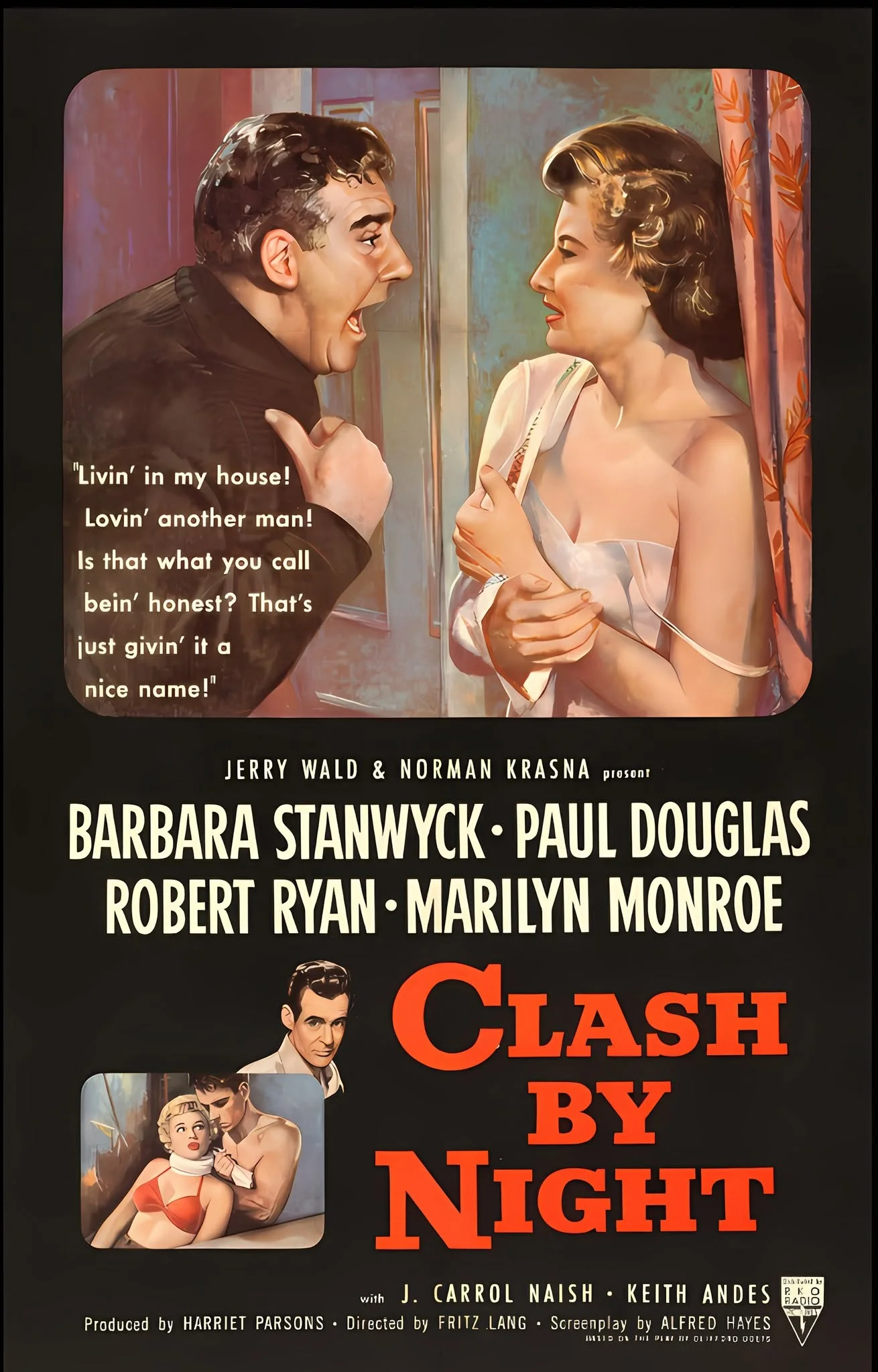
Analytická studie noiru Fritze Langa zkoumající přímořský naturalismus, krizi poválečné maskulinity, vizuální styl Nicholase Musuracy a dramatický debut Marilyn Monroe.
Analytical study of Fritz Lang's drama exploring coastal naturalism, post-war masculinity in crisis, Nicholas Musuraca's cinematography, and Marilyn Monroe's dramatic breakthrough.
Snímek Clash by Night (1952, stopáž 105 minut) představuje hlubinnou sociální sondu do emocionálního marasmu poválečné Ameriky. Fritz Lang využívá syrové prostředí kalifornského rybářského přístavu Monterey jako metaforu pro uvíznutí v osidlech rutiny, sociální determinace a nenaplněných tužeb. Film dekonstruuje mýtus o idylickém návratu domů a nahrazuje jej vizí domova jako klaustrofobního vězení. Výjimečnost snímku podtrhuje střet cynického vyčerpání zralé ženy v podání Barbary Stanwyck s živočišnou bezprostředností mladé Marilyn Monroe.
I. Produkční kontext a průmyslový naturalismus Monterey
Film vznikl v produkci nezávislé společnosti Wald-Krasna pro studio RKO. Fritz Lang spolu se scenáristou Alfredem Hayesem radikálně přepracovali původní divadelní hru Clifforda Odetse:
- Z divadla do reality: Přenesením děje ze statických newyorských interiérů do větrného přístavu v Monterey získal příběh silný dokumentární podklad.
- Průmyslová montáž: Lang otevírá film rozsáhlou montáží rybolovu, racků a mechanizovaného zpracování ryb v konzervárnách. Tento naturalismus není pouhou dekorací; definuje protagonisty jako součást nemilosrdného biologického a ekonomického cyklu, z něhož nelze uniknout. Moře představuje nedosažitelnou svobodu, zatímco město a domov ztělesňují prostor dusna a ekonomického přežívání.
II. Psychologie trojúhelníku a krize poválečné maskulinity
Dynamika milostného trojúhelníku nefunguje jako tradiční melodramatická zápletka, nýbrž jako destruktivní aréna frustrací:
- Mae Doyle (Barbara Stanwyck): Hrdinka se vrací do rodného městečka emočně i morálně zdevastovaná po krachu svých velkoměstských iluzí. Její sňatek s dobráckým rybářem Jerrym není aktem lásky, ale rezignovanou kapitulací před samotou a bídou.
- Earl Pfeiffer (Robert Ryan): Ztělesňuje typického langovského „temného dvojníka“. Je to sebedestruktivní promítač sžíraný komplexem méněcennosti a misogynií, jehož cynismus probouzí v Mae spící vášeň i pohrdání sebou samou.
- Jerry D’Amato (Paul Douglas): Reprezentuje krizi tradičního poválečného muže. Jeho naivní dobrota, těžkopádnost a neschopnost prohlédnout podstatu věcí ho činí zcela bezbranným vůči amoralitě moderního světa.
III. Vizuální styl Nicholase Musuracy a fyziologie zklamání
Kameraman Nicholas Musuraca, mistr noirového šerosvitu (Out of the Past), vtiskl filmu mimořádně hutnou vizuální atmosféru:
- Geometrické mříže: Stísněné interiéry rybářských domků jsou snímány z nízkých úhlů. Světlo pronikající skrze žaluzie a okenní rámy vytváří na stěnách i tvářích postav rastry stínů, které je vizuálně uvězňují.
- Fyziologie bez retuše: Lang a Musuraca využívají ostré boční svícení tváře Barbary Stanwyck k zachycení každé vrásky a hořkého rysu. Tvář hlavní hrdinky se stává mapou zklamání ze světa, který ženě odpírá autonomii.
IV. Marilyn Monroe a zrod nové sexuality
Role Peggy, mladé dělnice v konzervárně a přítelkyně Jerryho bratra, znamenala zásadní průlom v kariéře Marilyn Monroe:
- Kontrast generací: Monroe vnáší do temného příběhu nespoutanou tělesnou energii a živočišnost. Její scény (např. pojídání jablka v pracovních montérkách) reprezentují čisté bytí v přítomném okamžiku bez tíhy noirové minulosti.
- Moderní emancipace: V Langově determinovaném světě ztělesňuje Peggy nový typ poválečné ženy, která otevřeně odmítá podřízenost a bojuje za vlastní partnerskou suverenitu.
V. Závěr: Očištění bouří a determinismus osudu
Finále filmu vyvrcholí prudkou konfrontací během mořské bouře. Vlny bijící do pobřeží a řev větru fungují jako akustický katarzní ventil, který vyčistí dusné ovzduší, aniž by však vymazal hluboké psychologické šrámy.
Lang přesvědčivě dokazuje, že nejničivější lidská dramata se neodehrávají v temných uličkách gangů, ale za zavřenými dveřmi všedních obývacích pokojů. Člověk nemůže uniknout své minulosti ani své vlastní přirozenosti, ať zakotví v jakémkoliv přístavu.
Slovníček pojmů a bibliografie
- Přímořský naturalismus: Využití autentického průmyslového a přírodního prostředí (rybářské doky, konzervárny, mořský příboj) k posílení pocitu sociálního determinismu postav.
- Triangulace touhy: Narativní schéma milostného trojúhelníku, kde vztah neslouží k romantickému naplnění, nýbrž jako bojiště neukojených ambicí, frustrací a mocenské převahy.
- Krize maskulinity: Poválečný filmový fenomén zachycující rozpad patriarchální jistoty a stability tradičního muže tváří v tvář moderní emancipaci a cynismu.
- Fyziologie zklamání: Režijní a kameramanský postup mapující emocionální vyhoření, únavu a stárnutí v nezakryté tváři protagonistky pomocí tvrdého bočního světla.
Bibliografie (Chicago Style):
- Eisner, Lotte H. Fritz Lang. Translated by Bernard Miall. London: Secker & Warburg, 1976.
- Gunning, Tom. The Films of Fritz Lang: Allegories of Vision and Modernity. London: BFI Publishing, 2000.
- Odets, Clifford. Clash by Night: A Play in Three Acts. New York: Random House, 1942.
- Stanwyck, Barbara. The Complete Films of Barbara Stanwyck. Secaucus: Citadel Press, 1985.
Clash by Night (105 min) is a profound exploration of the social and emotional malaise of post-war America. Lang utilizes the setting of the Monterey fishing port as a metaphor for being trapped in the nets of routine and unfulfilled ambitions. The film deconstructs the myth of the happy homecoming, replacing it with a vision of home as a prison. The drama is marked by the collision of Barbara Stanwyck’s cynicism and the burgeoning stardom of Marilyn Monroe.
Methodological Framework
- Social Naturalism: The integration of documentary-style footage (fishing crews, cannery labor) to anchor human drama within real socio-economic conditions.
- Triangulation of Desire: The romantic triangle operated not as a melodrama, but as a destructive power struggle and collision of individual frustrations.
- Gender Shift: The stark contrast between the “world-weary” noir woman and a new post-war expression of uninhibited physical vitality.
I. Production Context: Wald-Krasna and the RKO Spirit
Produced by the independent Wald-Krasna banner for RKO distribution, the film adapted Clifford Odets’ original stage play via screenwriter Alfred Hayes. By shifting the narrative from New York’s claustrophobic interiors to the windswept, industrial docks of Monterey, Lang imbued the story with an organic, visually powerful scope.
The film features a powerhouse trio: Barbara Stanwyck, Robert Ryan (a favorite of Lang for portraying neurotically conflicted men), and Paul Douglas. For the rising Marilyn Monroe (playing Peggy), it provided one of her earliest opportunities to demonstrate genuine dramatic weight.
II. Environment as Fate: The Grit of Monterey
- Naturalistic Montage: Lang opens the film with an extensive documentary sequence of the fishing industry. This naturalism is not decorative; it establishes the characters as part of a biological and economic machine from which escape is impossible.
- Sea vs. Domesticity: While the open ocean represents untamed freedom and lethal risk, the domestic home operates as a claustrophobic site of emotional repression. The constant roar of the surf serves as a persistent auditory reminder of the unrest beneath the surface of everyday life.
III. The Psychology of the Triangle: Boredom and Violence
- Mae Doyle (Barbara Stanwyck): Returning home mentally and emotionally exhausted, her marriage to the good-natured fisherman Jerry is an act of surrender rather than romance.
- Earl Pfeiffer (Robert Ryan): Ryan embodies the classic Langian “dark double”—a man consumed by misogyny and self-hatred who ignites a destructive, volatile passion in Mae.
- Masculinity in Crisis: Paul Douglas personifies the crisis of the traditional post-war male. His passive goodness and simplicity leave him defenseless against the cynical undercurrents of the noir past.
IV. Cinematography: Musuraca’s Shadows
Master cinematographer Nicholas Musuraca (Out of the Past) provided the film with a dense visual texture.
Small-town domestic interiors are captured from low angles to accentuate claustrophobia. Light filtering through window blinds projects bar-like shadows across walls and faces, physically trapping the characters. Lang and Musuraca employ harsh side-lighting on Stanwyck to capture a uncompromised “physiology of disappointment,” exposing every line of bitterness.
V. The Role of Marilyn Monroe: A New Vitality
Playing Peggy, a cannery worker and girlfriend to Jerry’s brother, Monroe introduces a crucial shift in Hollywood’s depiction of young womanhood.
Monroe brings a raw, physical energy that contrasts sharply with Stanwyck’s emotional exhaustion. Her scenes (such as eating an apple in work clothes) embody unmediated presence in the moment. Within Lang’s fatalistic universe, Peggy represents a rare element of hope, vitality, and the incoming post-war generation.
VI. Conclusion: Purification by Storm
Clash by Night culminates in a violent storm that clears the stifling atmosphere without healing the underlying psychological wounds. Lang proves that the most intense thrillers often unfold not in urban alleyways, but within the silence of ordinary living rooms. The film serves as a chilling reminder that one can never truly escape their past or their nature, regardless of the harbor they seek.
Glossary and Bibliography
- Coastal Naturalism: The strategic use of authentic industrial and marine environments to reinforce themes of socio-economic determinism.
- Triangulation of Desire: A narrative structure where romantic relationships function as arenas for unfulfilled ambition, power dynamics, and emotional frustration.
- Masculinity in Crisis: The cinematic representation of post-war male vulnerability, where traditional stability (Jerry) collapses under internal aggression or cynicism (Earl).
- Physiology of Disappointment: Cinematographic technique (Nicholas Musuraca) utilizing direct, unretouched lighting to visually map emotional exhaustion and aging across a character’s face.
Bibliography (Chicago Style):
- Eisner, Lotte H. Fritz Lang. Translated by Bernard Miall. London: Secker & Warburg, 1976.
- Gunning, Tom. The Films of Fritz Lang: Allegories of Vision and Modernity. London: BFI Publishing, 2000.
- Odets, Clifford. Clash by Night: A Play in Three Acts. New York: Random House, 1942.
- Stanwyck, Barbara. The Complete Films of Barbara Stanwyck. Secaucus: Citadel Press, 1985.